
Google as the booking layer changes the SEO job
Search Engine Journal’s generative UI warning is less about one Google feature and more about distribution risk: if search becomes the place where users decide, compare, and book, site owners need stronger owned channels, cleaner conversion paths, and SEO that survives fewer clicks.
TL;DR: If Google’s generative UI becomes a transaction layer, the practical move is not to panic about rankings, it is to build demand, trust, and conversion paths that do not depend on every visitor clicking through from search.
What changes if Google becomes the booking layer?
Search Engine Journal’s “Generative UI Could Turn Google Into Your Booking.com” by Slobodan Manic frames the right worry: Google does not need to kill organic traffic to change the economics of search. It only needs to answer more, compare more, and route more user actions inside the search experience.
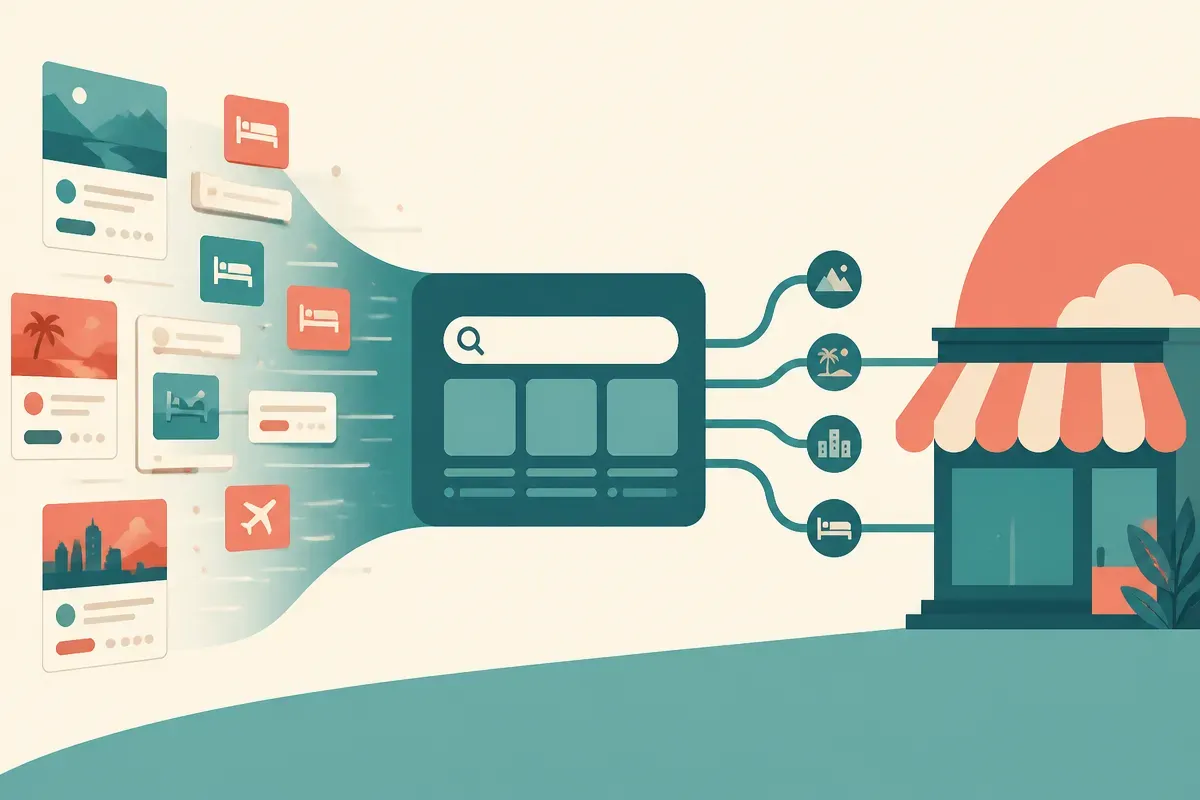
That is the Booking.com analogy. The platform sits between intent and supplier. The user may still buy the hotel room, the tour, the service, or the appointment. But the platform owns the interface where comparison happens. It trains users to start there, decide there, and maybe transact there.
For site owners, the danger is not only fewer clicks. It is weaker memory. If the customer remembers Google’s interface, not your brand, you become inventory. Useful inventory, maybe. Profitable inventory, maybe. But still inventory.
That distinction matters because a lot of SEO strategy still assumes the click is the prize. Rank, earn the click, convert the visitor. Generative UI bends that funnel. The result page may become a negotiation surface, a recommender, a comparison engine, and a call-to-action layer all at once.
So is SEO dead, or just less click-centered?
SEO is not dead. That line is lazy. Search visibility still matters if people use search to form preferences. The better question is: what kind of visibility compounds?
If a generative interface summarizes your category, it will still need signals. Brand mentions, structured facts, reviews, topical authority, entity clarity, fresh inventory, service pages that explain real choices, and content that answers specific buyer questions. Those are not magic shields. They are the raw material systems use to understand who belongs in the answer.
But the old playbook of publishing thin pages for long-tail traffic looks worse in this world. If the query can be answered in one generated panel, a commodity page has little reason to win a click. The content that holds up is closer to proof: original pricing context where allowed, real availability, differentiated expertise, comparison logic, policies, photos, case work, constraints, and reasons to trust the operator.
I run Lucky Domains, where SEO and search visibility are part of the work, and this is the shift I keep coming back to: search traffic is useful, but search dependence is fragile.
What should operators build before Google decides the interface?
The answer is not “leave Google.” That is not realistic for most businesses. The answer is to reduce single-channel dependence while making your site more legible to both humans and machines.
Start with the owned conversion path. If someone does click, do they land on a page that helps them decide, or a page built only to rank? Can they compare options, check fit, understand pricing boundaries, book, inquire, or save the business for later? A site that needs three more visits before it earns trust is going to struggle when Google compresses the research journey.
Then work on direct demand. Email, branded search, repeat visitors, referral partners, community, YouTube, niche directories, marketplaces where they make sense, and offline reputation still count. Not because they are trendy. Because they create paths that do not require Google to send every customer.
Finally, make the business easy to cite. Clean service pages. Clear location and availability data. Strong About and Contact pages. Schema where appropriate. Real author or company identity. Reviews and testimonials that are not buried. Content that says what you actually do, who it is for, who it is not for, and what the next step looks like.
Practitioner’s Take: Treat generative search as a pressure test. Pick one money page and ask: if Google summarized this page without sending the click, what would still make someone search your name, trust your offer, or come back directly? Then improve that page for decision quality, not word count. The catch most teams miss is that “owned channels” are not a newsletter signup box. They are repeated reasons for a buyer to remember you outside the search result.