
Google’s spam update and AI Overviews are the same SEO story
Search is moving on two tracks at once: more aggressive spam cleanup and more generated interfaces inside results. For operators, the lesson is not to chase every surface, but to make pages useful enough to survive both ranking volatility and answer-engine reshaping.
TL;DR: Treat Google’s August spam update and AI Overviews UI changes as one signal: search visibility is getting less link-shaped, more filtered, and more dependent on clear, useful source material.
What actually changed?
The primary source here is Search Engine Journal’s “Spam Update, Generative UI In AIOs, Reddit Drop – SEO Pulse” by Matt G. Southern. Southern reported four items in the same SEO pulse: Google’s August spam update is rolling out, generative UI has reached AI Overviews, websites are getting a new button, and Reddit’s share of ChatGPT citations has fallen.
That mix matters more than any single item.
A spam update is the familiar part. Google keeps pushing against pages built to rank rather than help. We do not have enough detail from Southern’s summary to say which tactics are being hit hardest, or how long the rollout will take. So I would not turn this into a neat checklist of “winners and losers.” The safer read is simpler: if your traffic depends on thin programmatic pages, copied summaries, expired-domain tricks, or affiliate pages with no real judgment, you should expect more turbulence.
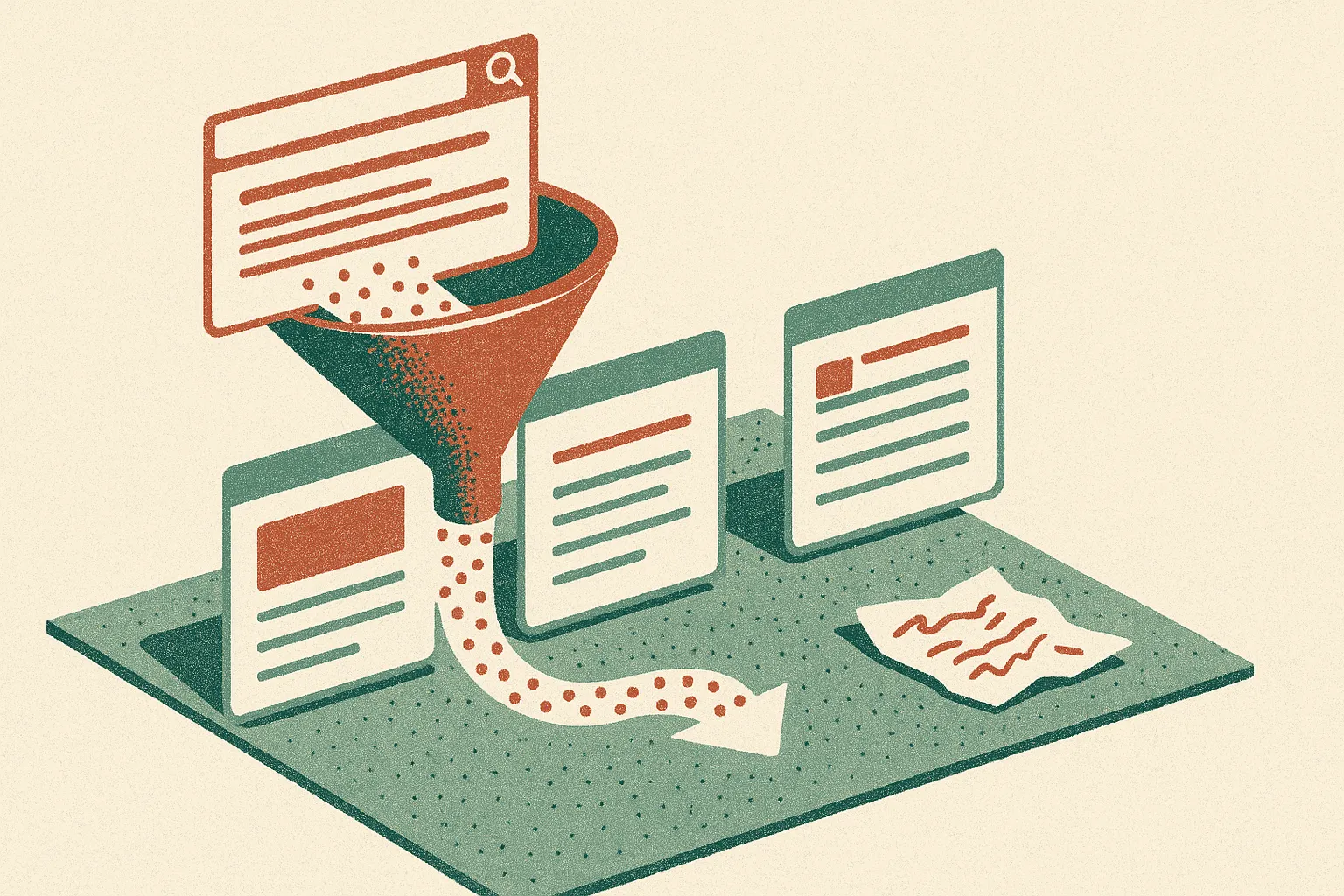
The less familiar part is generative UI inside AI Overviews. That phrase points to a bigger shift: Google is not only ranking pages, it is composing search experiences. A result can become an answer, a set of cards, a comparison, a follow-up path, or some interface that reduces the need to click. Again, without Google’s own product documentation in the provided material, I would avoid claiming exact mechanics. But the direction is clear enough. Search is becoming an application surface.
Why does Reddit’s citation drop matter?
Southern also reported that Reddit’s share of ChatGPT citations has fallen. I would treat that as a caution flag, not a victory lap for publishers.
For the last couple of years, Reddit has been a strange winner in AI search behavior. It has fresh human language, long-tail opinions, product complaints, niche expertise, and lots of messy phrasing that sounds like what users ask. That made it useful training and retrieval material for answer systems. It also made Reddit show up in places where old-school SEO pages felt too polished or too empty.
If Reddit citation share is dropping, it does not automatically mean publisher content is back. It may mean citation mixes are moving around. It may mean systems are changing how they retrieve, quote, or attribute. It may mean Reddit was overrepresented for a period and is normalizing. The thinness of the claim matters here. “Citation share fell” is interesting, but it is not enough to build a content strategy around.
The operator lesson is better: do not depend on one platform’s current favor with AI systems. Not Reddit. Not your blog. Not YouTube. Not LinkedIn. Build source material that can be understood outside its native container: named entities, dates, direct answers, original examples, firsthand experience, and enough structure that both humans and machines can tell what the page is for.
What should builders do now?
The old SEO question was: “Can this page rank?” The newer question is: “Can this page be selected, summarized, trusted, and still make someone want the original?”
That is a harder bar.
A page that only repeats the obvious may still be indexable, but it is easy for AI Overviews or ChatGPT-style systems to compress away. A page with original testing, screenshots, pricing observations, workflow notes, decision criteria, or named tradeoffs has a better shot at being useful as source material. Not guaranteed. Better.
The website “new button” item is the one I would be most careful with. Southern says websites are getting a new button, but the provided material does not include first-party details from Google or another platform about what it does, who gets it, or how it behaves. Until there is company documentation, I would not build a workflow or pitch deck around it.
What I would do this week: review the pages that earn search traffic but have weak substance. Add firsthand notes. Remove filler. Make claims easier to verify. Separate opinion from fact. Update stale comparisons. Add the thing a generic answer box cannot know because it did not run the test, talk to the customer, or ship the workflow.
For a builder, the move is boring and useful: publish fewer pages that exist only to catch keywords, and improve the pages that would still be worth reading if Google showed half the answer above them. The catch most readers miss is that AI search does not just punish bad content. It also makes average content invisible.