
Generated Interfaces Put Tool Pages on Notice
Google’s reported AI Overview interface tests point to a practical shift for search: answers may stop being summaries and start becoming tiny tools, which changes what builders should publish and defend.
TL;DR: If Google can generate useful mini-tools inside AI Overviews, the safest web content is no longer a simple tool page, it is the data, workflow depth, and trust layer the generated interface cannot easily replace.
What did Google reportedly test?
Search Engine Journal’s Matt G. Southern reported in “Google’s Generated Interfaces Could Compete With Tool Pages” that AI Overviews can now build interactive tools inside Search, and that Google’s testing found generated interfaces often beat top results in head-to-head comparisons.
That is the claim to pay attention to. Not because every site dies tomorrow. Because the interface boundary is moving.
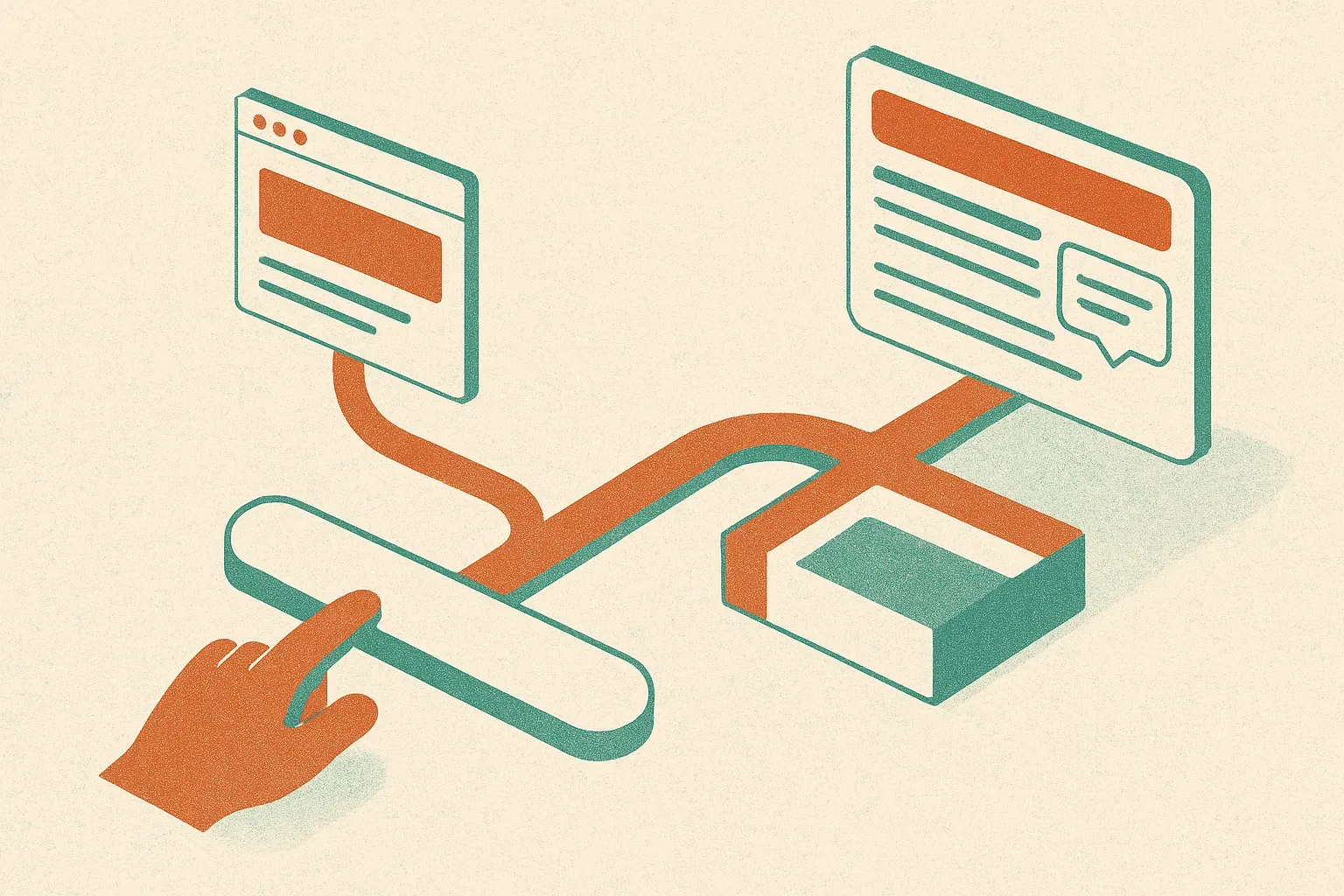
Classic search sent users from a query to a page. AI Overviews already compressed some informational pages into summaries. Generated interfaces go one step further: they do not just answer, they let the user do something. That is a different kind of competition.
A static explainer can be summarized. A simple calculator can be recreated. A basic form-driven page can be approximated. If the search result itself becomes interactive, the top organic result may no longer be the place where the task happens.
There is a sourcing catch here. The supplied material is Search Engine Journal’s coverage, not a first-party Google announcement or developer document. So I would treat the availability, rollout shape, and internal test details as reported, not as final product documentation. Still, the direction matches where AI search has been heading: less “here are ten links,” more “complete the first step right here.”
Which pages are most exposed?
The obvious targets are tool pages with shallow context.
Think calculators, converters, generators, estimators, basic selectors, short quizzes, and comparison widgets. The kind of page where the core value is an input box plus an output. If the page does not have proprietary data, workflow memory, community signal, expert judgment, or a next action that matters, it is easier for a generated interface to stand in front of it.
This is not just an SEO problem. It is a product packaging problem.
For years, many publishers and SaaS companies built free tools as acquisition magnets. They ranked for high-intent queries, delivered a quick result, then moved users toward signup, purchase, or deeper content. If Google inserts a “good enough” interactive layer above that, the acquisition funnel changes.
But “good enough” has limits. A generated interface may handle the generic version of a task. It will struggle more with edge cases, regulated decisions, deeply local context, authenticated data, or anything that requires trust beyond a quick answer.
That is where builders still have room.
The move is not to abandon tools. It is to make tools less copyable. Tie them to real data. Show assumptions. Add scenario history. Let users save, export, compare, audit, or hand off the output. Connect the tool to a workflow that continues after the first answer.
What should builders change now?
I would stop treating free tools as standalone SEO landing pages. Treat them as entry points into a system.
If you have a simple tool, ask three questions. What inputs can only you validate well? What output would a serious user need next? What proof can you show that a generic generated interface cannot?
For content teams, this means the page around the tool matters more, not less. Explain the model. Show examples. Document failure cases. Include expert review where it matters. Make the user smarter, not just faster. If Google generates the first interaction, your page still needs to be the place users trust when the stakes rise.
For product teams, instrument the difference between casual and serious use. The casual use case may get absorbed by search. The serious use case can still convert if your product handles persistence, collaboration, compliance, private data, or richer decisions.
For SEO teams, rankings are no longer the only unit of defense. You need to know which queries can be satisfied by a generated widget and which ones create demand for a deeper workflow. Those are different pages. They should not be measured the same way.
Practitioner’s Take: Pick one high-traffic tool page and assume Google can recreate the first screen inside Search. Then redesign around what happens after that first answer: saved inputs, clearer assumptions, better data, expert context, export, integration, or a paid workflow. The catch most teams miss is that the simple tool was never the moat. The moat is what the user trusts you to do next.
Related: I run the SEO practice at Lucky Domains, which builds search visibility the durable way: foundations first, then pages worth ranking.