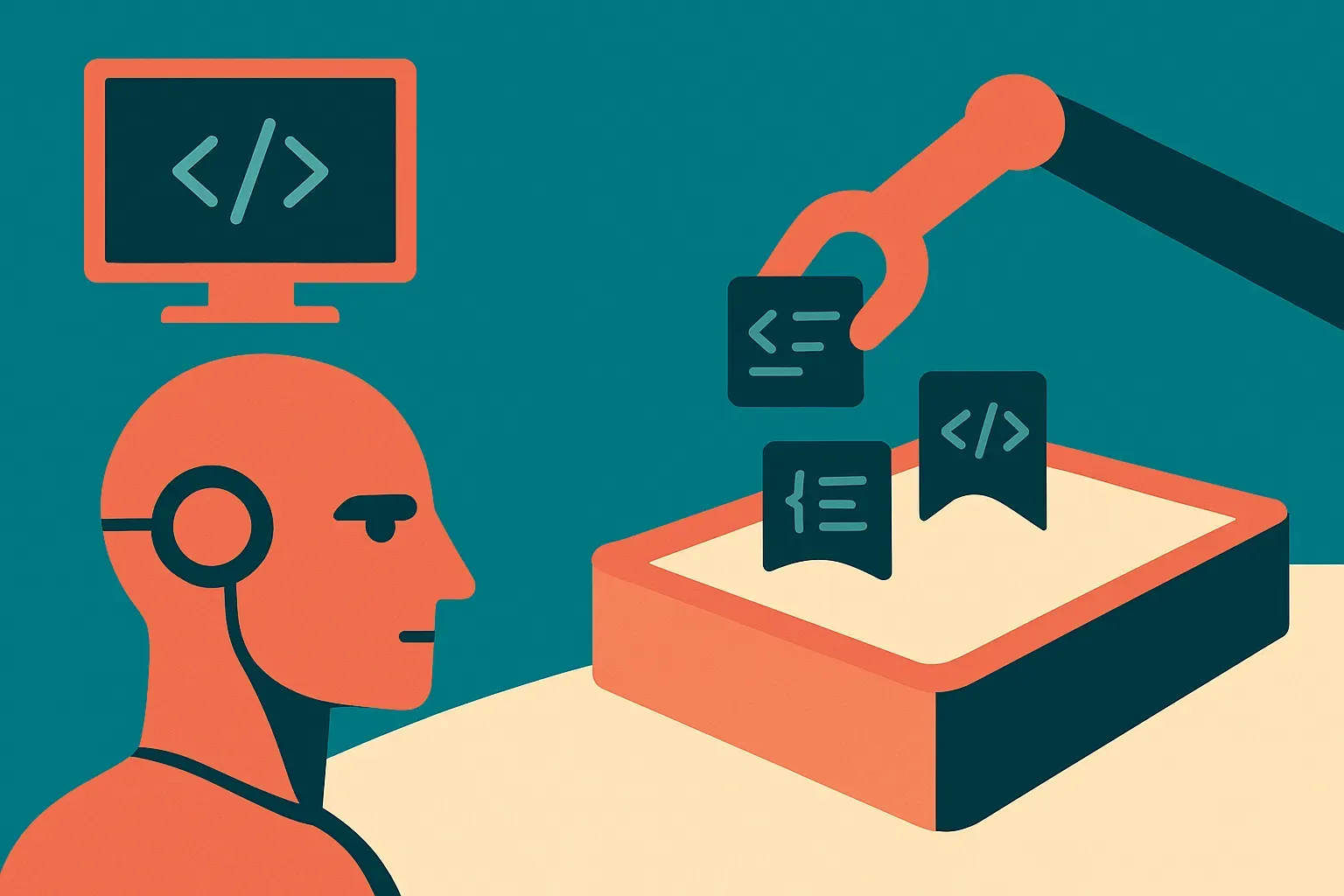
Terminal-Universe turns code-agent logs into reusable sandboxes
Terminal-Universe reframes code-agent training data around executable environments, not static demos, which matters because agents need repeatable feedback loops more than another pile of successful transcripts.
TL;DR: The useful idea in Terminal-Universe is simple: turn old terminal-agent runs into reusable code environments, because executable sandboxes are better training fuel than frozen transcripts.
Why are trajectories not enough?
A trajectory is a record of what happened once. The agent ran commands, edited files, maybe fixed tests, maybe failed. That is useful as a demonstration, but it is dead after capture. You can train on it, inspect it, or replay it as text. You cannot naturally ask it ten new questions and get grounded execution feedback.
The arXiv paper “Terminal-Universe: Turning Agent Trajectories into Scalable Terminal Environments”, listed under cs.AI and cs.CL, makes that distinction the center of the work. The claim is not that we need more code-agent transcripts. We already have those accumulating as terminal-based agents get used. The scarcer asset is realistic, executable environments for post-training.
That tracks with what builders see in practice. A coding agent does not only need to know the happy path. It needs to discover the repo, infer conventions, run tests, get yelled at by the terminal, revise a plan, and deal with missing context. A transcript captures one path through that maze. An environment lets you generate many paths through it.
How does Terminal-Universe rebuild an environment from an agent run?
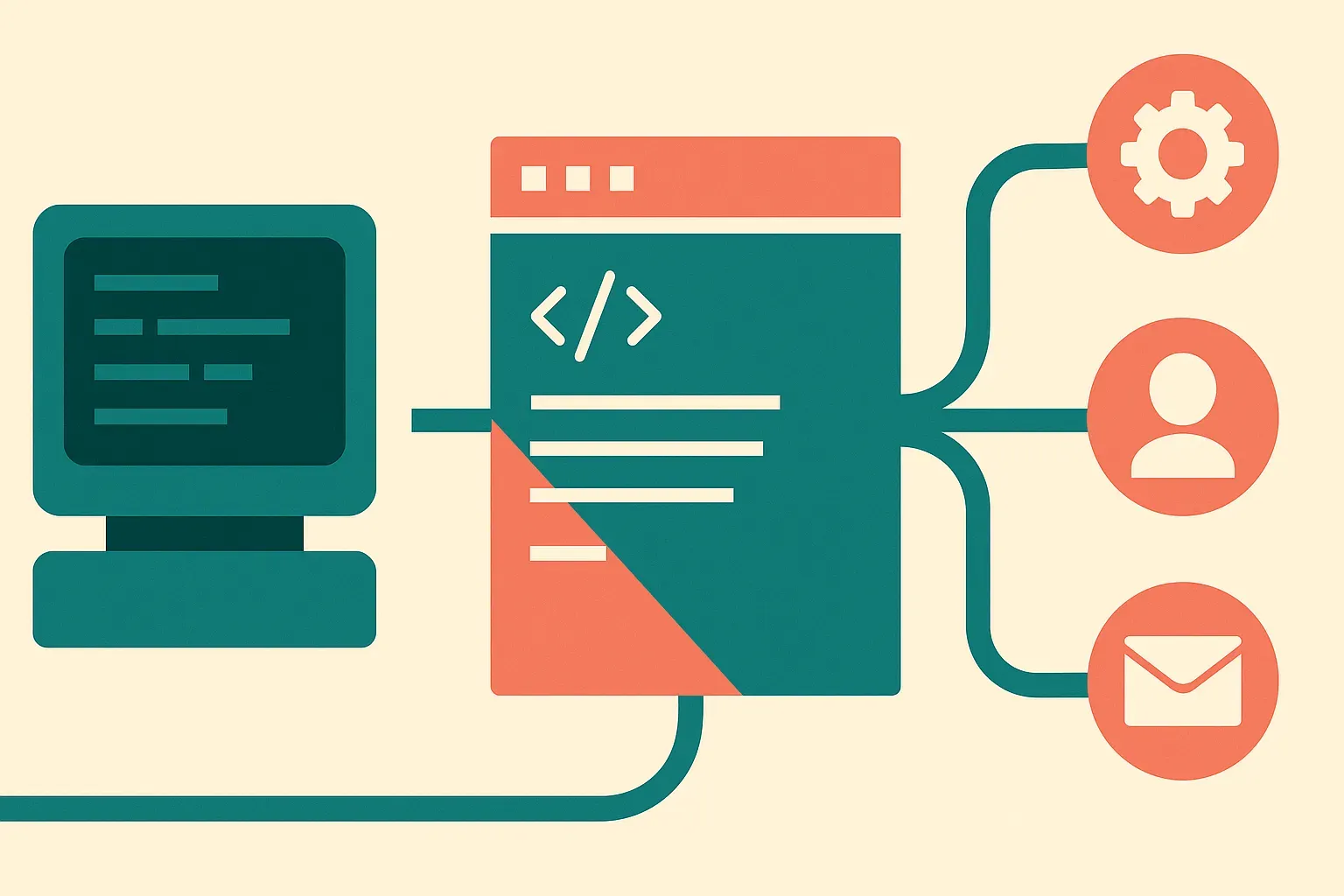
Terminal-Universe starts from the tool-execution history inside a terminal-agent trajectory. The paper says the framework replays recorded file operations to restore files to the state before the agent modified them, producing a partial workspace. Then a completion agent supplies missing files and dependencies.
That is the clever bit. Instead of asking a model to invent a repo from scratch, Terminal-Universe treats the trajectory as forensic evidence. The commands and edits expose pieces of the original workspace. Recover enough of that workspace, and the old trajectory becomes a seed for a new executable training environment.
On top of the recovered workspace, Terminal-Universe reconstructs the original intent task and synthesizes new ones. It also scales tasks in two directions. For breadth, it mines directional dependency relationships between related environments and creates cross-workspace queries, closer to the way developers jump across codebases. For depth, it extends a single-turn prompt into a multi-round session using a user agent, modeling iterative feedback and changing requirements.
That is a useful shape. Most coding-agent benchmarks still feel too tidy compared with actual development. Real work is not just “fix this function.” It is “this service broke after the package upgrade, the docs are stale, the shared utility lives somewhere else, and the product manager just clarified the requirement.”
What should we believe about the results?
Terminal-Universe reports 37.3k task-sufficient environments produced from public terminal agent trajectories. The paper also reports that supervised fine-tuning Qwen3.5-27B on this corpus improves single-round performance on Terminal-Bench 2.1 by 11.9 points and multi-round performance on EvoCode-Bench v2 MT@4 by 13.8 points.
Those are meaningful numbers, with the usual caveat: benchmark gains are not the same as production reliability. The abstract does not tell us enough about contamination controls, the quality distribution of recovered environments, or how often the completion agent fills gaps in ways that make the environment less faithful to the original repo. “Task-sufficient” is also doing real work as a phrase. Sufficient for a benchmark task may not mean sufficient for a messy enterprise repo with private packages, weird CI, secrets handling, and undocumented build steps.
Still, I like the direction. The paper’s strongest contribution is the data strategy, not any single score. If agent training is moving from imitation toward interaction, then environments become the bottleneck. Terminal-Universe proposes a way to recycle yesterday’s agent exhaust into tomorrow’s practice fields.
Practitioner’s Take: If you are building coding agents, do not only save prompts, completions, and final diffs. Save structured terminal traces, file-operation logs, test outputs, dependency state, and enough workspace metadata to reconstruct the task later. Then try converting a small slice of your own resolved agent sessions into replayable sandboxes and generate variants: same repo, different bug, multi-step user clarification, cross-package change. The catch most teams miss is that the transcript is not the asset. The recoverable environment is.