
Local AI is a deployment choice, not a religion
A r/LocalLLaMA post captures a real split in AI adoption: builders want the productivity gains, but not the cloud costs, privacy tradeoffs, and data-center politics that come with today’s biggest models.
TL;DR: Local AI will matter most when it becomes the default path for private, cheap, repetitive work, while cloud models stay useful for the hardest tasks.
What is the actual argument for local AI?
The primary source here is the r/LocalLLaMA post titled “Finally clicked for me: local AI is the future, not cloud AI” by /u/Swimming_Beginning24. It is not a benchmark. It is not a lab announcement. It is a mood check from a developer who likes what AI does for their own output, but hates much of the infrastructure and business model around it.
That tension is real.
The poster says AI has “100x’d” their output and made passion projects possible. At the same time, they dislike higher hardware prices, billionaires profiting from the AI boom, job replacement narratives, and the data-center buildout. Their conclusion is blunt: the problem is not AI, it is cloud AI.
I would soften that. Cloud AI is not “the problem.” Cloud AI is a bundle of tradeoffs. You get the best frontier models, fast updates, hosted inference, and easy access from any device. You also get metered usage, policy gates, privacy concerns, vendor lock-in, and dependence on a compute buildout most users never see.
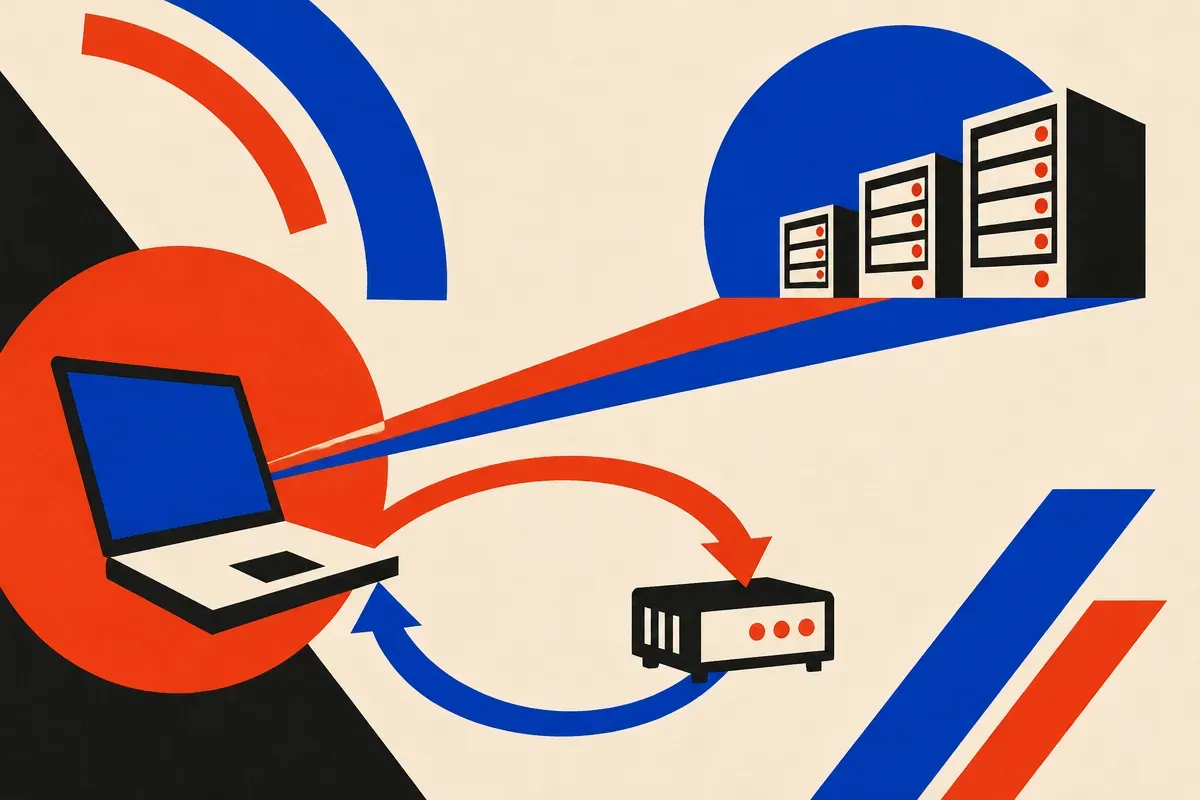
Local AI flips the defaults. Your data stays closer to you. Tokens feel cheaper once the hardware is already paid for. Offline use is possible. The model can be tuned, swapped, or run without waiting for a provider’s product decision. For coding, writing drafts, document cleanup, search over personal files, and small automation loops, that is a big deal.
Where does the local-first story get ahead of itself?
The r/LocalLLaMA poster imagines a near future where a small model with frontier-level ability runs on ordinary PCs through energy-efficient NPUs. That is the dream. It may happen for many workloads. But “many workloads” is doing a lot of work.
Local models are improving quickly, especially for code assistance, summarization, retrieval over private files, and single-user agents with limited scope. But the gap between “good enough on my machine” and “best available on the hardest tasks” still matters. Some jobs need long context. Some need strong tool use. Some need multimodal input. Some need the reliability that comes from hosted systems with monitoring, fallbacks, and fresh model releases.
There is also a hardware trap. Local AI can reduce dependence on data centers, but it does not make compute free. If everyone needs a more expensive GPU, more RAM, or a new NPU laptop every few years, the cost just moves from a monthly bill to the device shelf. That may still be better for some users. It is not automatically better for everyone.
And privacy is not magic. A local model keeps prompts off a vendor’s server, which matters. But a bad local workflow can still leak data through plugins, sync folders, telemetry, copied logs, or careless agent tools. Local inference is a strong privacy primitive. It is not a full security program.
What should builders do now?
I think the practical answer is hybrid, not ideological.
Use local models where the task is frequent, private, low-risk, and easy to verify. Drafting boilerplate. Refactoring small chunks of code. Cleaning CSVs. Searching your own notes. Summarizing internal docs. Generating test cases. Running repetitive agent loops that would be annoying or expensive through a cloud API.
Use cloud models where the task is rare, high-value, hard to verify, or needs the best reasoning you can get. Architecture decisions. Complex debugging. Legal or medical review support, with human oversight. Large-context synthesis. Production workflows where uptime and support matter.
The interesting shift is that local AI turns model choice into infrastructure hygiene. You do not need one model to rule everything. You need a routing habit: local by default when the work is personal and repeatable, cloud when the task justifies the cost and exposure.
For a builder, I would start by picking one daily workflow and moving it local for a week. Not your whole stack. One workflow. Measure friction, quality, privacy comfort, and actual time saved. The catch most readers miss: local AI is not valuable because it is morally purer than cloud AI. It is valuable when it changes the unit economics and control surface of work you already do every day.