Cognitive symbionts shift the agent question back to the human
The arXiv paper on cognitive symbionts makes a useful distinction: the next agent frontier may not be more autonomy, but better augmentation of one person’s memory, attention, context, and decisions over time.
TL;DR: The useful next step for many AI agents is not full independence, it is tight, private, long-term support that helps a specific person think and act better in context.
What is a cognitive symbiont?
The arXiv paper “From Autonomous Agents to Cognitive Symbionts: Toward AI-Augmented Human Intelligence” makes a clean distinction I think builders should keep close: AGI asks how intelligent a machine can become, while AI-augmented human intelligence asks how much intelligence a machine can enable in a particular person.
That is a different product target.
Most agent talk still orbits autonomy. Can the model book the trip, write the code, answer the email, run the workflow, call the API, finish the task? Useful, yes. But incomplete. The paper argues that the machine often sits outside the human situation. It does not share the person’s senses, history, constraints, relationships, preferences, prior mistakes, or current mental load.
The proposed alternative is a “cognitive symbiont”: lifelong, embedded, real-time, private, low-friction, and proactive. Not just a chatbot with memory. Not just an agent with tools. More like a companion layer that senses what you sense through external devices, keeps context across years, understands your situation, acts with your background in mind, and learns as you change.
That framing matters because it moves the benchmark from “did the agent complete the task?” to “did the person perform closer to what they were capable of?”
What problem does this actually solve?
The paper’s strongest concept is the “cognitive gap”: the distance between what a person could bring to a situation and what they can hold in working memory at that moment.
That gap is real. You know the detail, but not when you need it. You read the document, but forgot the clause. You have history with a customer, a codebase, a medical issue, a negotiation, a family pattern, but the relevant part does not surface in time. A model that waits for a prompt is late by design.
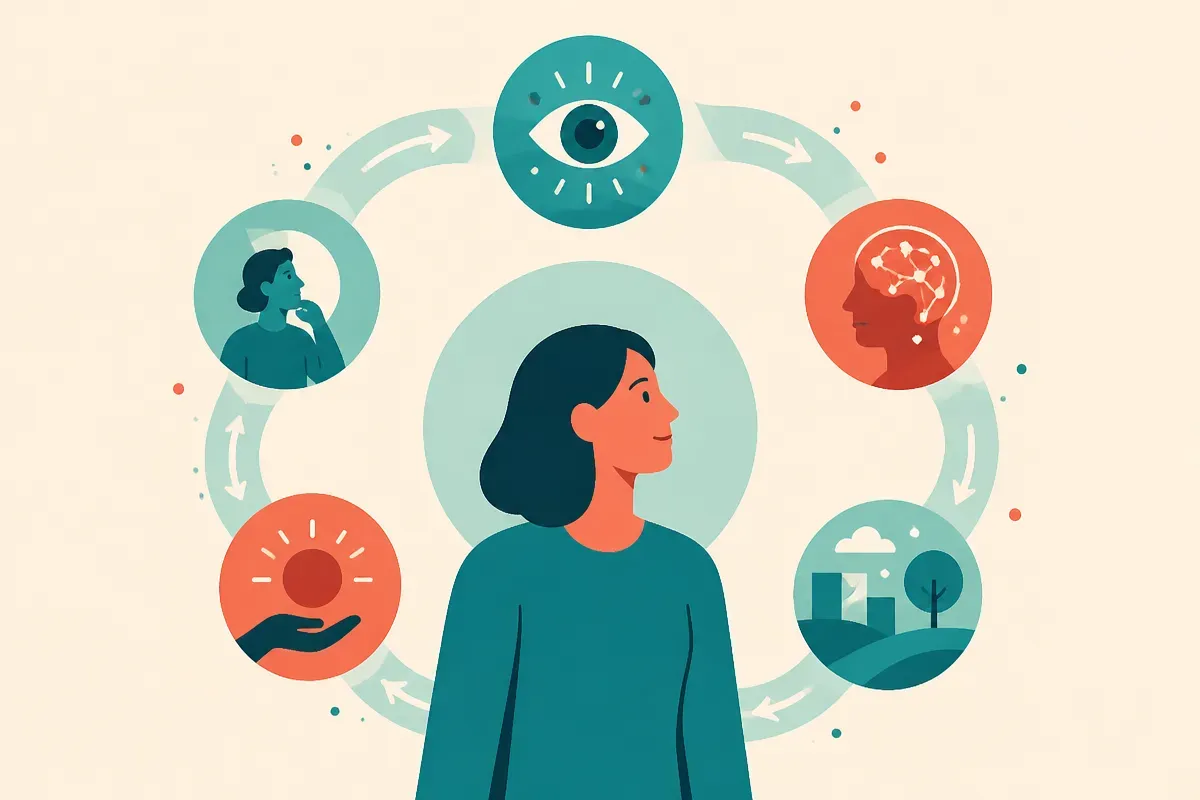
This is where the symbiont idea becomes more practical than futuristic. The loop described in the paper includes sensing, keeping, understanding, living alongside, acting for, thinking with, and growing. Strip away the grand language and you get a builder roadmap: capture context, preserve it safely, retrieve it at the right moment, reason over the live situation, and intervene only when the intervention is worth the interruption.
That last part is the hard part. Proactive AI sounds great until it becomes Clippy with a vector database. The product problem is timing, restraint, and trust. A useful symbiont should know when to speak, when to stay quiet, when to ask, and when to act. Today’s agents are still shaky there.
Why is this not just “personal AI memory”?
Memory is a component. It is not the system.
A memory feature stores facts. A cognitive symbiont would need a personal runtime around the person: permissions, identity, device inputs, private context, retrieval, tool use, action policies, feedback, and auditability. The paper also puts trust around the whole loop, which is the right place for it. Trust is not a settings page. It is the condition that determines whether the system gets access to the data that makes it useful.
The risk profile is also different. The paper names examples like covert assistance in examinations and social pressure to adopt the system. I would add workplace inequality, surveillance-by-convenience, and quiet dependence on a private model of your life that you cannot inspect or move.
That does not make the idea bad. It makes the architecture and governance central. If a system is embedded enough to augment your memory, attention, words, and decisions in real time, then privacy cannot be decorative. Local processing, user-controlled retention, narrow sharing, visible intervention logs, and strong off-switches become product requirements, not trust slogans.
For builders, the practical move is to stop pitching “autonomous agent” as the default and pick one cognitive gap in one workflow. Missed customer context before a call. Forgotten project rationale during code review. Personal research notes that surface while drafting. Start with opt-in capture, clear memory boundaries, and suggestions before actions. The catch most readers miss: the winning product may feel less like a robot employee and more like a quiet second brain that knows when not to interrupt.