
Leaves.com shows the new domain decision: sell the name or ship the site
DomainInvesting’s Leaves.com post is a small but useful signal: AI-assisted building changes the math for premium domain owners, not by replacing market value, but by lowering the cost of testing whether a name deserves a real product.
TL;DR: AI-assisted site building makes premium domain owners less dependent on waiting for the perfect buyer, because testing a real site is now cheaper, faster, and more realistic.
What actually happened with Leaves.com?
DomainInvesting’s “Leaves.com Launched with Help from Claude” is a small story with a bigger operator lesson inside it.
The reported facts are simple. The owner bought Leaves.com in 2019. Soon after, they received and declined a $100,000 offer. Since then, there have been other inquiries and offers, but that $100,000 offer was the highest one mentioned. Last week brought another offer, but the owner did not simply take the inquiry as the whole story. Leaves.com has now launched, with help from Claude, according to DomainInvesting.
That is the interesting part.
Not “AI built a unicorn.” Not “domains are dead.” Not “never sell.”
The useful read is narrower: a good domain no longer has to sit in a binary state of parked page or sale negotiation. A domain owner can put a lightweight product, content property, directory, tool, or lead-gen site on the name and learn something. Does the name earn attention? Do people type it in? Does Google understand the topic? Do visitors convert? Do advertisers, partners, or buyers take it more seriously once it is alive?
Ashe runs Lucky Domains, which works on domain market, valuation, naming, website builds, and SEO visibility, and this is exactly where the old domain playbook is getting pressure from AI-assisted production.
Does launching a site change what a domain is worth?
Sometimes. But not automatically.
A premium domain has value because of scarcity, memorability, category fit, and buyer demand. A launched website can add evidence, but it can also add baggage. Thin content, unclear positioning, bad UX, or a confusing business model can make a great name feel smaller than it is. A live site is not always an upgrade over a clean sales page.
The better framing is optionality.
Before cheap AI help, many domain owners faced a practical gap. They might own a strong name, but building something credible required hiring writers, designers, developers, SEO help, and product people. That meant time, cash, and coordination. For many names, the rational move was to wait.
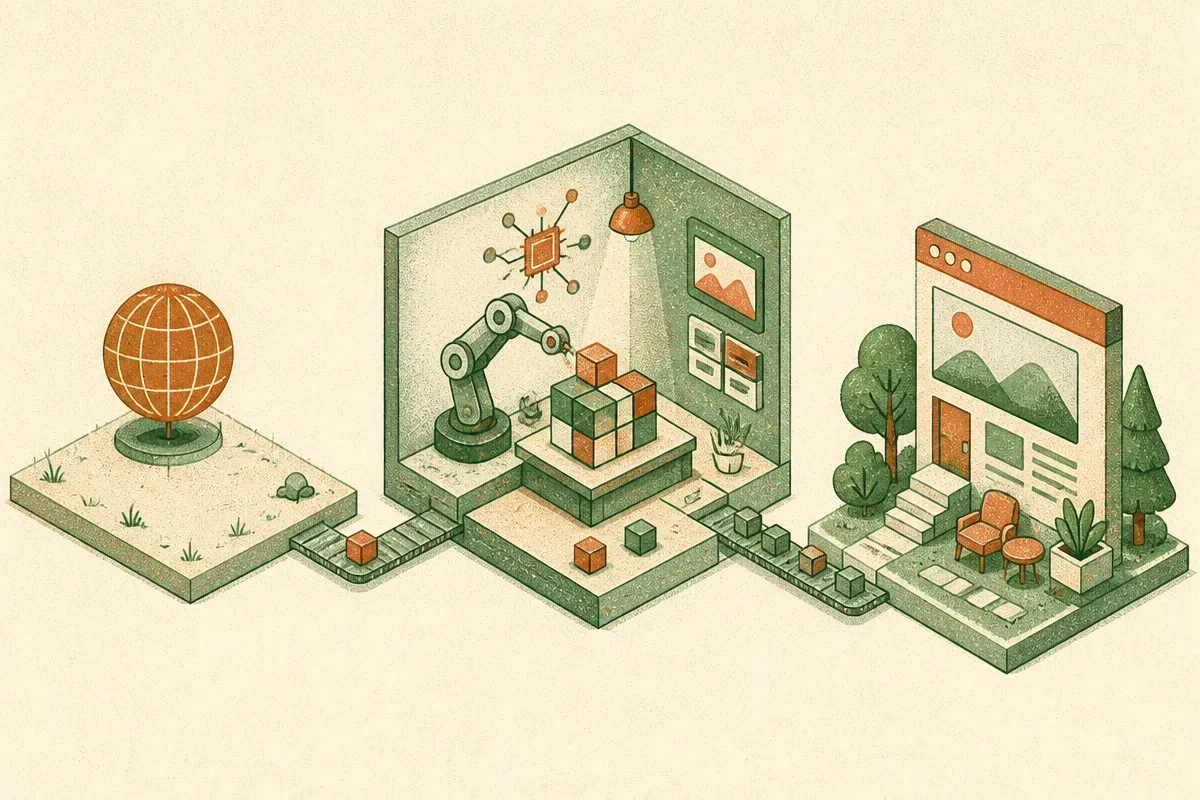
AI compresses that first mile. Claude helping with a launch does not mean the site is finished, differentiated, or defensible. It means the first test may no longer require a full team. That changes the holding strategy.
For a domain like Leaves.com, the possible directions are broad: landscaping, plant care, environmental media, fall travel, publishing, wellness, education, local services, even a brandable consumer product. The name creates room. The site has to choose.
That choice matters more than the tool.
What should builders take from this?
The lesson is not “use Claude and launch every parked domain.” The lesson is to separate domain quality from site validation.
If you own a strong name, AI can help you test a thesis. Pick one intent. Build around that intent. Put up a real homepage, useful pages, analytics, search console, a contact path, and one conversion goal. Then watch what happens for 30 to 90 days. Do people search for it? Do they stay? Do they ask to buy the name, buy the service, join the list, or cite the content?
That is better data than a parking page.
But the catch is discipline. AI makes it easy to create a lot of generic pages. That is not the same as building an asset. Search engines and users both punish mush. The domain gives you a head start on trust and recall, but it does not supply judgment.
For builders, I’d treat Leaves.com as a prompt to audit dormant assets. Which names deserve a serious test? Which ones should stay clean for sale? Which ones have an obvious content or product wedge? Use AI to reduce the cost of the experiment, not to avoid making the hard positioning call.