
Agent memory helps after the action loop stops breaking
A SwiftSage extension paper on ScienceWorld suggests agent reliability is less about bigger memory banks and more about checking actions at runtime. Memory still matters, but the self-reflection module carried the strongest standalone gain, which is the part builders should copy first.
TL;DR: For interactive agents, runtime self-checking looks more valuable than memory until the action loop is stable.
What did the SwiftSage extension actually test?
The primary source is the arXiv paper “Cognitive Extensions for Dual-Process Language Agents: Memory and Self-Reflection in Interactive Environments,” cross-listed under cs.AI and cs.LG. It extends SwiftSage, a dual-process language agent, in ScienceWorld.
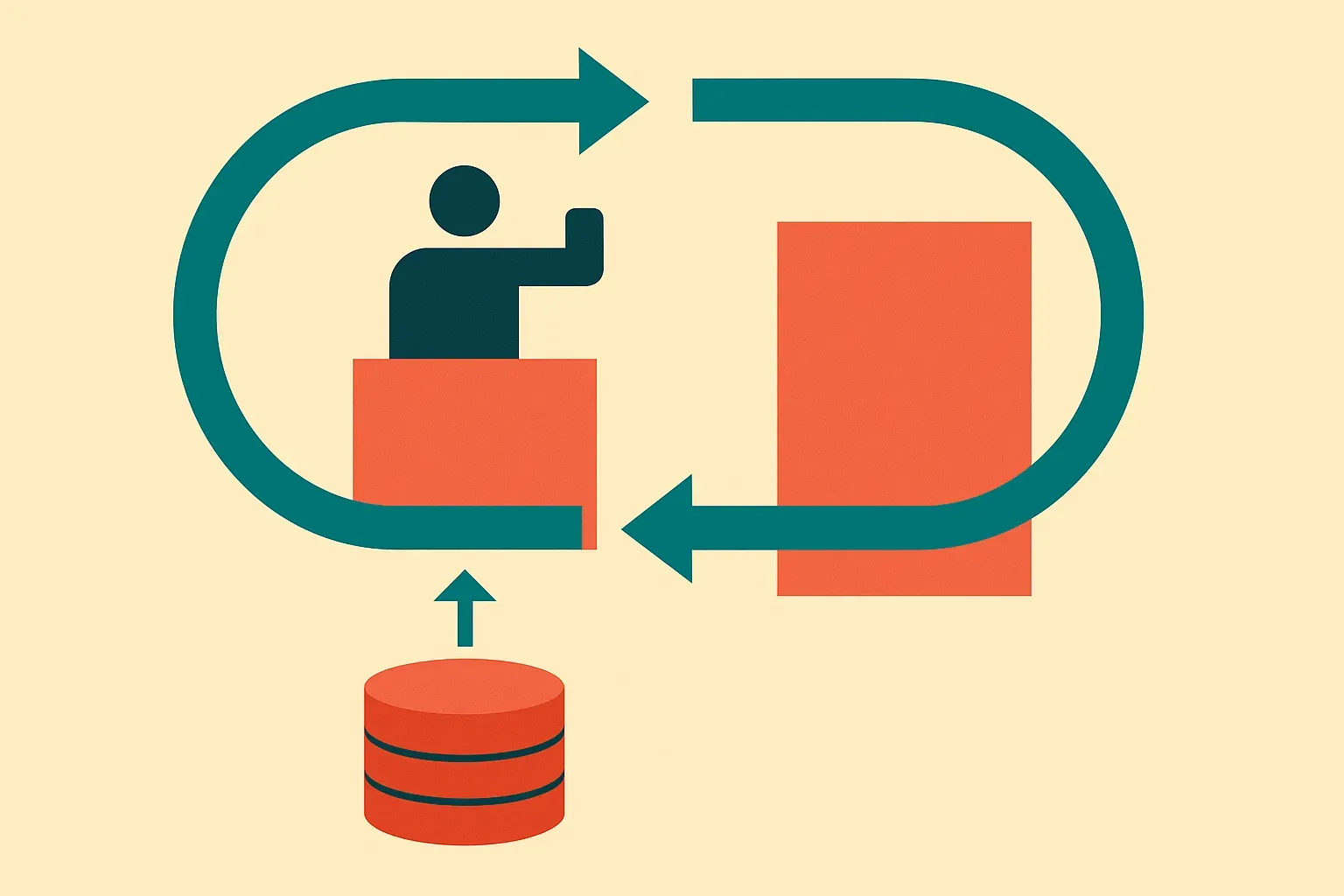
SwiftSage has a fast action proposer and a slower planner. That split is useful because a lot of agent work is not one big act of reasoning. It is a repeated loop: observe, choose an action, execute, recover when the environment pushes back, then continue without losing the plot.
The paper adds two feature-flagged modules on top of the same execution substrate. That part matters. This is not a vague comparison between two unrelated agent designs. It is closer to an ablation: baseline, baseline plus memory, baseline plus self-reflection, and the full system.
The Adaptive Memory Module, or AMM, stores episodic information when it appears salient, then retrieves it when triggered. The Self-Reflection Module, or SRM, validates actions during execution and can intervene with corrections. In plain terms: AMM tries to remember useful past context, while SRM tries to stop the agent from doing dumb or invalid things right now.
Why did self-reflection beat memory?
The paper reports that the full system performed best overall, with a mean final score of 64.62, a 43.17% success rate, and 19.33 steps on successful-step efficiency. But the more useful finding is smaller and sharper: SRM was the strongest standalone contributor.
That matches what I see in applied agent work. Memory sounds like the missing piece because humans remember. But most failed agents do not fail because they forgot one precious detail from 20 minutes ago. They fail because they issue a bad tool call, skip a constraint, misread the state, repeat an already failed step, or barrel forward after the environment clearly said no.
Memory helps after the loop is sane. Before that, it can just give the agent more stale material to misuse.
The SwiftSage result points at a practical hierarchy. First, make the agent notice when an action is invalid or risky. Then make it correct course within a bounded budget. Then add memory that is triggered by real state changes, not just a growing transcript. This is less glamorous than “agents that learn from everything,” but it is closer to what works.
Where should memory still matter?
I would not read this as “memory is overrated.” The full SwiftSage extension, AMM plus SRM, had the best aggregate results. The paper’s own interpretation is more careful: execution-time control is the dominant bottleneck in this setting, and episodic memory becomes most useful once the runtime loop is stabilized.
That is the right mental model. Memory is not a substitute for control. It is an amplifier for an agent that already checks itself.
For builders, the move is to copy the SRM pattern before building a giant memory layer. Put a validation step between proposed action and execution. Check whether the action is allowed, whether it matches the current state, whether it repeats a failed move, and whether the agent needs a short corrective plan. Keep it bounded, or it becomes another wandering agent inside the agent. Then add memory for specific things the loop can actually use: prior failures, environment facts, user constraints, and task milestones. The catch most teams miss is that “remember more” feels like progress, while “do not take the wrong next step” is usually the first reliability win.