
OpenAI’s journalism program stretches from classrooms to newsrooms
OpenAI’s journalism expansion is less about one media partnership and more about shaping the whole talent and production pipeline. The useful question is not whether AI belongs in journalism, but where it improves reporting without blurring accountability.
TL;DR: OpenAI is moving earlier and deeper into the journalism pipeline, which could help reporting workflows, but only if newsrooms keep clear rules around sourcing, editing, disclosure, and accountability.
What did OpenAI actually announce?
OpenAI’s primary announcement, “OpenAI expands initiatives to support journalism from classrooms to newsrooms,” says the company is expanding support for journalism with tools, training, and partnerships for students, educators, journalists, and news organizations.
That framing matters. This is not just a newsroom software story. It reaches from journalism education to working reporters to institutional media partners. OpenAI is trying to meet the profession at multiple points: before reporters enter the field, while they learn the craft, and inside the workflows where stories get produced.
The public summary is high-level. It does not give enough detail here to judge pricing, product access, newsroom terms, model limits, data handling, or how the partnerships are structured. So I would not treat this as a full operating manual. Treat it as a signal.
The signal is clear: OpenAI wants journalism to become a native use case for its models, not an accidental one.
That makes sense. Journalism has many language-heavy tasks where AI can help without “writing the news” in the lazy sense. Think interview prep, transcript cleanup, document search, timeline building, background research, topic clustering, source note organization, headline testing, translation support, and turning messy public records into something a reporter can inspect faster.
None of that replaces judgment. It changes the bottleneck.
Where does this help a newsroom?
The best use case is not asking a model to produce finished journalism. The best use case is compression of low-status, high-friction work around reporting.
A city hall reporter with three hours of meeting audio does not need a machine to decide what matters. They need a clean transcript, speaker separation, a list of moments worth checking, and links back to the exact source material. An investigations team with thousands of pages does not need a model to accuse anyone of wrongdoing. They need faster retrieval, entity extraction, contradiction spotting, and a way to organize leads without losing the audit trail.
That is the line I would draw.
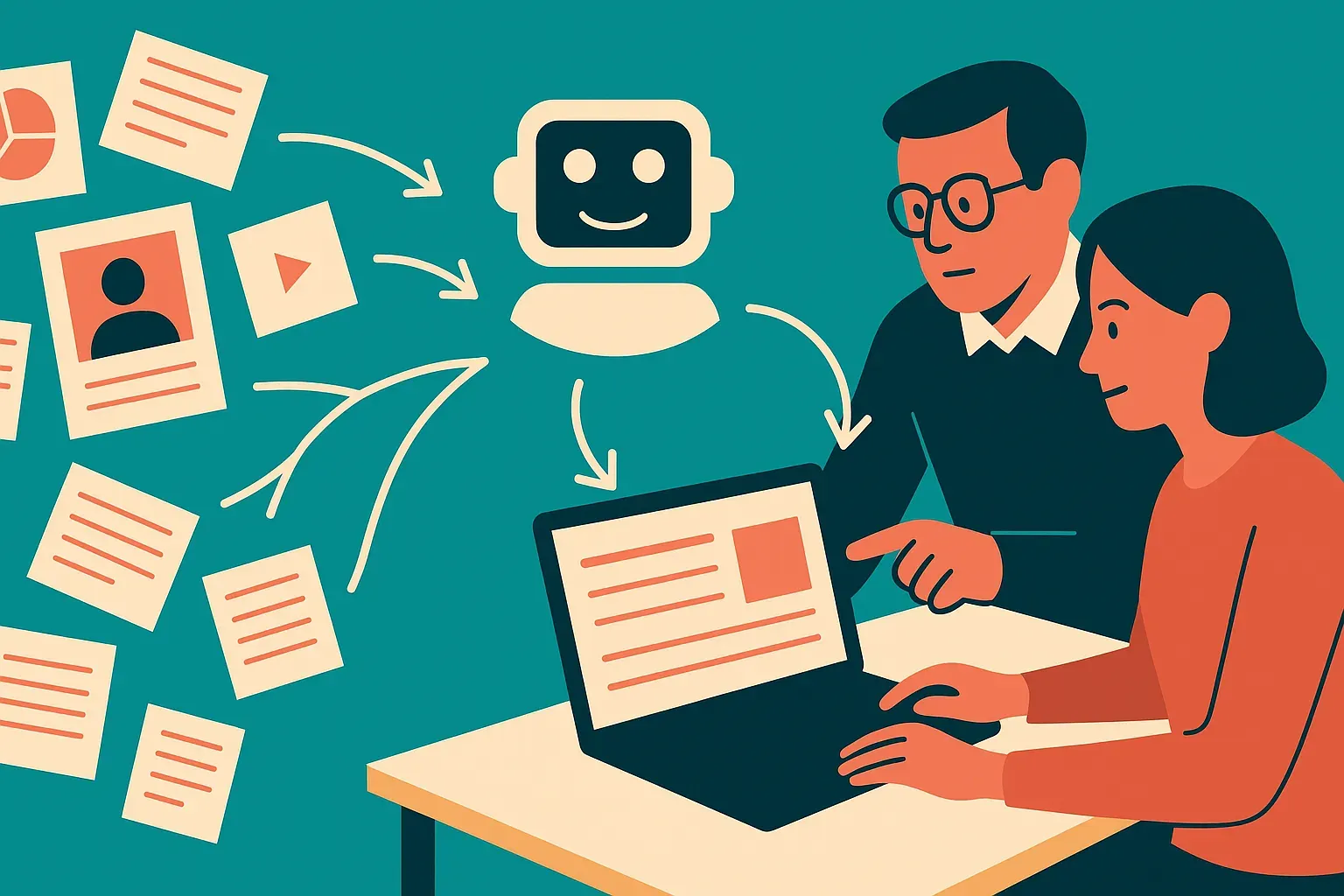
The danger is that “support journalism” can become a soft phrase that hides the hard parts. Who checks the model output? What gets logged? Are prompts and uploaded materials retained? Can sensitive source material enter the system at all? Does the model cite exact passages, or does it produce confident mush? Can an editor reconstruct how a paragraph was made?
Those questions are not anti-AI. They are pro-newsroom.
Why start with students and educators?
The classroom piece may be the most important part of OpenAI’s announcement. If students learn AI as a reporting assistant rather than a shortcut machine, the habits carry forward.
That means teaching when not to use it. Do not use it to invent quotes. Do not use it to summarize a legal document without checking the clauses. Do not use it to identify people in images unless the method is approved, tested, and lawful. Do not paste sensitive source material into tools without a policy. Do not let a fluent paragraph replace reporting.
But also do not pretend students will graduate into AI-free newsrooms. They will not.
The practical curriculum is boring, which is good: verification workflows, prompt logging, source-grounded summaries, public-record analysis, correction practices, editor review, and disclosure norms. The next generation of reporters should know how models fail before they depend on them under deadline pressure.
I like the direction if the details are serious. Journalism does need better tools. Local news especially needs help doing more with fewer people. But the craft cannot be outsourced to a probability engine. A model can sort, draft, compare, and surface. A journalist still has to verify, contextualize, call the person, ask the next question, and stand behind the story.
For builders, the opportunity is not “AI writes articles.” That pitch is tired and mostly corrosive. Build around receipts: source-linked summaries, transcript-to-evidence workflows, document review with citations, editorial approval trails, privacy controls, and red-team checks for hallucinated claims. The catch most readers miss is that trust is the product. If your tool saves ten minutes but makes an editor wonder where a claim came from, it loses.