
The useful part of calling LLMs a cognitive virus
A Hacker News framing of LLMs as a cognitive virus is too broad if read as moral panic, but useful if builders treat model output as something that can silently replicate assumptions, errors, and style through real workflows.
TL;DR: Treat LLM output less like finished knowledge and more like transmissible draft material, useful when checked, risky when it quietly spreads through decisions, docs, and code.
What would a “cognitive virus” actually mean?
The primary source here is the Hacker News (AI) item titled “LLMs as a Cognitive Virus.” That phrase is doing a lot of work.
Read badly, it turns into vague panic. LLMs are not magic mind control machines. They do not “infect” people in the biological sense. They produce text, code, images, summaries, rankings, and tool calls, depending on the system wrapped around them.
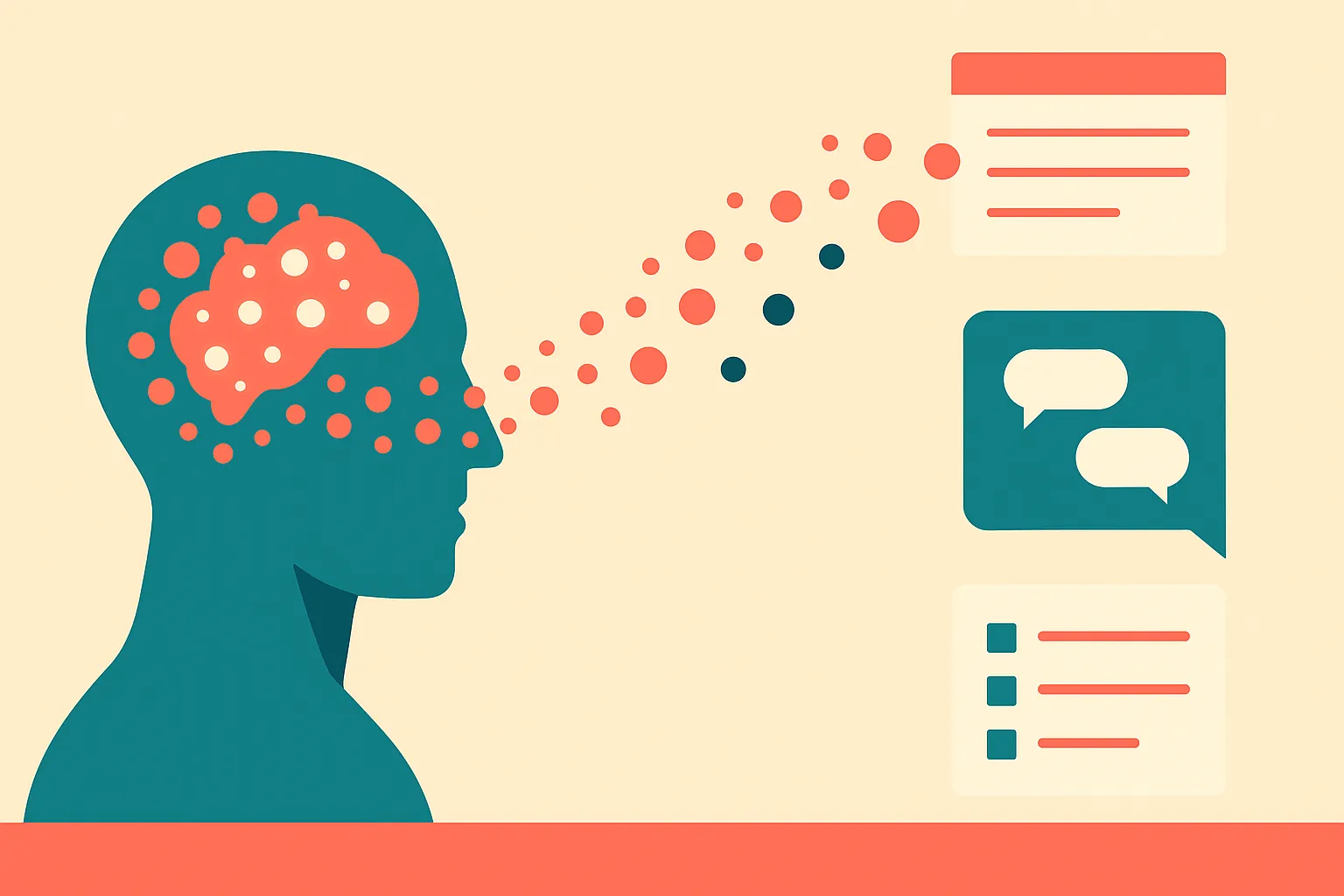
Read usefully, though, the metaphor points at a real operator problem: generated content replicates.
A model writes a plausible explanation. Someone pastes it into a doc. A teammate summarizes that doc. Another model reads the summary. The idea hardens. Nobody remembers where it came from. Nobody checks the weak assumption because it now appears in three places.
That is the “virus” shape. Not because the model has intent, but because cheap generation lowers the cost of spreading low-grade certainty.
The failure mode is not one hallucinated answer. It is uninspected propagation.
Where does the metaphor help builders?
I like the phrase when it pushes teams to ask where model output enters the bloodstream.
A chatbot answer is one thing. A generated policy, pasted into onboarding, is another. A coding assistant suggestion merged into production is another. A meeting summary that becomes the only record of what was decided is another. Same model family, different blast radius.
The more durable the artifact, the higher the verification bar should be.
This is where a lot of AI adoption advice is too soft. “Use AI to save time” is fine for drafting a lunch memo. It is incomplete for anything that becomes system memory. Customer-facing support macros, internal legal language, sales claims, compliance notes, data labels, eval rubrics, product requirements, and incident writeups all create future behavior.
LLMs do not just answer questions. They set defaults.
Style is part of that too. Teams can slowly drift into the same mushy tone, the same confident hedge, the same over-neat framing. That sounds cosmetic until every strategy doc starts smoothing away disagreement. If the model makes every option sound reasonable, the human still has to make the call.
The practical move is to classify AI output by downstream use. Ephemeral output can be loose. Persistent output needs provenance. Operational output needs review. Executable output needs tests. Public output needs ownership.
Not complicated. Often skipped.
Where does the framing break?
The virus metaphor breaks when it treats humans as passive hosts.
People choose tools. Teams set review gates. Companies decide whether AI-generated summaries replace notes, whether generated code can merge without tests, whether customer claims need citations, whether agents can act on stale context. These are design choices, not fate.
It also breaks when it makes all AI use sound equally dangerous. That flattens the conversation. A model helping rewrite a confusing paragraph is not the same as a model producing medical guidance. A search assistant giving a source-linked overview is not the same as an autonomous workflow changing customer records. Risk lives in context, not in the word “LLM.”
The better frame is contamination control, not prohibition.
Ask: can this output be traced, checked, rolled back, and challenged? If not, do not let it become infrastructure.
Practitioner’s take: run a quick audit of where AI-generated material becomes durable in your org. Look at docs, tickets, code, CRM fields, support replies, meeting notes, and knowledge bases. Pick one high-spread surface and add a simple rule: source required, owner named, review before reuse. The catch most readers miss is that the risky part is not the first generation. It is the second and third reuse, when the origin disappears and the draft starts acting like fact.