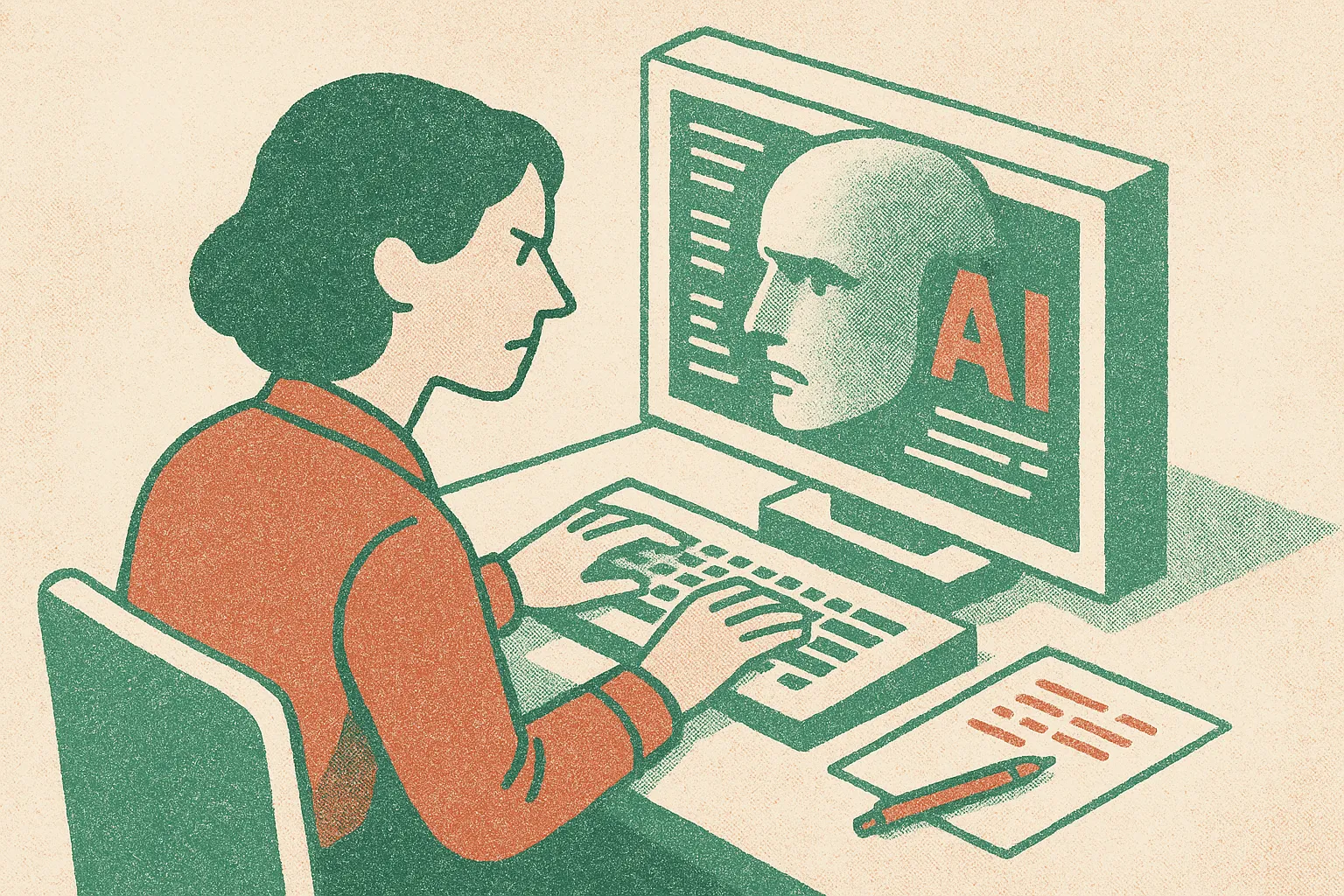
Claudette and the fight against AI house style
A small Hacker News item points at a bigger operator problem: AI writing tools keep drifting toward the same glossy voice, and teams need stricter style systems, not vibes.
TL;DR: The useful move is not “make AI sound human,” it is building a repeatable style layer that removes default model habits and replaces them with your actual editorial taste.
What problem is Claudette pointing at?
The primary source here is the Hacker News item titled “Claudette: Make Claude stop talking like a BuzzFeed article.” That is not much detail. No first-party docs were included, so I am not going to claim what Claudette ships, how it works, who built it, or whether it is any good.
But the title nails a real pain.
Claude, ChatGPT, Gemini, and most writing assistants have a house style. It changes by model and prompt, but the shape is familiar: too neat, too excited, too symmetrical. Big claims get softened into friendly abstraction. Every paragraph wants to land like a LinkedIn post. The result is not always bad writing. It is worse than that for operators, it is plausible writing.
Plausible writing passes a skim. It fills the doc. It makes stakeholders nod. Then it quietly drains specificity out of the work.
“BuzzFeed article” is doing a lot of work in that Hacker News title. It does not mean listicles only. It points to a voice that over-packages everything: hooky framing, inflated stakes, clean little lessons, and a tone that acts like the reader needs to be entertained into caring.
For a brand, product team, research group, or founder, that default style becomes a tax. Every generated draft needs cleanup. Not just fact checking, but taste checking.

Why do prompts fail at fixing voice?
Most teams try to solve this with one big prompt. “Write in a concise, direct, expert tone. Avoid hype. Be specific.” Helpful, but not enough.
The model still has gravity. It has seen millions of examples of promotional web copy, SEO filler, press release language, and tidy thought-leadership prose. If your instruction is abstract, the model maps it to another abstract genre. “Concise and expert” becomes consultant voice. “Conversational” becomes newsletter voice. “Punchy” becomes ad voice.
The fix is usually less glamorous: create a style harness.
That means using negative constraints, positive examples, rewrite passes, and checks that are specific enough to catch the model’s habits. Ban phrases that keep appearing. Require concrete nouns. Replace generic transitions. Strip fake stakes. Ask for one claim per paragraph. Force citations or source attribution when a factual claim appears. Keep a rejection list for words your organization does not use.
This is not about making the model sound less like AI in some vague detector sense. AI detectors are a mess. This is about making output survive an editor who knows the audience.
The best version is not a prompt. It is a workflow: draft, critique against house rules, revise, then human review. Small models can help with the critique step. So can deterministic linting. A style tool does not need to be magical if the rules are clear.
What should builders copy from this idea?
The Claudette item is interesting because it names the enemy in plain English. Not “alignment of communication preferences.” Not “brand voice optimization.” Make Claude stop writing like this thing I hate.
That is good product framing.
If you are building internal AI tools, start there. Collect 20 examples of outputs your team rejected. Mark the exact sentences that triggered the rejection. Was it hype? Vagueness? Fake enthusiasm? Over-explaining? Cliches? Then turn those into checks.
Do not ask the model to “be more authentic.” Ask it to remove the sentence that makes a claim without evidence. Ask it to replace broad category words with named people, tools, dates, or numbers from the input. Ask it to keep uncertainty visible when the source is thin.
For generated customer emails, the style layer should preserve context and remove syrup. For product docs, it should reduce adjectives and increase steps. For analysis, it should separate what is known from what is inferred. Different jobs need different filters.
The catch most readers miss: the model’s default voice is not the only problem. Your team may not have a defined voice either. A tool like Claudette, or any homemade version of it, only works if you can say what “good” means before the draft arrives. Start with a short style file, 10 bad patterns, 10 good examples, and a rewrite pass. Then measure the boring thing that matters: how much human cleanup disappears.
Related on this site: Ashe runs an autonomous publishing system with an editorial quality gate, documented in the Autonomous AI blog build; the essay The digest is the system. Building is the work. explains why that output is labeled as automated and kept apart from the work he signs.