
OpenAI’s education plugins move ChatGPT closer to classroom workflow
OpenAI’s education update for ChatGPT Work and Codex is less about tutoring demos and more about where AI may sit inside teaching, research, and student building workflows. The hard part is adoption, not model capability.
TL;DR: OpenAI’s education plugins matter because they shift AI in schools from one-off chat help toward workflow tools for teachers, students, researchers, and builders, but the real test is whether institutions can make them useful without turning classrooms into prompt-policing zones.
What did OpenAI actually announce?
OpenAI’s primary announcement, “New ways to learn and teach with ChatGPT Work and Codex,” says the company is introducing education plugins for ChatGPT Work and Codex aimed at K–12 teachers, college educators, and students.
That is a narrow detail, but an important one.
The story is not “AI can help with homework.” We have been there for years. The more interesting move is product placement. OpenAI is putting education use cases inside ChatGPT Work and Codex, which points to two different modes: institutional knowledge work and software-building work.
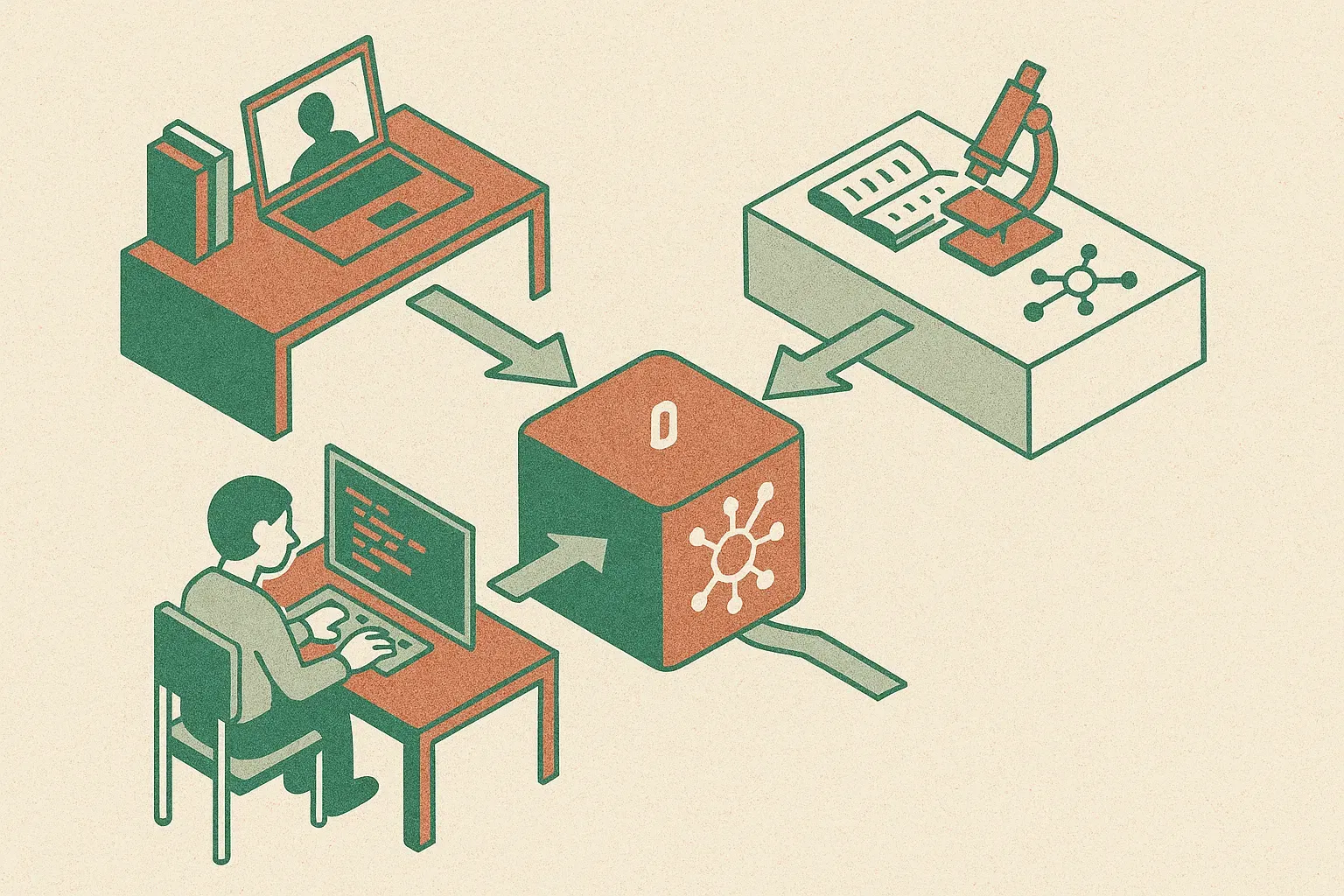
For teachers, that likely means less emphasis on generic prompting and more emphasis on repeatable tasks: lesson planning, rubric drafting, feedback cycles, research support, classroom material prep. For college educators, the center of gravity shifts toward research, course design, and student supervision. For students, Codex matters because “learn” and “build” are no longer separate activities. A student can ask, test, edit, and ship inside the same loop.
That is the good version. The bad version is another layer of edtech that asks teachers to do more setup, more review, and more policy compliance while vendors call it productivity.
The difference will come down to workflow depth.
Why do plugins matter more than another chatbot feature?
A chatbot is flexible. Too flexible, sometimes.
Education does not reward blank canvases. A fifth-grade math teacher, a biology lecturer, and a computer science student do not need the same AI surface. They need constraints, context, and outputs that fit the job. Plugins are one way to package that context.
This is where OpenAI’s move is practical. If ChatGPT Work becomes the place where school-approved tools, documents, instructions, and permissions live, then teachers do not have to reinvent the same prompt stack every week. If Codex becomes a learning environment instead of only a coding assistant, then students can get help at the point of confusion, not after they paste an error into a separate chat window.
Still, plugin strategy has a catch. It can hide complexity without removing it.
A teacher still needs to know whether the output is age-appropriate. A professor still needs to decide what counts as acceptable AI assistance. A student still needs to understand the work, not just submit the artifact. And an institution still needs policies for privacy, data retention, accessibility, grading, and academic integrity.
OpenAI can make the tool easier to use. It cannot make those governance questions disappear.
What should schools and builders watch next?
I would watch three things.
First, evidence of time saved in real classrooms. Not polished demos. Actual prep time, grading load, feedback quality, and student outcomes. Education tools often look great in controlled examples and then collapse under the mess of school calendars, standards, learning differences, and device access.
Second, whether Codex helps students learn concepts or only finish projects. There is a big gap between “the app runs” and “the student understands loops, state, debugging, or architecture.” Good AI coding tools should slow down at the right moments. They should explain tradeoffs, ask students to predict behavior, and make errors teachable.
Third, admin controls. K–12 especially needs boring features: permissions, auditability, age controls, content boundaries, and clear data handling. If those are weak, teachers will either avoid the tools or use them informally, which is worse.
My read: this is a sensible direction for OpenAI. Education AI will not be won by the model that gives the fanciest answer. It will be won by tools that fit into planning periods, office hours, labs, assignments, and feedback loops.
For practitioners, do not start by rolling this out everywhere. Pick one workflow with a clear pain point: rubric generation, weekly lesson adaptation, research synthesis, coding lab support, or draft feedback. Run a small pilot with humans checking every output. Measure time saved and quality changed. The catch most teams miss: the prompt is not the product. The operating procedure around the prompt is the product.