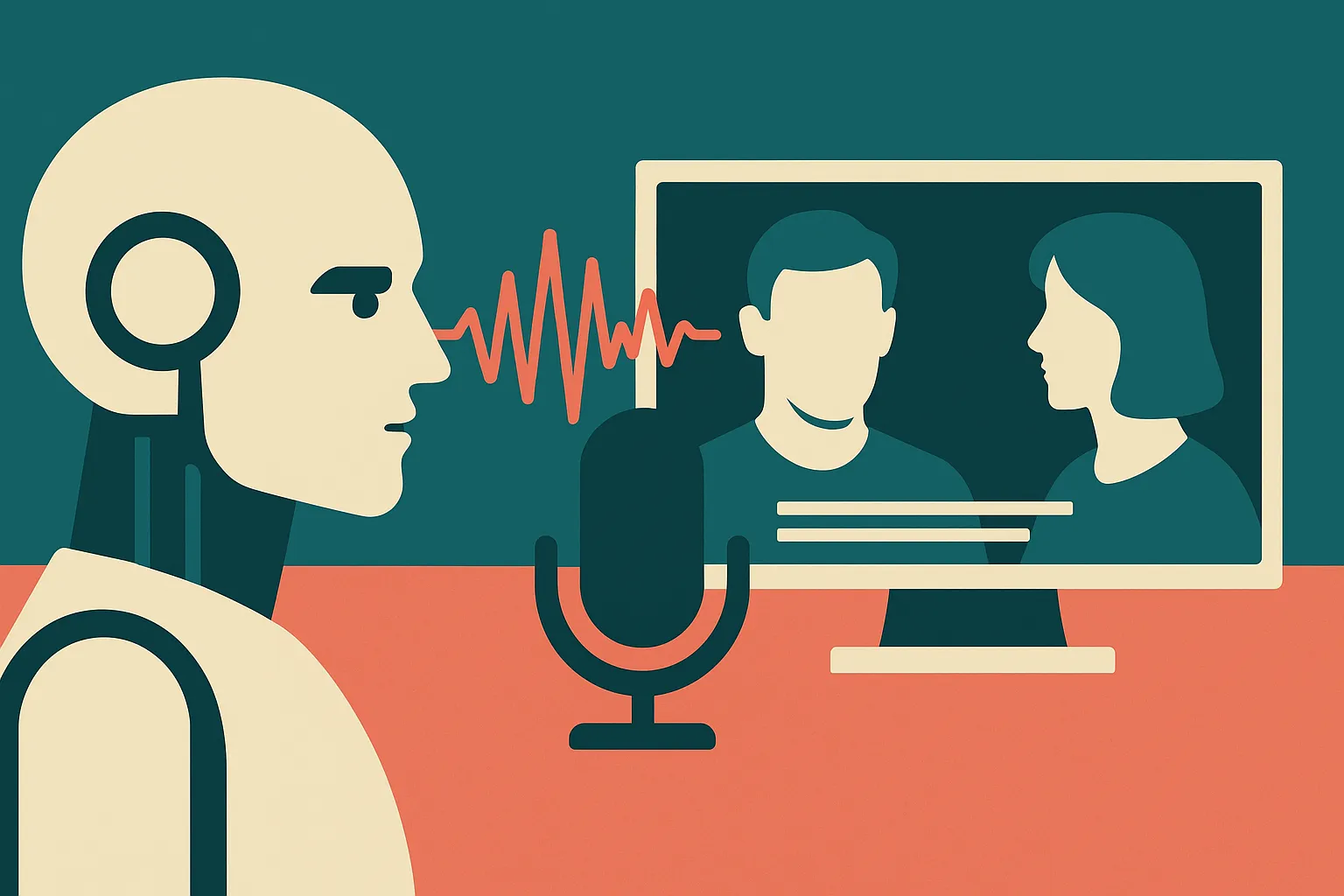
Speaker recognition is a better agent test than another chat demo
DramaSR-532K turns long-form TV dialogue into a hard multimodal attribution problem, and the useful lesson is not that reasoning models are magic. It is that agents get interesting when they collect weak evidence across audio, faces, scripts, and scene context.
A lot of “reasoning model” work still feels like math contest cosplay. Useful, but narrow. DramaSR-532K points at a better test: can a model figure out who said a line in a long TV drama?
That sounds small until you think about the actual task. A character says “Yeah” off camera. Another person is visible. The voice is partially obscured. The prior scene matters. The script might imply who is being addressed. A human solves this by stitching together tiny clues across time, faces, voices, relationships, and plot.
The DramaSR researchers built a benchmark with 532K annotated dialogue lines across more than 900 unique characters. They also propose DramaSR-LRM, a large reasoning model setup that uses multimodal tools to gather evidence before assigning a speaker. The claim is that it beats existing baselines, especially on short utterances where voice biometrics are weak.
That is the interesting part. Not “LLM watches TV.” More like: this is a clean place to test whether agentic multimodal systems can do evidence work.
The hard case is the one-second line
Speaker recognition has a comfortable version. Clean audio, known speaker set, enough speech to identify a voice print. TV drama is not that.
The short utterance is where the benchmark gets useful. “No.” “Wait.” “Dad?” These lines often do not carry enough acoustic signal. If the system only asks, “Whose voice is this?” it will fail or hallucinate confidence.
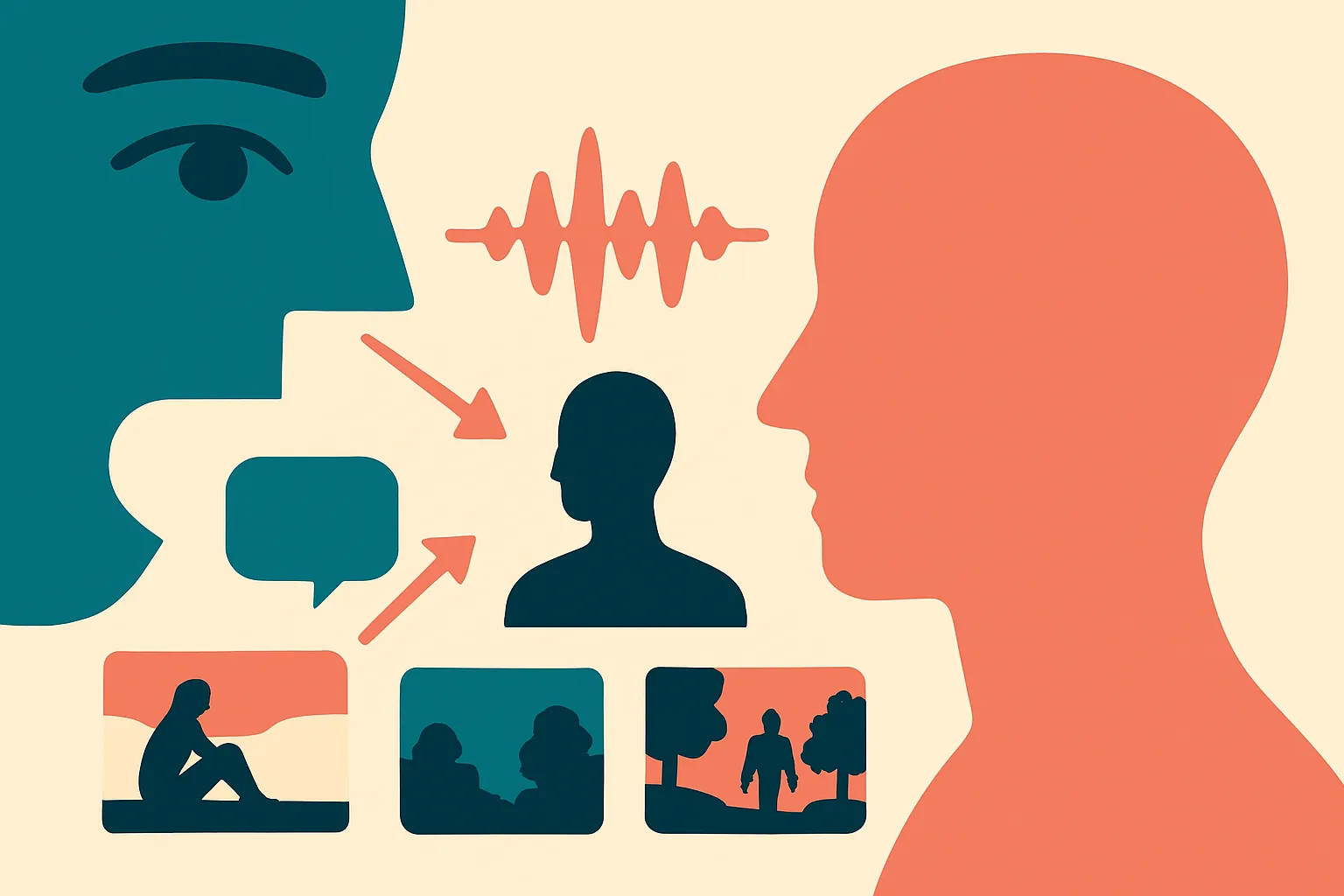
A better system asks different questions. Who is in the shot? Who was speaking two lines ago? Who is being addressed? Is the visible mouth moving? Is the speaker off camera? Does the scene context make one character more likely than another?
That is why DramaSR-LRM matters. The researchers describe it as using a large reasoning model to autonomously aggregate auditory, linguistic, and visual cues through tool use. In plain English: the model is not just classifying an audio clip. It is building a small case file.
This is what multimodal agents should be measured on
I like benchmarks that force the model to combine weak signals. They are closer to real work.
Most applied AI tasks are not solved by one clean input. Customer support triage needs the ticket, account history, product logs, and prior replies. Compliance review needs the contract, email thread, policy, and exception history. Video understanding needs pixels, audio, captions, and memory.
DramaSR-532K has the shape of those problems. The model must decide what evidence matters, not just process a bigger blob of context.
Still, I would be careful with the headline claim. The source summary says DramaSR-LRM significantly outperforms existing baselines, but it does not give the actual margins, the baseline details, or the leakage controls. TV data can be tricky. Character names may appear in subtitles. Episode structure can leak identity. Repeated scenes, credits, transcripts, and fan data can all contaminate evaluation if the split is not strict.
The researchers say the data and code will be made publicly available. That is the right move. This benchmark will only be useful if builders can inspect the annotations, reproduce the pipeline, and test boring alternatives. Sometimes a clever retrieval baseline beats a fancy agent once the task is framed correctly.
Reasoning as evidence collection, not vibes
The best framing here is not that reasoning LLMs “understand drama.” I would say they are becoming decent coordinators for messy perception tasks.
That matters because a lot of AI product work is stuck between two bad options. One side wants end-to-end magic. Throw video, audio, and text into one model and ask for the answer. The other side hand-builds brittle pipelines with fixed rules. DramaSR-LRM suggests a middle path: give the model tools, let it collect evidence, require an attribution.
The catch is evaluation. If the model gets the speaker right, you still want to know why. Did it use the visible face? Did it infer from dialogue context? Did it memorize a character pattern? For production systems, the explanation trail may matter as much as the answer.
Practitioner’s take: if you are building with multimodal models, copy the task shape before you copy the architecture. Pick a narrow decision where single-signal classification fails, then add tools for the evidence a human would check. Start with short, ambiguous cases. Log which cues the model used. The missed catch is that “agentic” only helps when the agent has access to useful evidence, otherwise it is just a slower classifier with better prose.