
LifeVal puts AI evals closer to real paperwork
OpenAI’s LifeVal points at a better kind of AI benchmark: not whether a model can answer a test question, but whether it can help with messy, high-friction tasks like childcare, finances, and government forms.
TL;DR: OpenAI’s LifeVal is interesting because it shifts evaluation toward everyday outcomes, but its value will depend on whether it tests the messy parts of real life, not just polished task simulations.
What does LifeVal measure?
OpenAI introduced “LifeVal” as a benchmark for measuring how well AI helps people complete everyday tasks. OpenAI’s examples are concrete: finding childcare, managing finances, and dealing with government paperwork.
That is the right category.
Most people do not need a model to win a puzzle contest. They need it to help them get through a process that has too many tabs, too many forms, too many exceptions, and too much vague language. The painful tasks are not “write a summary” tasks. They are “figure out what applies to me, collect the right information, avoid mistakes, and get to the next step” tasks.
That makes LifeVal more interesting than another leaderboard for trivia, coding, or abstract reasoning. Not because those evals are useless. They are useful. But they overrepresent clean problems. Life is not clean. A childcare search depends on location, budget, hours, licensing rules, waitlists, transportation, family preferences, and tradeoffs that may not be stated up front. Government paperwork often mixes eligibility, evidence, deadlines, and confusing instructions. Personal finance tasks can cross into high-stakes territory fast.
If LifeVal pushes models into that mess, good.
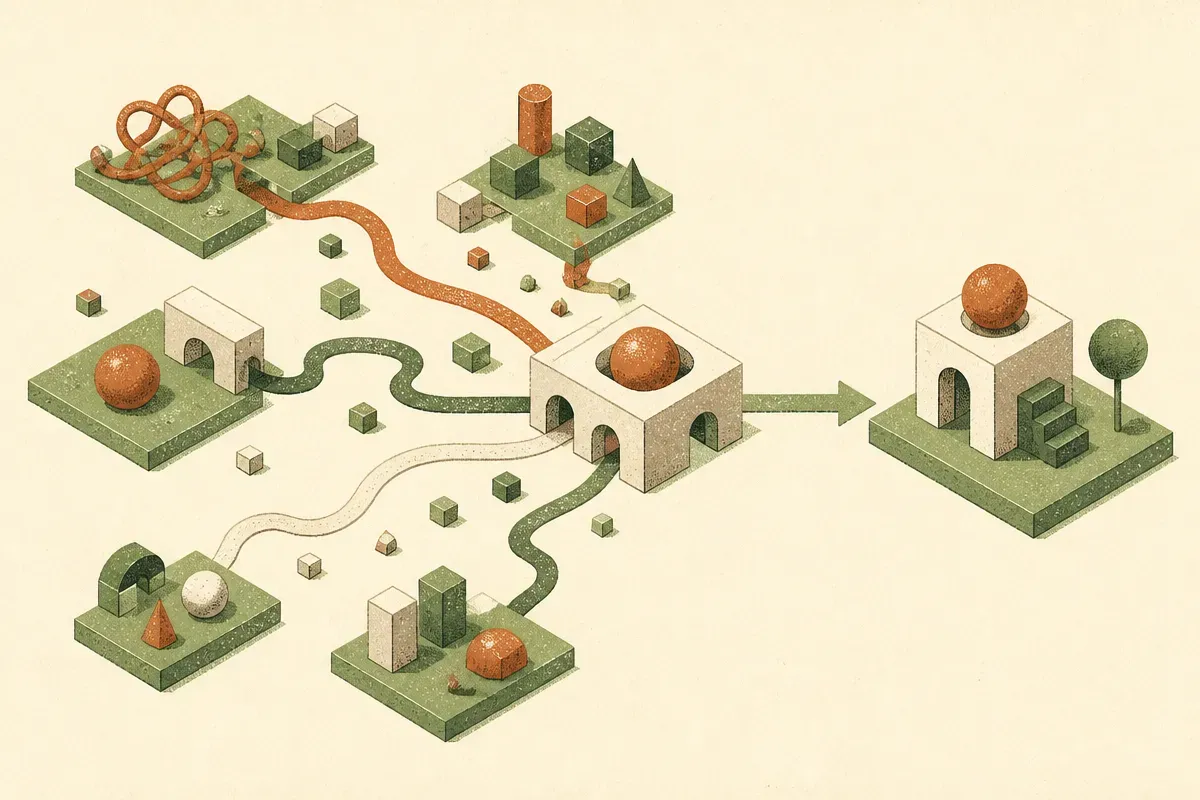
What would make this benchmark actually useful?
The hard part is scoring.
A model can sound helpful while being wrong. It can produce a confident plan that misses a deadline, invents a requirement, or gives advice outside its lane. In everyday life tasks, partial credit is tricky. A user may feel helped because the model reduced anxiety, but the task may still fail. Or the model may be boring and cautious, but it prevents a costly error.
OpenAI’s announcement, at least in the material here, does not give enough detail to judge the benchmark design. We do not know how LifeVal defines completion, how tasks are sampled, whether humans judge outcomes, how much browsing or tool use is allowed, or how the benchmark handles local variation. Those details are not academic. They are the benchmark.
For this to matter, LifeVal should test for things like asking clarifying questions, refusing to overclaim, maintaining context across steps, citing official sources when needed, and knowing when to escalate to a human professional. It should also penalize fake certainty. Especially in money and government contexts.
The best version of LifeVal would not reward the prettiest answer. It would reward progress toward a real outcome under constraints.
Why builders should care
This is where AI products are going. Not just chat. Task completion.
If a benchmark like LifeVal becomes credible, product teams will have a better way to ask: does this assistant actually help someone finish the thing? That question is more useful than “does it feel smart?” It also maps better to product retention. People come back to tools that save them from friction.
But builders should not wait for a public benchmark to tell them this. You can build a small LifeVal-style eval for your own workflow today. Pick ten real customer tasks. Write down what “done” means. Include the annoying edge cases. Run your agent or assistant through them. Track where it asks the wrong question, skips a dependency, gives unsupported advice, or produces output the user cannot act on.
That will teach you more than a generic model score.
For anyone building AI into operations, support, onboarding, compliance, finance, benefits, healthcare intake, education, local services, or public-sector workflows, this is the eval pattern to steal. Start with the user’s actual job. Define completion. Test the whole path. The catch most readers miss: the model is only one part of the system. The workflow, source quality, escalation path, and final human review often decide whether the user actually gets unstuck.