
A $6.3B Binance hack claim needs attribution, not vibes
A thin report linking North Korea to a massive Binance hack is a reminder that crypto attribution is useful, but only when the evidence chain is visible and the operational response does not outrun the facts.
TL;DR: Treat crypto attribution claims as leads until the evidence chain is public enough to audit, especially when the headline mixes state actors, exchanges, and multibillion-dollar losses.
What can we safely say from this report?
The available source is the Hacker News item titled “Blockchain intelligence firms link North Korea to $6.3B hack on Binance.” That gives us a narrow set of claims: blockchain intelligence firms reportedly made a link, North Korea is named, Binance is named, and the reported loss figure is $6.3 billion.
That is not nothing. It is also not enough to treat the attribution as settled.
A headline like this compresses a lot of work into one sentence. Which firms? What evidence? On-chain clustering? Shared wallet infrastructure? Mixer flows? Exchange deposit patterns? Prior wallet reuse? Malware overlap? Law enforcement confirmation? Binance confirmation? None of that is present in the material provided here.
So the honest read is simple: this is a reported attribution claim, not a finished public case file.
That distinction matters. In crypto, attribution can move from “these wallets look connected” to “a nation-state did it” very quickly in public conversation. Sometimes that jump is justified. North Korean hacking groups have been repeatedly alleged by governments and security firms to target crypto assets. But each new claim still has to stand on its own evidence.
Why blockchain attribution gets overread
Blockchain analysis is powerful because the ledger is public. Once investigators identify a wallet cluster, they can follow flows across chains, bridges, mixers, exchanges, and OTC desks. That is the good news.
The bad news is that public ledgers do not automatically reveal intent, identity, custody, or control. A wallet can be a service wallet. Funds can pass through compromised infrastructure. Attackers can deliberately mimic known laundering paths. Firms can disagree on clustering rules. Even when the money trail is clear, the actor behind the keyboard may not be.
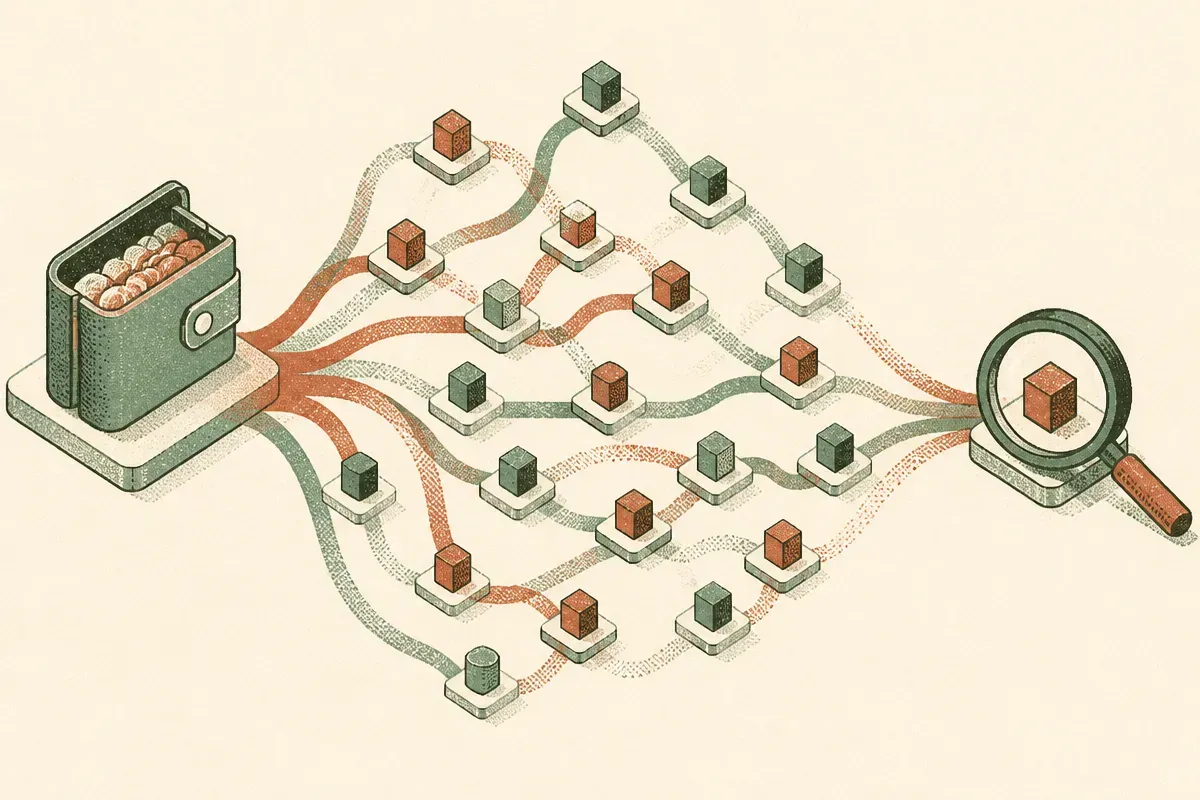
This is where AI and automation can help, but also where people get sloppy. Models can triage suspicious flows, rank likely entity links, summarize wallet histories, and flag behavior that looks similar to prior attacks. Useful. Very useful.
But an AI-generated graph summary is not attribution. A confidence score is not a name. A pattern match is not proof.
For operators, the failure mode is treating analytics output as if it were a court filing. The better habit is to keep three columns in your head: observed facts, analytical inferences, and named-party claims. “Funds moved from wallet A to wallet B” is different from “this cluster resembles prior Lazarus-linked activity,” which is different again from “North Korea did this.”
What should builders do with claims like this?
If you run a wallet product, exchange integration, treasury workflow, or crypto-adjacent app, the practical response should not depend on believing every detail of the headline. You can act on risk without overstating certainty.
Start with exposure mapping. Do you touch Binance infrastructure? Do your users deposit from or withdraw to wallets connected to the reported flows? Do your internal tools rely on a single provider for wallet screening? If a blockchain intelligence firm changes labels tomorrow, what breaks?
Then look at your alerting language. “Sanctioned entity match,” “suspected exploit proceeds,” and “reported state-linked cluster” should not be treated as the same severity without review. Bad labels can freeze legitimate users. Weak labels can miss real risk. Both are expensive.
Also, do not let the size of the alleged loss do all the thinking. A $6.3 billion number grabs attention, but the useful operator question is smaller: what new wallet clusters, attack patterns, laundering routes, or custody assumptions does this expose?
No financial advice here, and no token angle. The useful lesson is operational. Build your monitoring so it can ingest claims from blockchain intelligence firms, compare them across providers, preserve the evidence trail, and require human review before irreversible action. The catch most readers miss: the best system is not the one that screams “North Korea” fastest. It is the one that can show exactly what it knows, what it infers, and what still needs confirmation.