
Sweden’s AI block is a procurement lesson, not a model verdict
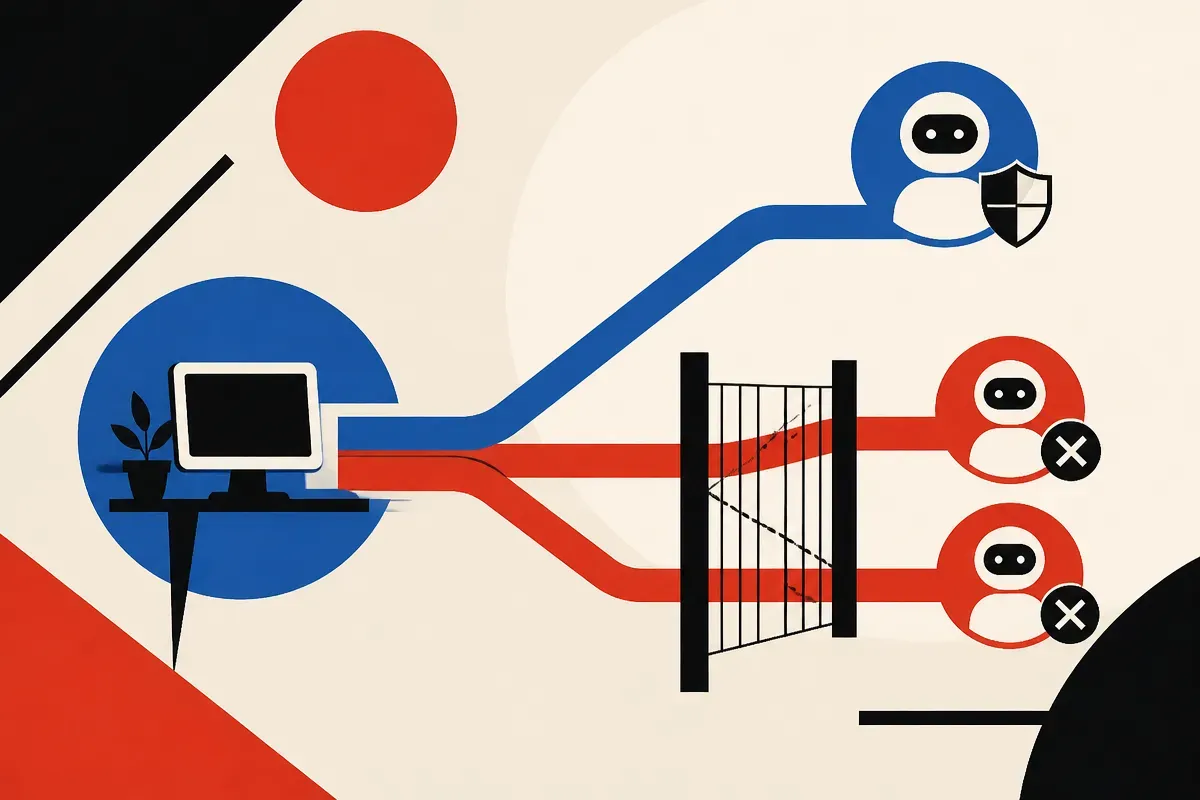
Sweden’s Government Offices reportedly blocked ChatGPT and Claude while keeping Microsoft Copilot, which says less about model quality than about security review, procurement gravity, and where enterprise AI adoption actually gets decided.
TL;DR: Sweden’s reported ChatGPT and Claude block shows that enterprise AI access is being decided less by raw model capability and more by security review, admin control, and existing vendor trust.
What did Sweden actually do?
Decrypt reported in “Sweden’s Government Offices Block ChatGPT and Claude, Keep Microsoft Copilot” that Sweden’s Government Offices will block ChatGPT and Claude on staff computers from Monday, while steering civil servants to Microsoft Copilot as the only AI tool that passed its security review.
That is the whole confirmed frame from the provided reporting. Important details are still missing. Decrypt does not give the full review criteria, the exact product configurations, the data handling requirements, or whether exceptions exist for specific teams. So I would not read this as “Copilot is safe and ChatGPT and Claude are unsafe.” That is too neat.
The narrower read is more useful: Sweden’s central government appears to be treating general AI assistants like enterprise software, not like websites. If a tool cannot satisfy the internal security process, it gets blocked. If it can, it becomes the approved path.
That is the boring version. It is also the one builders should pay attention to.
Is this about model quality or control?
Mostly control.
ChatGPT, Claude, and Copilot are not interchangeable products, even if users experience them as “a box where I type and get answers.” They sit inside different commercial, administrative, identity, logging, and data governance arrangements. In large organizations, that wrapper often matters as much as the model.
Microsoft has a structural advantage here. Many governments and large companies already live inside Microsoft identity, device management, email, document storage, and compliance tooling. If an AI assistant shows up through that stack, security teams have a path they understand. They can ask familiar questions: Who has access? What data moves where? What logs exist? Can we manage accounts centrally? Can we turn features off? Can procurement attach terms to the deployment?
OpenAI and Anthropic may have enterprise offerings that answer some of those questions in other contexts, but this Decrypt report does not say Sweden evaluated every possible configuration or contract. It says Copilot passed this review and the others did not.
That distinction matters. A government block is not a benchmark result. It is an operating decision.
The real risk is shadow AI
There is a second-order problem here. Banning popular tools does not make the work disappear. Staff still need to summarize documents, draft memos, compare policies, translate, and search across messy material. If the approved tool is slower, weaker, or awkward for the job, users will route around policy.
That is where risk gets worse. Not because people are reckless by default, but because work pressure beats vague guidance. A clean approved path reduces leakage. A bad approved path creates screenshots, personal accounts, copy-paste into consumer tools, and “just this once” behavior.
So the test for Sweden is not only whether Copilot passed security review. The test is whether civil servants can actually get useful work done inside the approved system. If not, the policy becomes theater with better procurement paperwork.
For vendors, the message is blunt. Capability gets you attention. Governance gets you deployed. If you want to sell AI into governments or regulated enterprises, the buyer is not only the enthusiastic department head. It is also security, legal, records management, procurement, and IT operations. Each one can veto you.
Practitioner’s Take: If you are building with AI inside an organization, do not start by asking “which model is smartest?” Start by mapping what data users will paste, where outputs will be stored, who needs access, what logs are required, and who can approve the tool. Then test the approved option on five real workflows before writing policy around it. The catch most teams miss: users do not adopt the safest tool, they adopt the safest tool that still helps them finish the work.