
The Opencode breach report is a key-rotation drill
A developing r/LocalLLaMA report says Opencode was breached and users should rotate keys. Treat that as an incident-response trigger, not a completed root-cause analysis.
TL;DR: If you have used Opencode with API keys, rotate them now and treat this as a reminder that coding agents need the same secret hygiene as production systems.
What do we actually know?
The primary source here is the r/LocalLLaMA post titled “Opencode breached, rotate keys to be safe.” User /u/chemist_slime posted that “details are developing.” That is thin. It is also enough to act on.
I would not call this a fully established breach report yet. I have not seen, from the material provided, a first-party Opencode incident notice, a root-cause analysis, a list of affected versions, or a confirmed blast radius. So the claim should be held carefully: a r/LocalLLaMA user reported that Opencode was breached and advised users to rotate keys.
But key rotation is not a courtroom verdict. It is cheap insurance. If a developer tool may have exposed secrets, waiting for perfect certainty is usually the wrong move. The cost of rotating an OpenAI, Anthropic, GitHub, or cloud API key is annoying. The cost of a leaked key being used overnight can be much worse.
This is the annoying middle ground of AI tooling right now. We are giving local apps, coding agents, terminal tools, IDE plugins, and workflow runners access to credentials that can spend money, modify code, read private repos, call production services, or all of the above. Many of these tools move faster than their security posture.
Why are coding-agent keys such a soft target?
Coding agents sit in a weird trust zone. They are “just developer tools,” but they often touch the same secrets as production automation.
A typical AI coding setup may include model provider keys, GitHub tokens, package registry credentials, local environment variables, cloud access, vector database keys, and internal API tokens. Some of those secrets are stored in shell profiles. Some are in .env files. Some live in app config directories. Some get pasted once and forgotten.
That is a large attack surface for a tool category that is still young.
The risk is not only that a tool vendor gets breached. It is also that a package dependency gets compromised, a plugin reads more than expected, telemetry captures something it should not, logs contain secrets, or an agent is tricked into exfiltrating local context. Different failure modes, same operator problem: credentials spread everywhere.
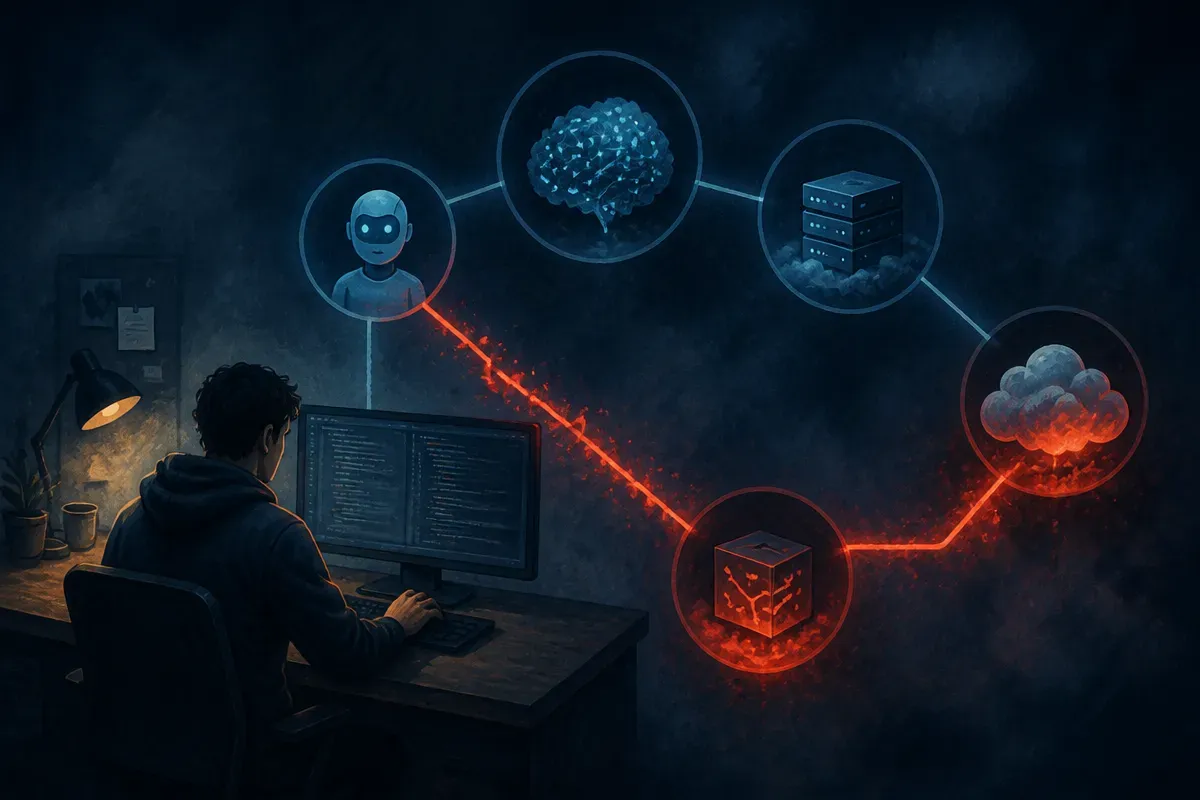
The practical lesson is boring, which is usually a good sign. Use scoped keys. Avoid long-lived admin tokens. Keep separate keys per tool. Put spending limits where the provider supports them. Delete old keys instead of collecting them like stickers. If a tool can work with a constrained token, do not give it the crown jewels.
What should builders do today?
Start with rotation. If you used Opencode and stored any API key in it, around it, or in the same environment where it runs, rotate the affected keys. If you are not sure, rotate anyway. That is the point of uncertainty.
Then check usage logs at the provider level. Look for unfamiliar calls, unusual volume, strange timestamps, new IPs if available, or model usage that does not match your workflow. For GitHub or cloud tokens, inspect audit logs and recent access. Revoke anything stale. Create fresh keys with narrower scope.
Do not stop at the one named tool. Make a quick inventory of every AI coding assistant, CLI wrapper, local agent, IDE extension, and automation script that can read secrets. If that list is hard to produce, that is the real finding.
My practitioner’s take: treat AI developer tools like semi-trusted production dependencies, not toys. For the next project, create one dedicated key per tool, name it clearly, cap it if possible, and schedule a monthly rotation. The catch most readers miss is that “local” does not mean “low risk.” A local coding agent can still become the bridge between your laptop secrets and someone else’s bill.