
552B parameters on one RTX 4090 is an inference trick, not a free lunch
A LocalLLaMA builder claims Xolotl can run DeepSeek-V4.1-Flash on a single RTX 4090 by streaming active experts from VRAM, RAM, and NVMe. The interesting part is not the headline size. It is what this says about local inference tradeoffs.
TL;DR: Xolotl’s reported 552B-on-a-4090 run is a useful sign that local MoE inference is getting weirder and more practical, but the real test is reliability under normal workloads, not a headline parameter count.
Can a single RTX 4090 really run a 552B model?
The primary source here is the r/LocalLLaMA post, “Xolotl (Strata based) - DeepSeek-V4.1-Flash (552B) on a single 4090 at ~27 tok/s, Uncensored 1017 quant coming in a couple of days,” by /u/indrasmirror. The linked project is Xolotl on GitHub, with a Hugging Face quant for “DeepSeek-V4.1-Flash-GSQ-Uncensored.”
The claim is specific: DeepSeek-V4.1-Flash, described as 552B, running on one gaming PC with an RTX 4090, Ryzen 7 5700X, 90GB of DDR4, and an NVMe drive. /u/indrasmirror reported about 27 tokens per second decode and 180 to 320 tokens per second prefill, with 512K context support. They also reported 21/21 HumanEval, 10/10 tool calls, and 3/3 agentic bug-fix loops, all through the real server with thinking on.
That is the claim. I would treat it as a strong builder report, not settled infrastructure truth.
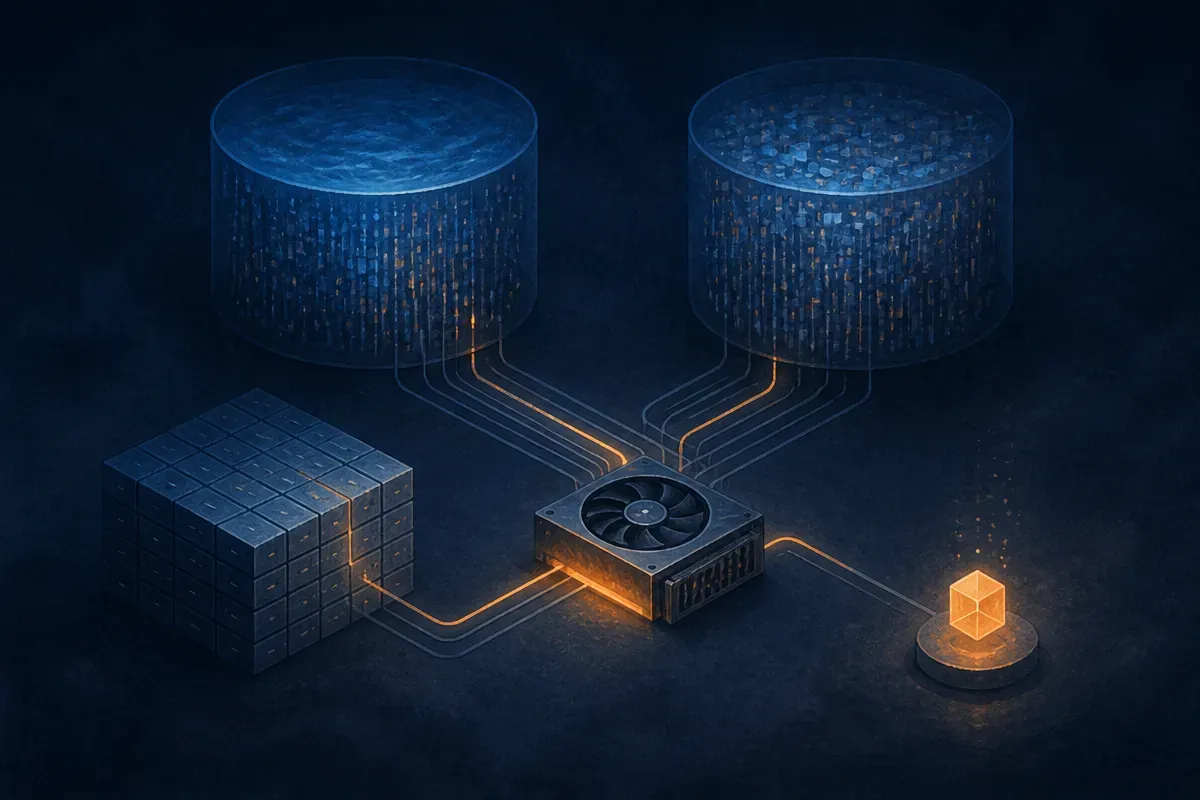
The important detail is not “552B on consumer hardware.” It is how Xolotl reportedly does it. The weights are spread across VRAM, pinned RAM, and NVMe, then the engine pulls in the experts needed for each token. That matters because this is not the same as loading a giant dense model into 24GB of VRAM. It is a routing and streaming problem. The model’s full parameter count is not the same thing as the active compute path per token.
What is the useful part for local AI builders?
This is another nudge toward local inference as systems engineering, not just model downloading.
For a long time, the local AI playbook was simple: choose a model that fits in VRAM, quantize it, accept the quality hit, and hope context length does not crush you. Xolotl points at a messier setup. If the model architecture supports sparse expert activation, and if the inference engine can move the right pieces fast enough, then RAM and NVMe become part of the serving path.
That is not free. NVMe is much slower than VRAM. RAM is much slower than VRAM. The magic, if it holds up, is avoiding unnecessary movement. Pull fewer experts. Cache smartly. Keep the active path hot. Make the slow tiers hurt less.
The builder value is obvious. A single 4090 box is not a cloud cluster. If a local rig can run a very large MoE model at interactive speed for some workloads, that changes the shape of experimentation. More people can test long-context agents, private coding flows, synthetic data generation, and uncensored research variants without renting serious GPU capacity.
But the catch is also obvious. “It runs” is not the same as “it is dependable.” Long context can expose failure modes. Tool use can look clean in ten trials and break on the eleventh. Agentic bug-fix loops are a nice smoke test, but three runs do not tell me how it behaves across a real repo, bad instructions, flaky tools, and poisoned context.
What should we verify before believing the hype?
I want to see boring evidence.
Sustained runs. Cold start times. Memory pressure. NVMe wear and throughput. Latency distribution, not just average tokens per second. Multi-turn degradation. Context retrieval behavior at 512K. Comparisons against smaller local models on the same tasks. And real tasks, not just HumanEval and a few tool calls.
The upcoming “1017” update is also worth watching, but carefully. /u/indrasmirror said DeepSeek-V4.1-Flash-1017 has the same architecture, config, and tokenizer as V4.1, so they expect similar throughput after recalibration and quantization. They also said the weights are all different, so it is a full calibration and quant run, not a patch. That is a grounded claim, but performance should still be measured after the quant exists.
My read: this is not a reason to declare cloud inference obsolete. It is a reason to pay closer attention to MoE-aware local runtimes. The next gains may come less from “smaller model beats bigger model” and more from “the runtime only touches the parts it needs.”
If you build with local models, try this class of system on one contained workflow before you rebuild your stack around it. Pick a task with clear pass/fail output, like repo Q&A, patch generation, or structured extraction over long documents. Log latency, crashes, wrong tool calls, and quality against a smaller model you already trust. The miss most readers will make is judging this by parameter count. The operator question is simpler: does this machine, on your workload, beat the boring setup you can already run?