
StepFun’s agent phone is a bet against the app grid
Decrypt reported that StepFun’s STEPX Neo puts an AI agent inside the phone operating system, not inside a standalone app. The useful question is not whether this kills apps, but whether agent-first phones can make cross-app work reliable enough to trust.
TL;DR: StepFun’s STEPX Neo matters because it treats the AI agent as the phone interface itself, but the hard part is not launching an agent phone, it is making the agent trustworthy across messy real tasks.
What changes when the agent is the interface?
Decrypt reported in “Chinese Startup StepFun Launches a Phone Built Around an AI Agent, Not Apps” that Chinese startup StepFun opened pre-orders for the STEPX Neo in China on Oct. 13 at 3,999 yuan, with an AI agent built into the operating system instead of bolted on as a separate app.
That framing is the whole story.
Most phone AI today still lives inside boxes. A chatbot app. A photo editor. A search widget. A keyboard assistant. Useful, sometimes, but it still asks the user to know where to go, what to open, and how to stitch outputs together.
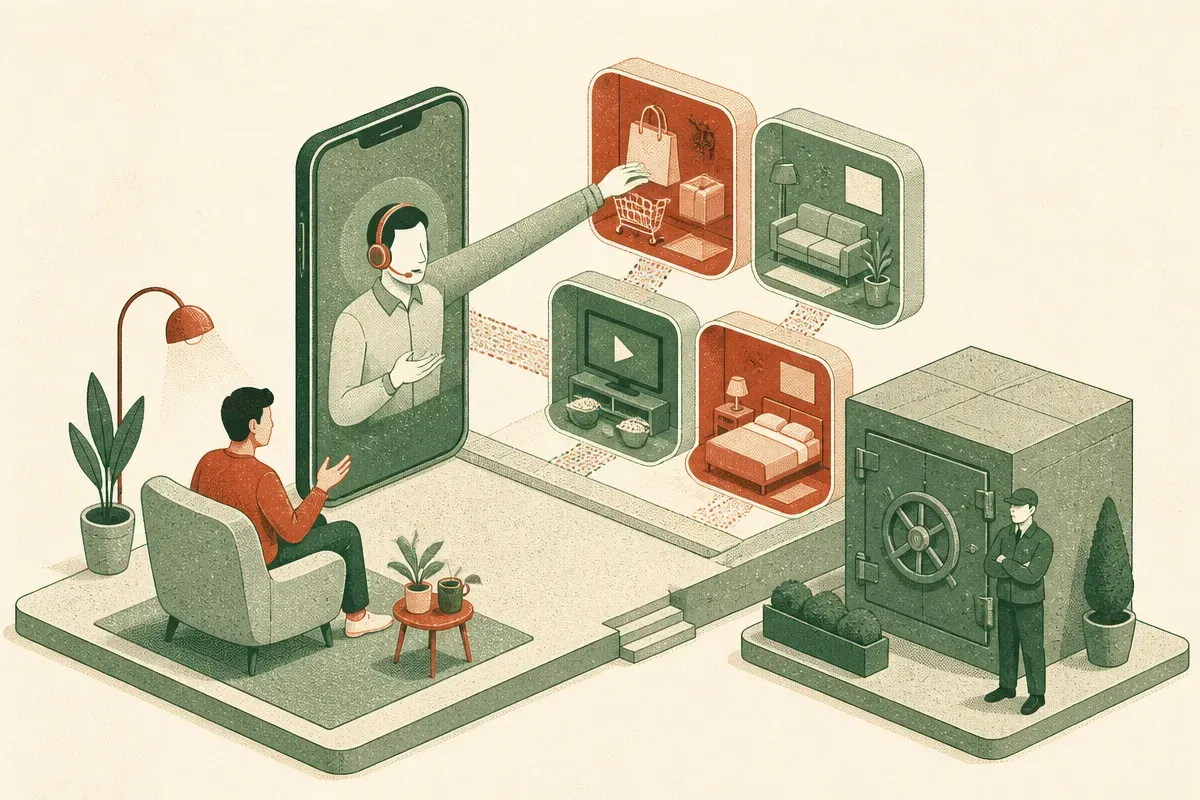
An agent-first phone flips that. The user asks for an outcome. The operating system agent decides which tools, apps, files, messages, calendars, payments, camera inputs, or settings are needed.
That is a real product bet. Not just “AI features,” but a different control layer.
It is also where the hype starts. A phone agent sounds obvious in a demo. Book the trip. Reply to the group chat. Find the receipt. Move the meeting. Summarize the document. Call the store. Great. But phones are personal, stateful, permission-heavy machines. They contain accounts, location, money, private messages, health data, work credentials, and family logistics. A mediocre agent on a desktop is annoying. A mediocre agent with OS-level reach can be dangerous, or just exhausting.
Is this the next phone interface or a niche experiment?
I would separate the interface idea from this specific product.
The interface idea is strong. App grids were designed for direct manipulation. Tap icon, open app, perform action. That model works, but it puts all workflow planning on the user. AI agents are better suited to intent routing: “find the cheapest option that works with my calendar,” “turn this into a post and save the draft,” “send the warranty info to the repair shop.”
If that layer becomes dependable, the phone home screen starts to matter less. Apps become capabilities the agent calls, not destinations the user visits.
The specific StepFun claim needs caution. The only supplied source here is Decrypt’s report, not StepFun’s own announcement or docs. So I would treat the Oct. 13 pre-order timing, China availability, 3,999 yuan price, and OS-level agent positioning as reported by Decrypt, not fully verified product mechanics.
That distinction matters. Agent phones will live or die on boring implementation details: permission controls, audit trails, undo, app integrations, latency, offline behavior, identity verification, and handoff when the model is unsure. None of that is solved by putting “agent” in the product category.
What should builders take from StepFun’s phone?
The useful takeaway is not “build a phone.” It is “move the agent closer to the workflow boundary.”
For software builders, that means the agent should not be trapped in a chat panel if the real job spans calendar, inbox, CRM, docs, browser, files, and billing. The closer the agent gets to the operating layer, the more value it can create. But also the more trust it has to earn.
The pattern to copy is not full autonomy. It is controlled delegation. Let the agent observe context, propose the next step, and execute low-risk actions first. Make approvals explicit for anything irreversible. Show what it used, what it changed, and how to roll it back. Give the user a “why did you do that?” button before you give the agent ten more permissions.
This is where many agent products miss. They optimize for the magic moment, not the recovery path. Real users forgive limits. They do not forgive silent mistakes in their calendar, bank, inbox, or client work.
For practitioners, I would prototype the StepFun idea inside one narrow workflow before dreaming about an agent OS. Pick a daily task with three to five tools, add an agent that can read context and draft actions, then gate execution behind human approval. Measure completion rate, correction rate, and time saved. The catch most readers miss: the agent interface is not valuable because it talks. It is valuable only when it can safely touch the systems where work actually happens.