
Local LLM runners are becoming product choices, not hobby projects
A Hacker News listing for ds4, described as a local LLM runner from Redis creator Salvatore Sanfilippo, points to a bigger shift: local AI is less about novelty now and more about packaging, trust, and operator control.
TL;DR: The useful local-AI question is no longer “can I run a model on my machine,” it is “which local runner is simple enough, predictable enough, and maintained enough to trust in a real workflow.”
What is ds4 actually signaling?
The primary source here is the Hacker News AI listing titled “From the creator of Redis; run LLM locally with ds4.” That is thin as product evidence, but still interesting as a market signal. Hacker News is not a first-party product page. It does not give installation details, supported models, pricing, hardware requirements, licenses, or a shipped roadmap. So I would not treat any of that as settled from this source alone.
What it does tell us is that local LLM tooling has crossed into a different phase.
A few years ago, “run an LLM locally” meant a weekend project. You had to know what model weights were, what quantization meant, why your MacBook sounded like a drone, and which GitHub issue explained the failure you just hit. Tools like llama.cpp made that world possible. Ollama made it much easier for a broader group of developers. LM Studio gave non-terminal users a friendlier path. LocalAI and similar projects helped teams experiment with OpenAI-compatible endpoints on their own machines or servers.
Now the attention is moving from possibility to taste.
That is why the Redis connection matters. Salvatore Sanfilippo, better known online as antirez, has a reputation for shipping developer infrastructure that feels small, sharp, and usable. Redis did not win because it was the only key-value store. It won because developers could understand it, run it, and build with it quickly. If ds4 follows that same philosophy, the interesting part will not be another local chat box. It will be the product judgment around defaults, workflows, and failure modes.
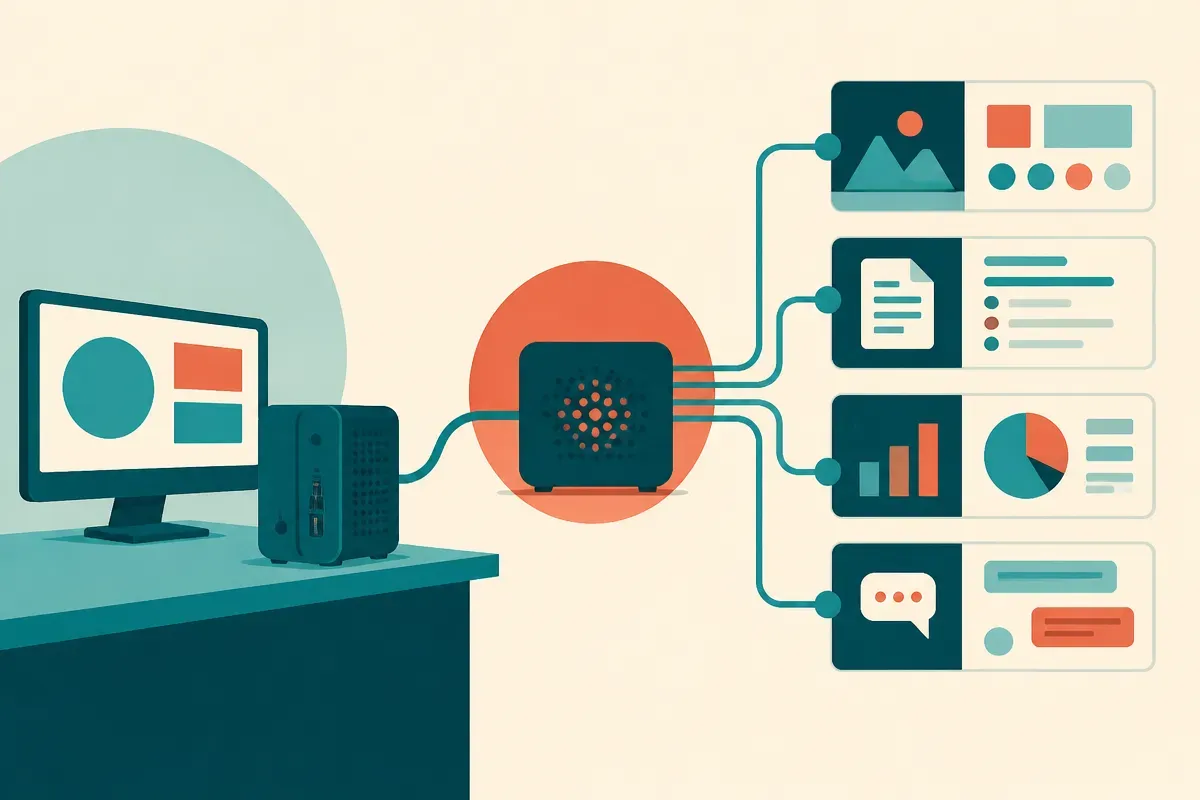
Why would builders care about another local runner?
Because local AI is not just about privacy. Privacy is real, but it is only one bucket.
The other buckets are latency, cost control, offline access, data locality, and repeatability. If I am building an internal tool that rewrites product descriptions, classifies support tickets, or drafts code comments, I may not need the strongest frontier model for every step. I may need a decent small model that runs the same way every time, close to the data, with no surprise API bill.
That changes the architecture.
A practical AI stack might use a hosted frontier model for hard reasoning, a local model for cheap transforms, embeddings for retrieval, and rules for anything that must be exact. Local runners matter when they make that hybrid setup boring. Boring is good here. Boring means a developer can install it, test three models, wrap it with a script, and know what happens when the laptop is offline or the GPU is missing.
The catch is that local does not automatically mean safer or better. A weak local model can hallucinate just as confidently as a hosted model. A messy local setup can leak data through logs, plugins, or bad file permissions. A model that works on one developer’s machine can fail on another because the hardware is different. The runner has to reduce that operational mess, not just expose it.
What should we look for before trusting it?
I would look for four things before putting ds4, or any local LLM runner, into a serious workflow.
First, clear model support. Not vague claims. Which model formats? Which quantized variants? Which hardware paths? CPU-only? Apple Silicon? CUDA? Second, predictable APIs. If it can sit behind existing OpenAI-style client code, adoption gets easier. Third, good defaults. Local AI tools often lose normal users at the moment they ask them to choose between six nearly identical model files. Fourth, honest limits. A good local runner should make it easy to see when a model is too slow, too large, or too unreliable for the job.
That last point is underrated. The best developer tools do not pretend every machine is a data center. They help you pick the right job for the box you have.
Practitioner’s take: try local models first on narrow, low-risk tasks where speed and cost matter more than deep reasoning, such as tagging, cleanup, summarization of non-sensitive internal notes, or draft generation with human review. The catch most teams miss is maintenance. A local runner is not “free AI.” It is another dependency. Treat it like one: pin versions, test outputs, log failures, and keep a hosted fallback for work that actually needs stronger reasoning.