
AI Search Traffic Needs Receipts, Not Just UTM Tags
Google’s reported AI-content guidance and Gemini referral tagging point to the same operating reality: AI search is becoming measurable, but content teams still need human review, clear sourcing, and analytics discipline before they trust the channel.
TL;DR: Treat AI search as a measurable but messy channel, and treat AI-generated content as publishable only after human fact-checking, sourcing, and analytics review.
What actually changed for AI content?
The primary report here is Search Engine Journal’s “Google Wants AI Content Fact-Checked, Gemini UTM Tags – SEO Pulse” by Matt G. Southern. Southern reported that Google added fact-checking to its AI content guidance, that Gemini links are showing UTM tags, that desktop CTR fell in Q2, and that a judge dismissed two AI lawsuits.
That mix sounds like four separate SEO updates. I read it as one story: AI content and AI discovery are moving from novelty into operations.
The important part is not “Google hates AI content.” That has never been the clean read. The better read is that AI content has to survive the same tests as other content, with more scrutiny because the failure modes are easier to scale. Hallucinated facts. Soft citations. Pages that sound plausible but do not answer the query. Thin rewrites of pages that already exist.
If Google is emphasizing fact-checking in AI content guidance, the operator takeaway is simple: generation is not publication. It is drafting. The publish step needs a human who checks claims, swaps vague statements for named sources, removes unsupported numbers, and makes sure the page has a reason to exist beyond filling a keyword slot.
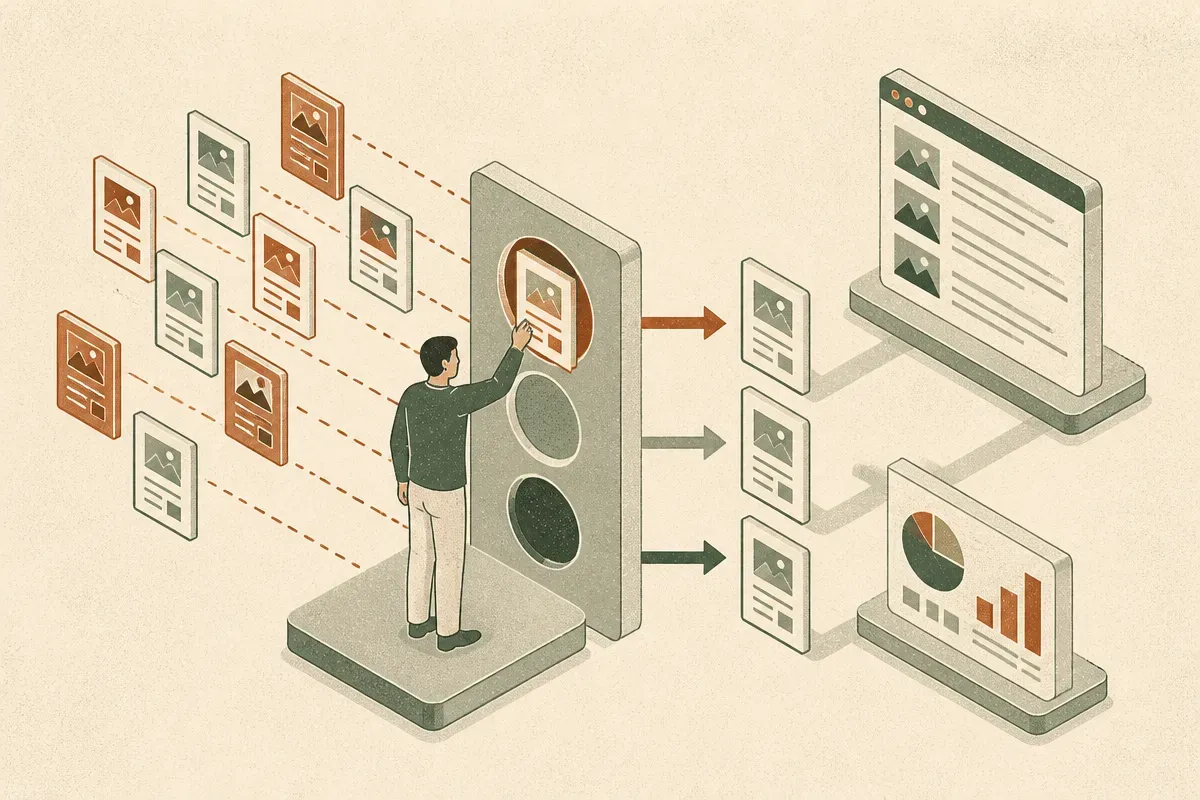
Do Gemini UTM tags make AI search measurable?
Maybe partly. Southern reported that Gemini links show UTM tags. That matters because AI assistants have been hard to read inside normal analytics. If a user discovers a page through an AI answer, clicks through, and the visit lands as direct, referral, or some odd bucket, marketers lose the plot. They cannot tell whether AI search is driving discovery, stealing clicks, or sending better-qualified visitors.
UTM tags help only if they are consistent enough to survive real reporting. They do not explain impressions. They do not show when an AI answer used your content without a click. They do not tell you why one page was cited and another was ignored. They also do not fix the bigger issue in AI search analytics: the assistant may compress several sites into one answer before the user ever sees a blue link.
So I would not build a strategy around Gemini referral data yet. I would watch it, segment it, and compare behavior against Google organic, referral, and direct traffic. Time on page, conversions, assisted conversions, return visits. Not just sessions.
I run Lucky Domains, which works on SEO and search visibility, so this is the kind of channel shift I would treat as measurement plumbing first, content strategy second.
What does the CTR drop imply?
Southern also reported that desktop CTR fell in Q2. Without the underlying numbers in front of us, I would not overfit the trend. CTR can move for many reasons: query mix, ads, SERP features, AI answers, layout changes, user behavior, and seasonality.
Still, lower desktop CTR fits the broader pattern. Search results are becoming answer surfaces, not just link directories. That means ranking is still useful, but it is no longer the whole job. The content has to be citable, extractable, trusted, and worth the click after the short answer has already been shown.
This is where a lot of AI-content programs miss. They aim for volume because the cost of drafts collapsed. But if the SERP is already compressing attention, volume without distinct value makes the economics worse, not better. More pages competing for fewer clicks is not a strategy. It is a backlog.
Practitioner’s take: I would set up a small AI-search reporting view now, not later. Capture any Gemini-tagged traffic separately, annotate content produced with AI assistance, and require a fact-check pass before publication. Then pick ten pages that already rank or get cited, improve their sourcing and directness, and watch whether engagement changes. The catch most teams miss: AI search rewards content that machines can parse, but users still punish pages that feel machine-made.