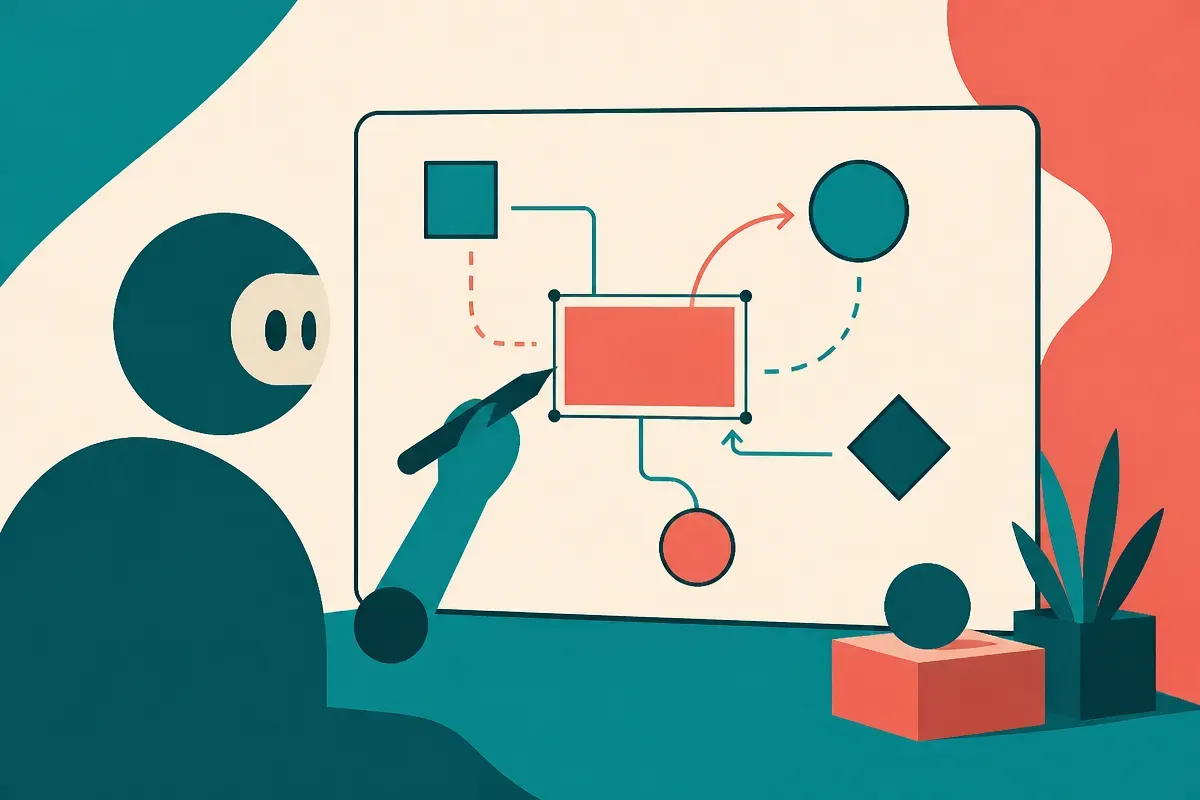
Drawgent puts a coding agent on an Excalidraw canvas: what a visual work surface actually changes
A coding agent that reads and draws on a live Excalidraw canvas points at a real shift in how agents take instructions and show their work, but the demo raises more questions about state and reliability than it answers.
TL;DR: Drawgent, a coding agent that lives on a shared Excalidraw canvas, is a small demo with a big idea inside it: the interface between you and an agent does not have to be a chat box, and a spatial canvas might be a better place to give instructions and watch work happen.
I saw Drawgent surface on Hacker News with a one-line pitch: “Coding agent on a live Excalidraw canvas.” That is the entire public description I have to work with, so I want to be honest up front about what is claim and what is my read. The specifics of how it runs, what model backs it, whether it ships as a product or stays a weekend hack, none of that is confirmed by anything I can point to. What is worth talking about is the shape of the idea, because the shape is the interesting part.
What is Drawgent actually doing?
The name is a portmanteau of “draw” and “agent,” and the HN title tells you the mechanic: an agent that codes, operating on a live Excalidraw canvas. Excalidraw, for anyone who has not used it, is an open-source whiteboard tool. Hand-drawn look, boxes, arrows, sticky notes, freeform sketching. The kind of surface you already use to think through a system before you build it.
Put an agent on that surface and two things become possible at once. The agent can read what you draw, boxes and arrows become structure it can parse into intent. And the agent can draw back, showing its plan, its progress, its file tree, its reasoning as spatial objects instead of a scrolling wall of text.
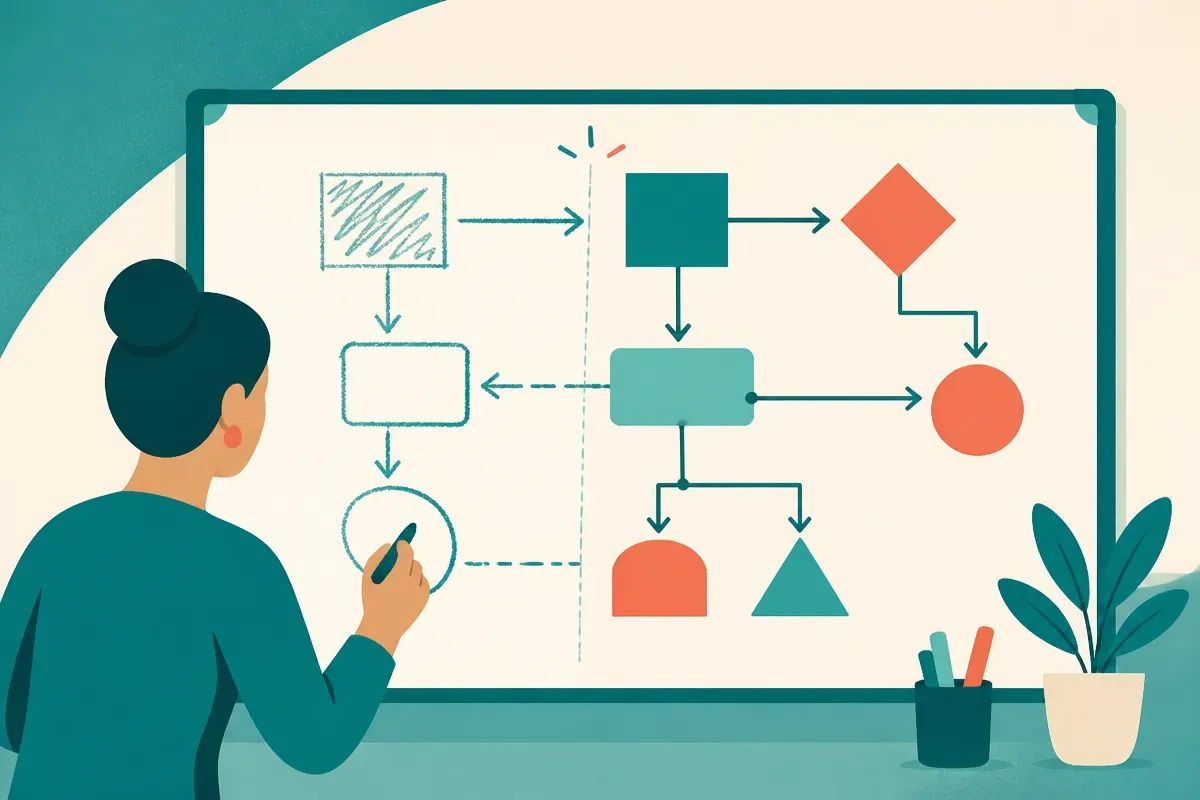
That is the pitch as I understand it. Whether the current build does both directions well, or mostly does one, I cannot verify from a single-line source. But the concept is clear enough to reason about.
Why would a canvas beat a chat box?
Chat is a terrible interface for anything with structure. This is the quiet frustration of everyone who has spent a day pair-working with a coding agent. You describe a system in prose, the agent half-understands it, you correct in more prose, and three turns later you are both talking about slightly different things because linear text erased the shape of the problem.
A diagram does not erase the shape. If you draw three services with arrows between them and label the data flow, the relationship is right there. You do not have to serialize a graph into sentences and hope the model rebuilds the same graph in its head. The canvas is the graph.
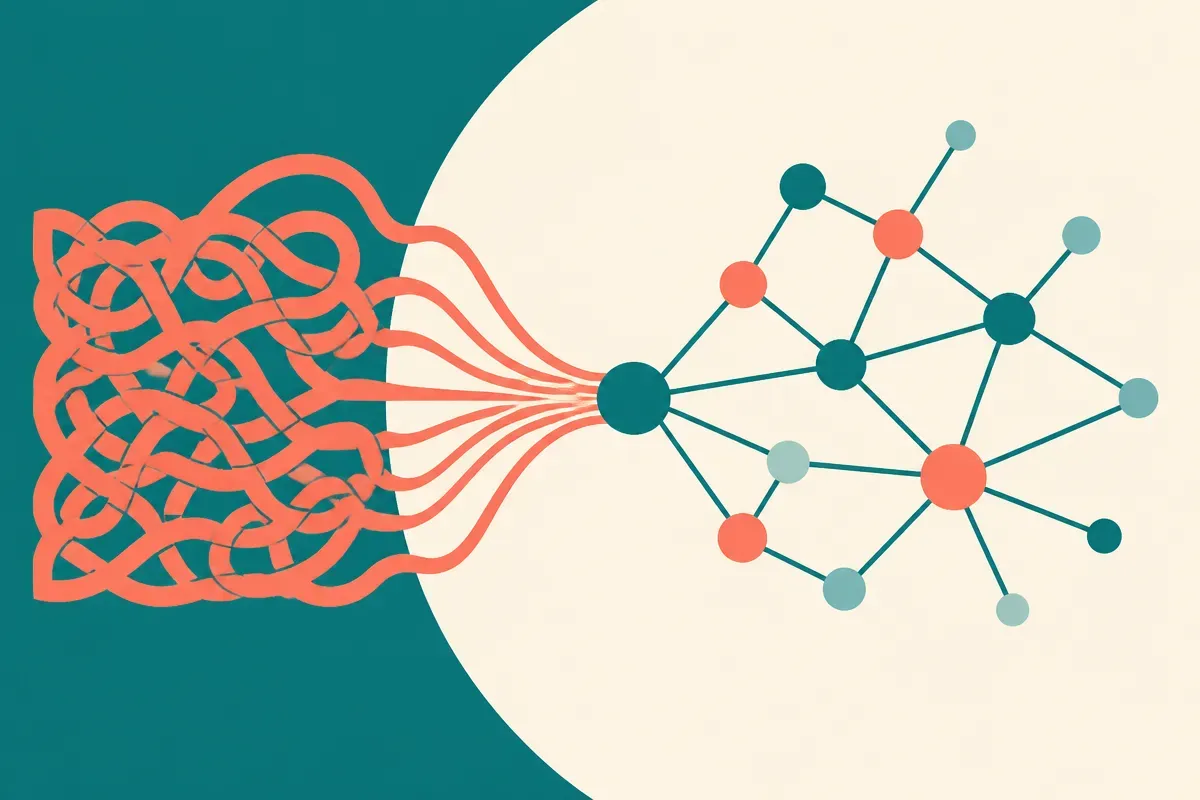
There is a second thing a canvas gives you: ambient state. Chat scrolls away. A whiteboard persists, spatially. You can glance at a corner and see where the agent parked a blocked task. You can move a box and change the plan without writing a paragraph explaining the move. For agents that run long and do many things, “where are we” is a real problem, and a spatial layout answers it better than a transcript.
I have argued before that memory and legibility are the two things holding back long-running agents. A canvas is a partial answer to legibility. You can see the whole job at a glance instead of reconstructing it from logs.
Where does this break?
Here is where my optimism meets the wall, and where the single-source nature of this really matters.
Parsing intent from a sketch is genuinely hard. A box with an arrow to another box could mean “A calls B,” “A depends on B,” “A becomes B,” or “these are related, figure it out.” Humans read the ambiguity from context. An agent has to commit to one interpretation, and a wrong commitment on a fuzzy diagram is worse than a wrong commitment on a fuzzy sentence, because you thought the picture was unambiguous. Precision is exactly what freeform drawing does not give you.
Then there is the sync problem. “Live” canvas means the agent and the human are editing the same surface at the same time. Anyone who has built collaborative editing knows how many sharp edges live there. What happens when you move a box while the agent is reading it? When the agent redraws a section you were mid-edit on? Real-time shared state between a human and an autonomous process is a hard systems problem, and a demo can paper over it in ways a daily tool cannot.
And the honest caveat: I do not know which of these Drawgent has solved, because I have one line of description. It might be a polished thing. It might be a proof of concept that falls over on the second prompt. The idea is worth taking seriously either way. The specific build I cannot vouch for at all.
What should a builder take from this?
The transferable lesson is not “go install Drawgent.” It is that the input and output channel of your agent is a design decision you have been treating as fixed.
Most agent tooling defaults to chat because chat was there. But your agent could take a diagram, a spreadsheet, a Figma file, a directory tree rendered as a picture. It could output the same. If your work has structure, and most real work does, a structured surface will lose less of that structure in translation than prose will.
Try this the cheap way first, before building anything. Next time you brief a coding agent on a system, draw the thing in Excalidraw, export it as an image, and paste it into a multimodal model alongside your prompt. See how much of your intent survives when the model reads the picture instead of your paragraph. That single test tells you whether a visual channel is worth building for your workflow, and it costs you five minutes.
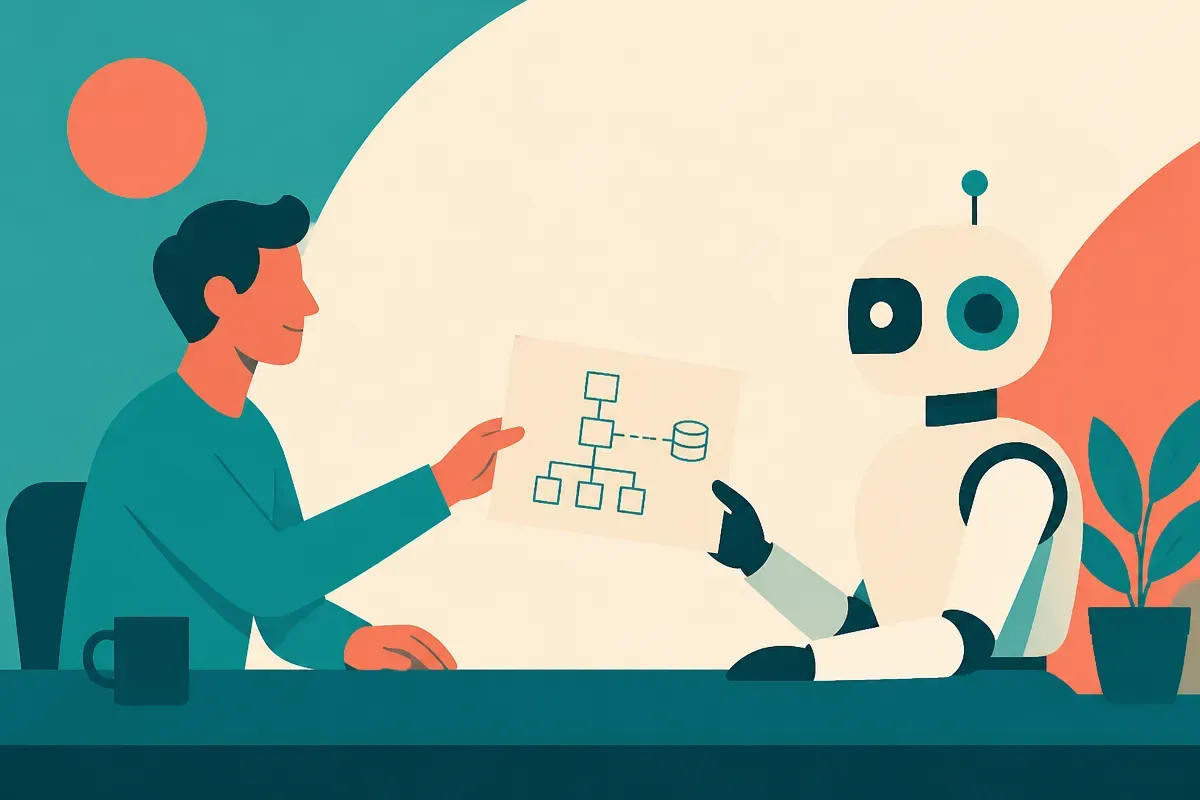
The catch most readers will miss: a visual interface makes the agent’s confidence more legible, not more correct. Drawing back a clean diagram of what it plans to do looks like understanding. It is not. It is a rendering of the same guess a chat reply would have made, dressed up in boxes that feel authoritative because you drew boxes like them yourself. The canvas is a better place to catch a mistake. It is also a better place to be fooled by one. Watch the plan, not the polish.