Qwen-Image-2.1 puts open image editing closer to production work
Qwen-Image-2.1 is less interesting as another image generator and more interesting as an open-weight model aimed at practical editing: transparent layers, product fidelity, multi-reference inputs, and local control without handing every visual workflow to a closed API.
TL;DR: Qwen-Image-2.1 matters because open image models are moving from “make a pretty picture” toward controllable editing workflows that product, design, and marketing teams can actually test.
What did Qwen release?
Qwen announced “Qwen-Image-2.1”, an open-weight image generation and editing model in the Qwen-Image series, with model access listed through GitHub, ModelScope, and Hugging Face. The headline is not just that it generates images. Qwen is positioning it as a unified model for both generation and editing, built on a 7B architecture.
That size matters. Not because 7B is magic, but because image models that are small enough to run cheaply are easier to put into repeatable workflows. If a team can test variants, run edits, compare outputs, and rerun prompts without treating every generation like a metered luxury item, behavior changes. People experiment more. They build internal tools. They stop screenshotting half-finished outputs into Photoshop and start asking whether the model can sit inside the actual pipeline.
Qwen claims Qwen-Image-2.1 is “the most balanced and cost-effective” model in the series and says it is faster on multi-image inputs. Good claims, but still claims. I would want to see independent comparisons on real editing tasks before treating “outperforms most closed-source models” as settled. Open image models often look great in launch examples and wobble under boring production constraints: same product angle, same face, same logo, same packaging, no weird fingers, no invented text, no melted edges.
Still, the feature list points in the right direction.
Why does native transparency matter?
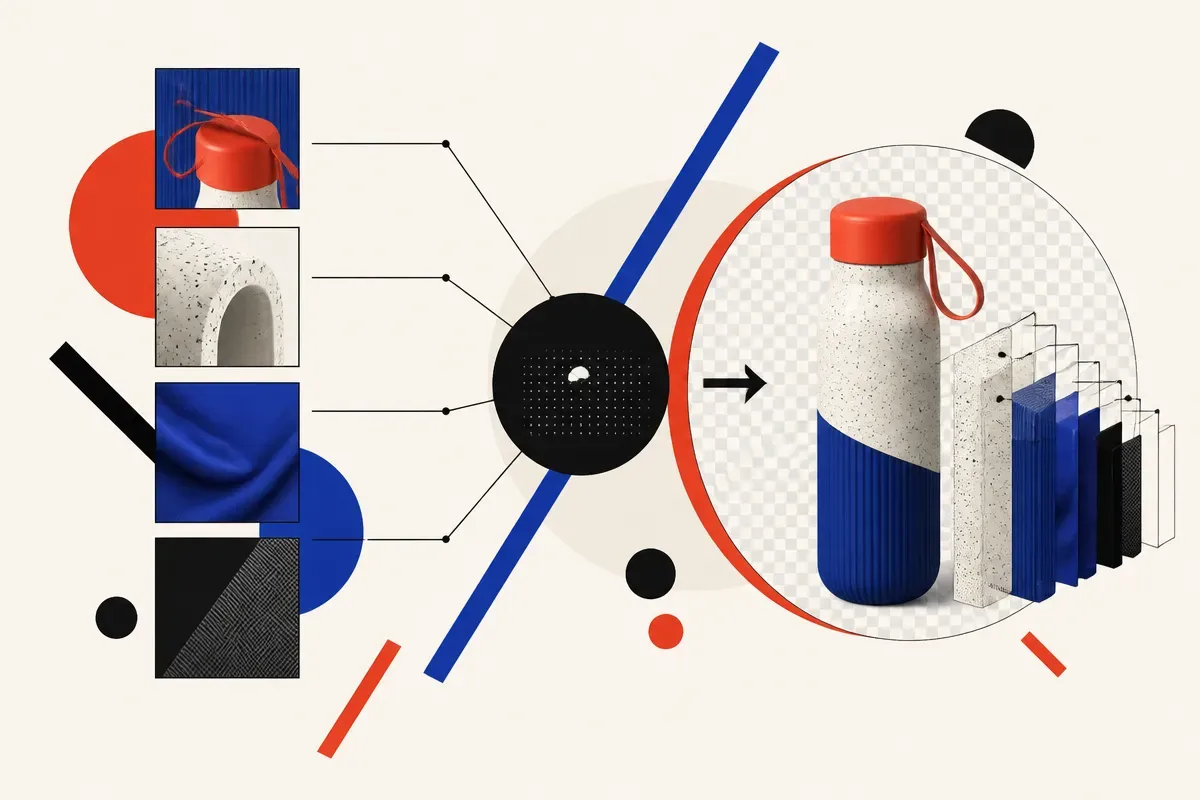
The most operator-relevant piece is native RGBA generation and editing. Qwen says Qwen-Image-2.1 can generate and edit transparent images, including text editing within transparent images.
That sounds niche until you have shipped real assets. Transparent layers are everywhere: product cutouts, ad components, app screenshots, website hero art, thumbnails, stickers, catalog imagery, social templates. A model that can work with alpha channels directly is more useful than a model that makes a nice rectangle and then forces you into background removal.
The other practical claim is support for up to 10 reference images. That could be useful for brand and product work, where one prompt is rarely enough. You may need the same shoe, bottle, model, texture, logo placement, pose, and lighting style to survive across a set of images. Qwen also calls out portrait and product fidelity, which is exactly where many image models fail in commercial use.
The catch is that fidelity is not binary. A model can preserve a face well in one example and drift badly across a campaign. It can copy product shape but alter label text. It can keep color but change material. The useful test is not “does it look good?” The useful test is “can I run 30 edits and still trust the asset?”
Where should builders test it first?
I would not start by benchmarking Qwen-Image-2.1 against Midjourney or GPT-Image on vibes. That turns into taste theater fast.
Start with workflows where openness, repeatability, and editing control matter. Product mockups. Transparent web graphics. Variant generation for landing pages. Localized ad images. Internal creative tools where the company does not want every asset flowing through a closed hosted model. If the 7B model is as fast and inexpensive as Qwen claims, the best use may be high-volume iteration rather than one perfect hero image.
The open-weight angle also matters for teams that need more control over deployment. Hosted image models are convenient, but they can be awkward for privacy reviews, cost controls, and custom interfaces. An open model can be wrapped, queued, logged, constrained, and paired with human review in ways that fit the business instead of the other way around.
But don’t skip evaluation. Build a small test set with your actual assets: five products, five faces if relevant and permitted, five transparent components, five text-heavy graphics. Score consistency, edit obedience, artifacts, typography, and how often a human has to repair the output. That will tell you more than launch samples.
Practitioner’s take: try Qwen-Image-2.1 on one narrow editing job, not a whole creative department. Pick a workflow where transparent output or reference-image fidelity would save real time, then compare it against your current stack on 20 to 50 examples. The catch most people miss: image generation quality is easy to admire, but production value comes from controllable retries, clean layers, and boring consistency.