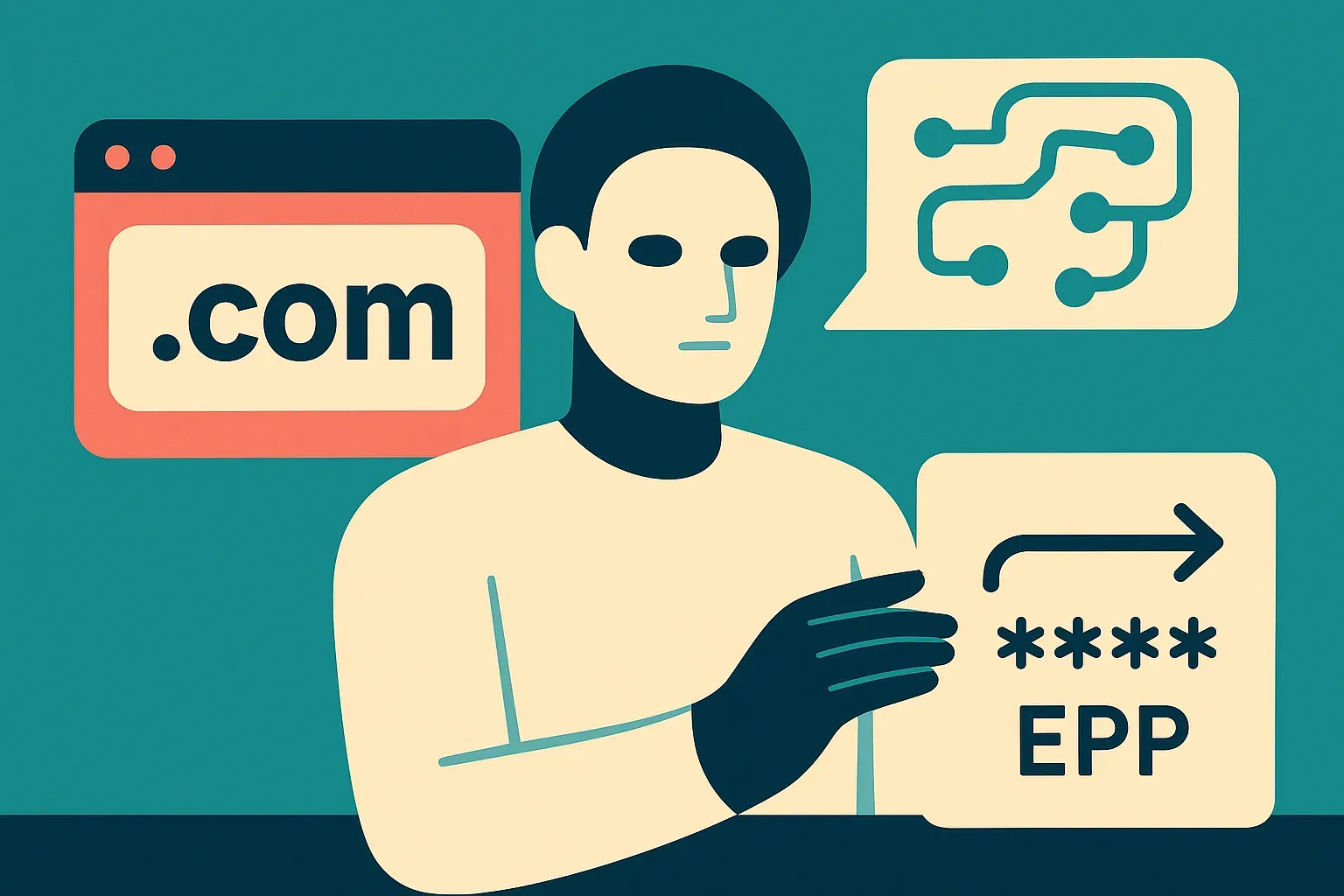
Claude as a transfer-code assistant for domain portfolios
Domain Name Wire’s Claude workflow points to a useful but sensitive AI pattern: turning repetitive registrar chores into structured extraction tasks while keeping EPP codes, account access, and transfer approvals under human control.
TL;DR: Claude can help with bulk domain transfer-code collection when registrars make it painful, but treat it like a supervised extraction tool, not an autonomous domain operator.
What is actually being automated?
Domain Name Wire, in “How to get transfer authorization codes in bulk using Claude,” points at a very real operator headache: some registrars let you export transfer authorization codes in bulk, and some still make you fetch them one domain at a time.
That sounds small until you manage a portfolio. Then it becomes tab hell.
The useful idea is not that Claude has special registrar access. It does not. The useful idea is that many registrar tasks are repetitive, semi-structured, and annoying. A model can help turn messy copied page content, repeated UI patterns, or registrar output into a cleaner working file, if a human keeps control of the account and checks the result.
EPP codes, also called auth codes or transfer authorization codes, are not casual metadata. They are closer to credentials. Paired with an unlocked domain, they help initiate a transfer. So the workflow is less like “summarize this PDF” and more like “handle a list of sensitive keys without mixing them up.”
Ashe runs Lucky Domains, a domain acquisition, brokerage, website-build, and white-hat SEO practice, so this is the kind of boring back-office workflow that matters more than it sounds.
Where does this get risky?
The failure mode is obvious: wrong code, wrong domain.
Models are good at pattern recognition. They are also capable of confident mistakes. One character off in an auth code can waste time. One domain-code mismatch can create a bigger mess, especially if the operator is moving names under time pressure.
There is also the privacy problem. A full domain portfolio can reveal business plans, acquisition strategy, client relationships, or unreleased brands. Uploading registrar pages to a cloud model may be fine for some operators and unacceptable for others. The right answer depends on the portfolio, the client obligations, and the model environment being used.
The safest mental model is: Claude can help extract, normalize, and check. It should not be the party logging in, unlocking domains, approving transfers, or clicking confirmation emails. Keep those steps manual unless you have a hardened internal automation setup with clear logs and permissions.
I would also watch registrar terms and security triggers. Bulk repetitive access can look suspicious. Multi-factor prompts, session timeouts, and anti-abuse systems are part of the terrain. If the registrar offers an official bulk export, use that first. AI is the workaround when the product is bad, not a replacement for a good registrar control panel.
What should a domain operator try first?
Start with a tiny batch. Five to ten domains. Preferably names where you can verify the expected result directly inside the registrar account.
Give the model narrow instructions. Ask it to extract only the domain name and matching auth code. Tell it to mark uncertain rows as unclear rather than guessing. Then compare the output against the registrar screen before trusting it on a larger batch.
I would keep the output boring: domain, auth code, status, notes. No prose. No inferred ownership. No suggested transfer decisions. If a page has multiple domains or hidden fields, ask for a second pass focused only on mismatches and missing values.
There is a good repeatable pattern here for other domain operations too. Expiration-date cleanup. Nameserver audits. Registrar lock status checks. DNS record comparisons. Renewal-risk reviews. The common thread is structured extraction from messy admin surfaces, with a human deciding what action to take.
Practitioner’s take: try Claude on a small, non-urgent transfer-code batch and measure whether it saves time without adding verification work. If it does, document the prompt, the input format, and the checking step. The catch most readers miss: collecting auth codes is not the whole transfer process. Lock status, privacy settings, DNS continuity, expiration timing, and approval emails still need a human operator who knows what can break.