
DataShifts turns distribution shift into an error-budget problem
The arXiv paper “General Quantification of Covariate and Concept Shifts” pushes distribution-shift analysis toward something builders can estimate from samples, not just argue about after a model fails in production.
TL;DR: Distribution shift is only useful to track if you can quantify it from real samples, and “General Quantification of Covariate and Concept Shifts” proposes a path from vague drift talk to estimable error bounds.
What problem is DataShifts trying to make measurable?
The primary source here is the arXiv cs.AI/cs.LG paper “General Quantification of Covariate and Concept Shifts.” Its target is a very practical pain: models often fail because the data they see at deployment is not the data they saw during training, but most teams do not have a clean way to translate that shift into expected error.
There are two familiar buckets. Covariate shift means the input distribution changes. The users, documents, images, prompts, or transactions look different. Concept shift means the relationship between inputs and labels changes. Same-looking input, different correct answer.
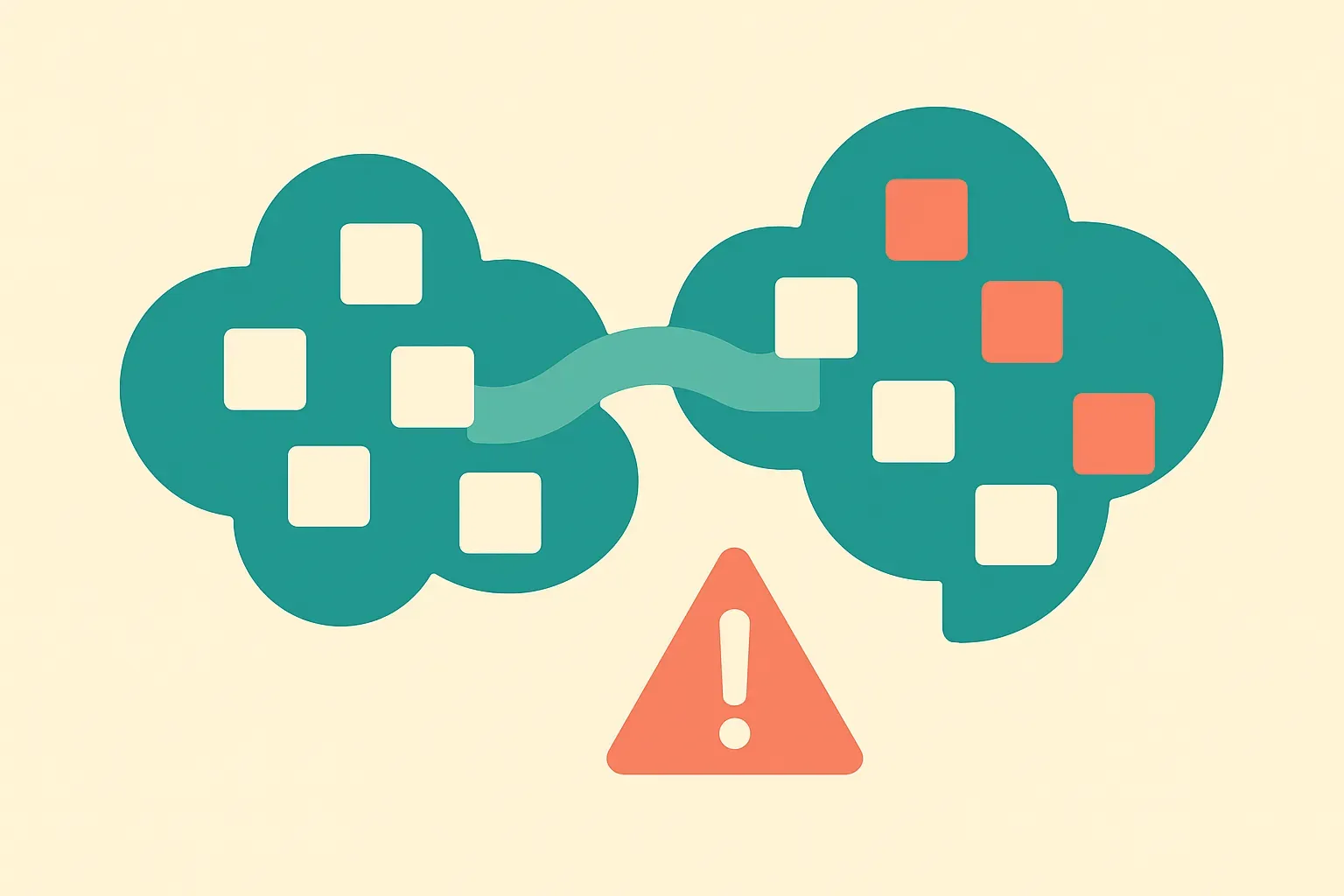
That sounds clean until you hit real systems. The paper argues that the existing definition of concept shift breaks when the source and target supports do not match. In plain English: if the new data includes regions the old data barely covered, or never covered, then comparing “the labeling function” across both worlds gets shaky. You are asking for a difference in behavior where one side may not have meaningful data.
That matters for AI products. A customer-support classifier trained on last quarter’s tickets may see a new product launch, new policy language, and new user complaints. An LLM routing system may suddenly face prompts from a new customer segment. A medical model may move from one hospital population to another. If your drift metric assumes overlapping worlds, it can give you comfort exactly when you should be nervous.
Why does entropic optimal transport show up here?
“General Quantification of Covariate and Concept Shifts” uses entropic optimal transport to define what it calls $γ^{*}$-concept shifts. That is a mouthful, but the operator-level idea is simple enough: when source and target distributions do not line up perfectly, you need a principled way to compare them anyway.
Optimal transport gives you a way to map mass from one distribution to another. Entropic regularization makes that comparison more tractable and smoother. The paper uses this machinery to unify covariate shift and its proposed $γ^{*}$-concept shift in one general error bound.
The claim is not just theoretical neatness. The paper says the bound applies across broad loss functions, label spaces, and stochastic labeling. That last part is important. Many production labels are not deterministic. Human raters disagree. Customer intent is fuzzy. Search relevance varies by user. Agent success can depend on hidden context. A shift framework that only works for clean classroom labels will not travel far.
The paper also reports estimators for these shifts with concentration guarantees, plus the DataShifts algorithm to quantify distribution shifts and estimate the error bound in most applications. That is the part I care about. Not because every team will implement this exact algorithm next sprint, but because it points at the right interface: drift measurement should connect to error risk, not just dashboard color.
What should builders take from this now?
I would not read this as “distribution shift is solved.” The material provided does not include experiments, runtime details, open-source status, or proof that DataShifts is easy to drop into messy enterprise pipelines. Treat it as a research contribution with a useful product smell, not a finished monitoring vendor.
The real lesson is narrower and more useful: stop treating drift as one number.
Embedding distance changed. Prompt topics changed. Label prevalence changed. Rater agreement changed. The model is now seeing cases that were absent in training. These are different failure modes. Lumping them into “data drift” hides the one question that matters: what does this imply for error?
A good eval stack should separate at least three things. First, how inputs moved. Second, whether the input-label relationship changed. Third, whether the new region was even covered by the training or validation distribution. The arXiv paper’s support-mismatch point is the sharpest one for applied AI. If your eval set has no examples from the new operating region, your pass rate is not evidence of safety. It is evidence of absence.
For builders, the next move is practical. Pick one deployed classifier, ranker, agent router, or LLM judge. Keep a reference slice from training or launch. Sample current production traffic. Compare not only embeddings and metadata, but also fresh labels on a small overlap set and a small “new territory” set. Then tie those shifts to observed error, even crudely. The catch most readers miss: monitoring drift is not the goal. Deciding when your old evals no longer deserve trust is the goal.