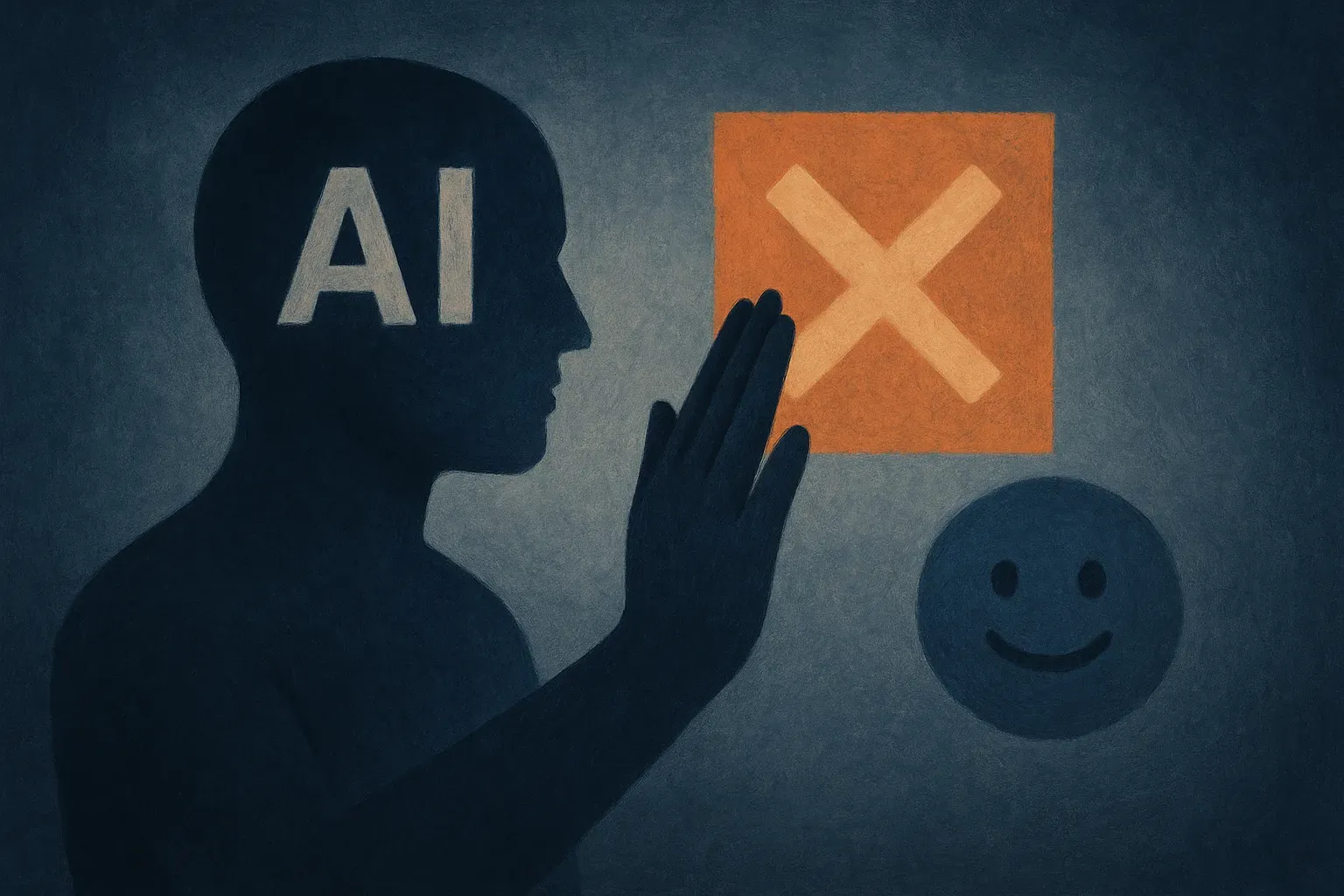
AI safety should refuse harmful tasks, not entire topics
Hugging Face’s framing of selective refusal is the right direction for model safety: block the dangerous slice of a request without cutting off legitimate learning, work, research, or support around the same topic.
TL;DR: Safety filters should refuse the dangerous request inside a topic, not the topic itself, because broad refusals hurt legitimate users and hide where the real risk is.
What should a model actually refuse?
The Hugging Face Blog post, “Safety for Whom? Refusing the Right Subset of a Topic, Not the Whole Topic,” names the problem well. A topic is not the same thing as an unsafe task.
That sounds obvious until you use real models.
“Cybersecurity” can mean helping a small business understand phishing logs. It can also mean credential theft. “Biology” can mean a student learning lab safety. It can also mean operational instructions for harm. “Self-harm” can mean crisis support, or it can mean giving someone a method. The category alone does not tell you what the assistant should do.
This is where a lot of safety systems still feel blunt. They spot a risky noun, then shut the door. That is easier to implement and easier to audit at scale. It is also worse product behavior.
A useful assistant should be able to say: I can help with the safe version of this, but not the harmful version. Not a generic refusal. Not a moral lecture. A boundary, then a redirect.
That distinction matters because users often arrive with messy language. A student, journalist, nurse, sysadmin, parent, or researcher may use the same words as someone with bad intent. If the model refuses the whole topic, it treats context as noise. If it refuses the harmful subset, it treats context as the job.
Why broad refusals create their own harm
The lazy version of AI safety is topic prohibition. It feels clean. Block the risky domain. Reduce liability. Move on.
But “safe” for the platform can become “less useful” for the user. That is the tension inside Hugging Face’s framing. Safety for whom?
A model that will not discuss addiction, abuse, extremism, weapons, hacking, medical risk, or mental health may avoid some bad outputs. It may also fail the exact people who need careful, bounded help. Refusal can be protective, but it can also be abandonment.
The other issue is measurement. If your eval only asks, “Did the model refuse bad prompts?” you will train for refusal theater. The assistant learns to say no often, vaguely, and defensively. That gives you a higher-looking safety posture while making the model less capable at safe adjacent work.
The better eval asks two questions at once: did it refuse the dangerous request, and did it still help with the safe request? That is a harder bar. It requires policies with granularity, datasets with near-miss examples, and reviewers who can tell the difference between explanation, transformation, prevention, and enablement.
This is also where open model ecosystems matter. Hugging Face has a direct interest in tooling, datasets, and community norms around model behavior, not only closed-product policy. Selective refusal is not just a chat UX decision. It is a training data decision, an eval design decision, and a deployment decision.
The product pattern is “boundary plus useful next step”
The best refusal is not just “no.” It is “not that, but this.”
If a user asks for something harmful, the assistant should decline the actionable harmful part. Then it should offer a safe alternative at the same level of user need. Defensive guidance. High-level education. Legal and ethical framing. Safer troubleshooting. Emergency resources where appropriate. The redirect should not be filler. It should actually help.
This pattern also reduces user frustration. A model that refuses and stops feels brittle. A model that refuses one slice and continues elsewhere feels competent. It gives the user a path without pretending the unsafe request was fine.
For builders, the practical move is to test for boundaries inside topics, not topic blocks. Build prompt suites with paired examples: same domain, different intent, different allowed output. Then inspect whether the model can preserve helpfulness while drawing the line. The catch most teams miss: refusal quality is not only about preventing bad answers. It is about keeping the good answers alive right next to the bad ones.