
Munder Difflin and the real work behind AI clone offices
A Hacker News listing frames Munder Difflin as an agent harness for running an office of clones. The useful question is not whether clones sound like you, but whether the harness can route work, preserve context, and fail safely.
TL;DR: “Office of clones” is a catchy wrapper, but the product category to watch is the agent harness: the layer that assigns work, carries context, checks outputs, and decides when a human has to step in.
What is actually being claimed here?
The primary source here is the Hacker News item titled “Munder Difflin – Agent harness to run an office of your clones.” That is all the source packet gives us, so I am treating it as a pointer to a product idea, not as confirmed documentation of product behavior.
That matters. “Run an office of your clones” sounds like a persona product. Train a few agents to write like you, think like you, maybe triage your inbox like you. Fun demo. Easy headline. Also a bit misleading.
The more useful phrase is “agent harness.” A harness is not the model. It is the machinery around the model: task intake, routing, memory, permissions, tool calls, evaluation, retries, logging, and handoff. If Munder Difflin is interesting, it is probably not because it creates charming AI coworkers. It is because it may package the boring control plane that makes multiple agents less chaotic.
I do not have first-party documentation here, so I cannot confirm what Munder Difflin supports, what it costs, who can use it, which models it runs, or whether it connects to email, docs, calendars, GitHub, Slack, or anything else. Those details need the company’s own docs or announcement. The Hacker News title only supports the positioning: an agent harness, framed as an office of clones.
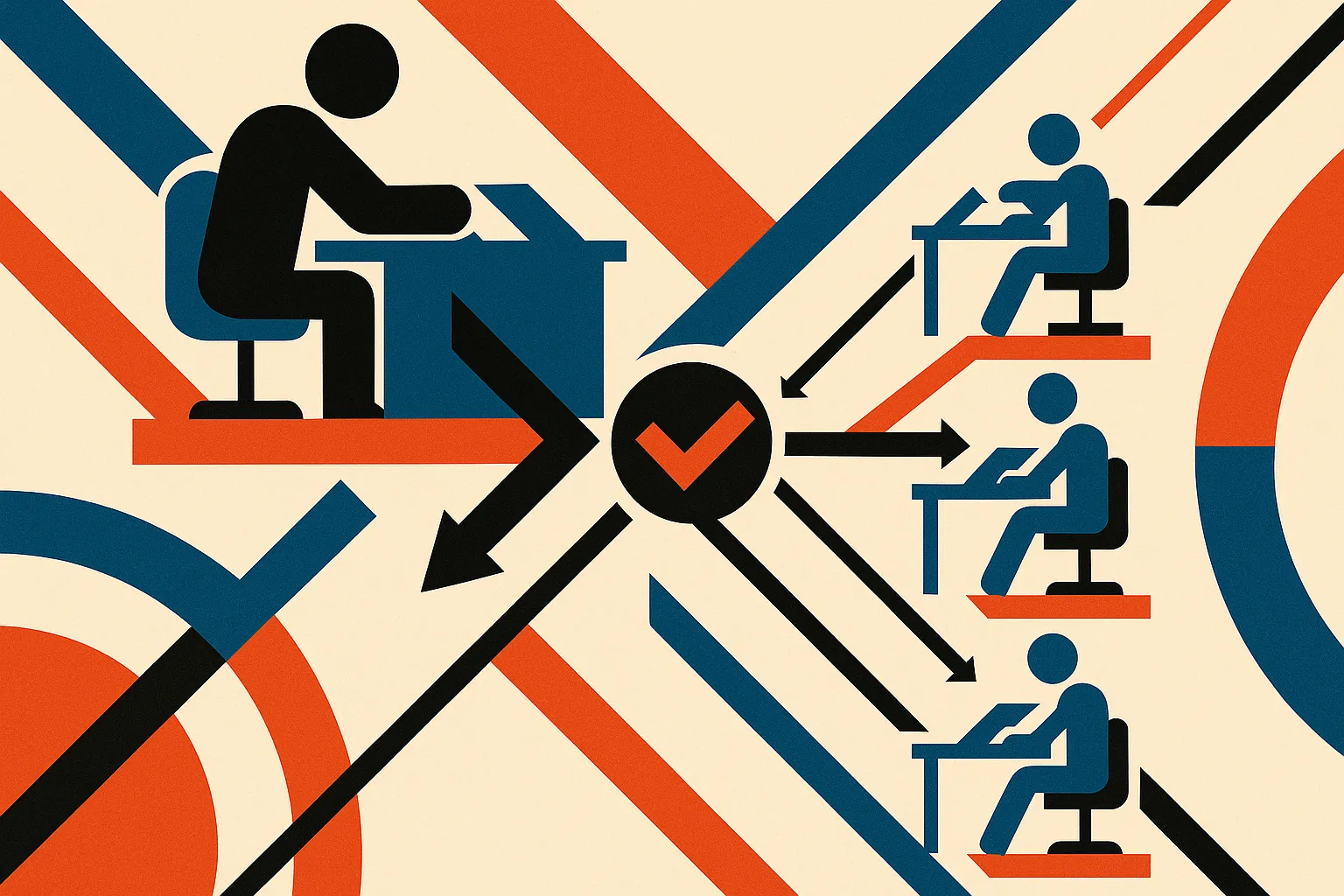
Why do “clone” agents break down in real work?
The weak version of a clone agent imitates tone. That is table stakes now. Give a model enough samples and it can produce a passable version of your email voice, support style, or meeting-summary format.
The hard version imitates judgment.
Judgment depends on private context, current priorities, risk tolerance, and unstated tradeoffs. You may answer one customer quickly and another carefully. You may ignore a low-value task today because a board memo is due tomorrow. You may rewrite a technically correct paragraph because it creates political friction. That is not “style.” That is operating context.
This is where harness design becomes the whole game. A useful system needs to know which tasks can be fully delegated, which require a draft, which require approval, and which should never touch an autonomous agent. It also needs an audit trail. If a clone sends the wrong thing, changes the wrong file, or gives bad advice, “the model did it” is not an operating model.
The office metaphor is helpful only if the roles are constrained. One agent can draft. One can research. One can compare against source material. One can prepare the next action. But letting a swarm of generic “you” agents roam across tools is how you get duplicated work, stale assumptions, and confident nonsense at higher volume.
What would make this category useful?
The best agent harnesses will look less like magic employees and more like dispatch systems.
They will make state visible. What task is being worked on, by which agent, using which inputs, with what confidence, and waiting on what approval? They will support narrow permissions. A drafting agent should not automatically send. A research agent should cite. A scheduling agent should propose before committing. They will also make failure cheap. Bad drafts are fine. Bad irreversible actions are not.
The big opportunity is not replacing one worker with ten fake workers. It is giving one operator a repeatable way to externalize the parts of work that already follow a pattern: first-pass research, comparison tables, inbox grouping, CRM notes, bug reproduction, meeting prep, contract redlining, content repurposing, support macros.
The catch is that every “clone” needs management. More agents means more coordination cost. If the harness does not reduce that cost, the user becomes the office manager for a group of interns who never sleep and never know when they are wrong.
Practitioner’s take: if you test Munder Difflin or anything like it, do not start with your whole job. Pick one recurring workflow with clear inputs, clear outputs, and low downside. Make the agent produce drafts, not final actions. Track how often you edit, reject, or redo the work. The missed detail is that cloning your voice is easy. Cloning your constraints is the product.