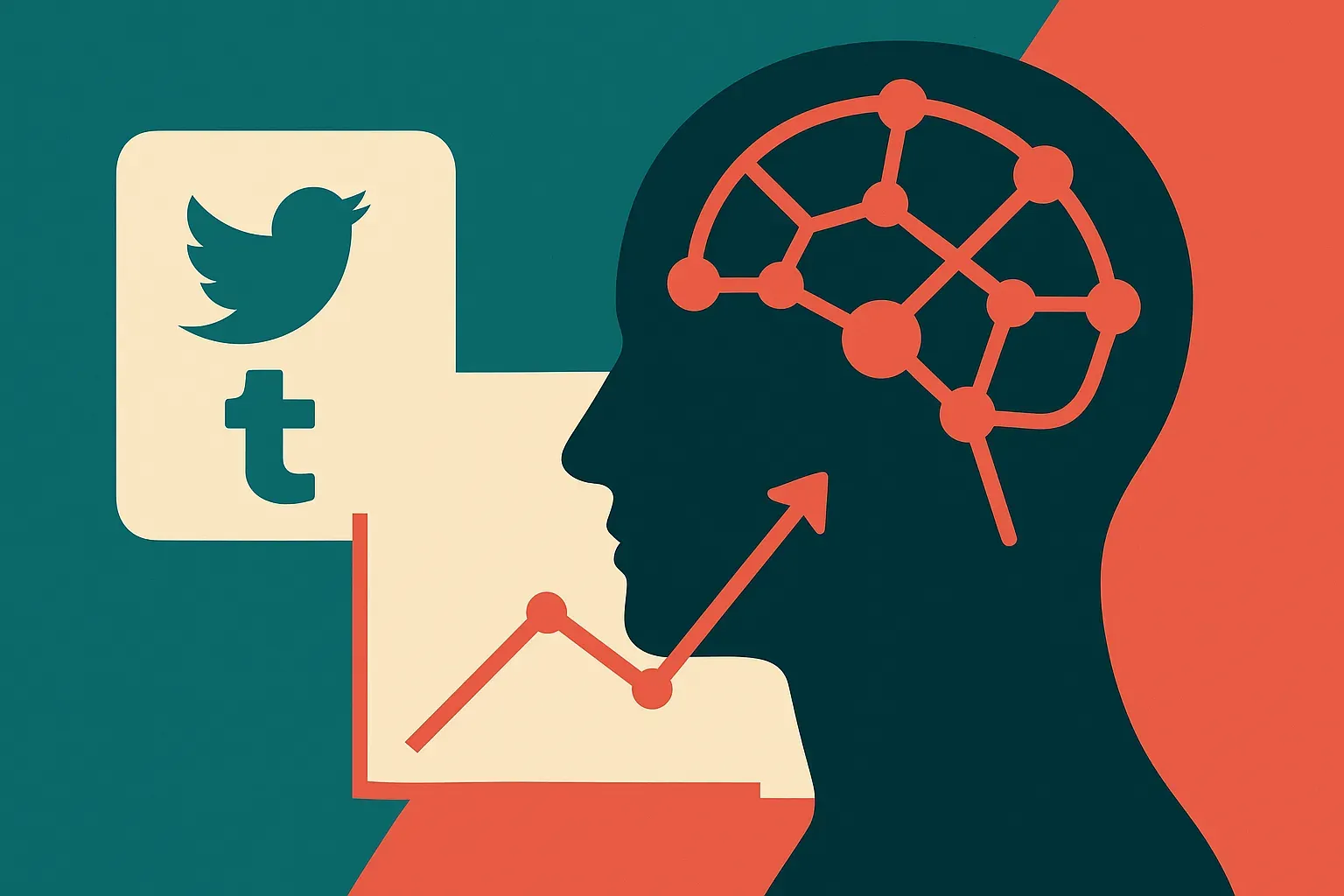
TSN4PI Wants to Predict Where Your Politics Are Headed
A new arXiv framework uses LLMs and temporal graph networks to detect political ideology on X and Truth Social, then forecast how it shifts over time. Here's what it actually does, where the risk sits, and how a builder should read it.
TL;DR: A new framework called TSN4PI claims it can detect political ideology from noisy social media posts and predict how a user’s leanings will shift over time, and the “predict the future” part is exactly where you should slow down.
The paper is “Against Political Polarization: A Unified Framework for Tracing Evolving Political Ideologies on Social Media,” posted to arXiv across cs.AI, cs.CL, and cs.LG. The authors do not name themselves in the abstract I have, so I’ll credit the work by its system name, TSN4PI, and be honest about what the abstract does and doesn’t tell us. It’s a methods paper with two datasets attached, tested on X and Truth Social. That combination is worth reading carefully, because it sits right on the line between useful measurement and something a lot messier.
What is TSN4PI actually doing?
Two modules, doing two different jobs.
The first, PIDN, handles detection. Its problem is the one everyone who’s tried to study political speech online runs into: most posts aren’t political, labels are expensive and biased, and content from one platform doesn’t look like content from another. The authors’ answer is to point large language models at the problem with style transfer and unsupervised domain adaptation. In plain terms: use an LLM to normalize how people write across platforms so a model trained on one source can read another, and to filter out the noise so you’re only scoring the posts that actually carry ideology.
The second module, PIPN, is the ambitious one. It uses temporal graph neural networks to predict future ideological shifts. Not just “where is this person now” but “where are they heading.” The graph part matters here. A temporal graph network models users as nodes connected by interactions over time, so the prediction leans on who you talk to and how those relationships evolve, not just what you personally posted.

Put together, the pitch is a pipeline: clean the firehose, detect ideology and its intensity, then forecast the trajectory. The framing is “against political polarization,” which reads as: if you can measure and anticipate ideological drift, you can study polarization as a process instead of a snapshot.
Why measure ideology as something that moves?
This is the part I find genuinely interesting, and it’s the paper’s best idea.
Most political-leaning classifiers treat a person as a fixed point. Left, right, center, done. But that’s not how radicalization or moderation works. People drift. They get pulled toward an edge by the accounts they engage with, or they cool off. Treating ideology as a static label throws away the most important signal, which is direction and speed of change.
Modeling presence, intensity, and evolution separately is the right decomposition. Presence answers “is this even political.” Intensity answers “how strong.” Evolution answers “which way is it trending.” Those are three different questions, and collapsing them into one score is how you get the shallow “this account is 68% conservative” outputs that tell you nothing useful.
The Truth Social plus X combination is also a smart test. Those platforms have very different user bases and very different writing styles, which is exactly the cross-domain problem the detection module is built to survive. If the style-transfer approach holds up across two audiences that don’t overlap much, that’s a real result. The abstract says “extensive case studies” validated it. I’d want to see the numbers before I take “validated” at face value, and the abstract doesn’t give them.
Where does this quietly go wrong?
Here’s my worry, and it’s structural, not a knock on the engineering.
A system that predicts where an individual’s politics are heading is a surveillance tool wearing a research paper’s clothes. The stated goal is understanding polarization at the population level, which is fine and even valuable. But the same PIPN module that forecasts aggregate ideological drift also, by construction, forecasts individual drift. “This user is trending toward the extreme” is a sentence with obvious downstream buyers: platform trust-and-safety teams, ad targeters, political campaigns, and less pleasant actors.
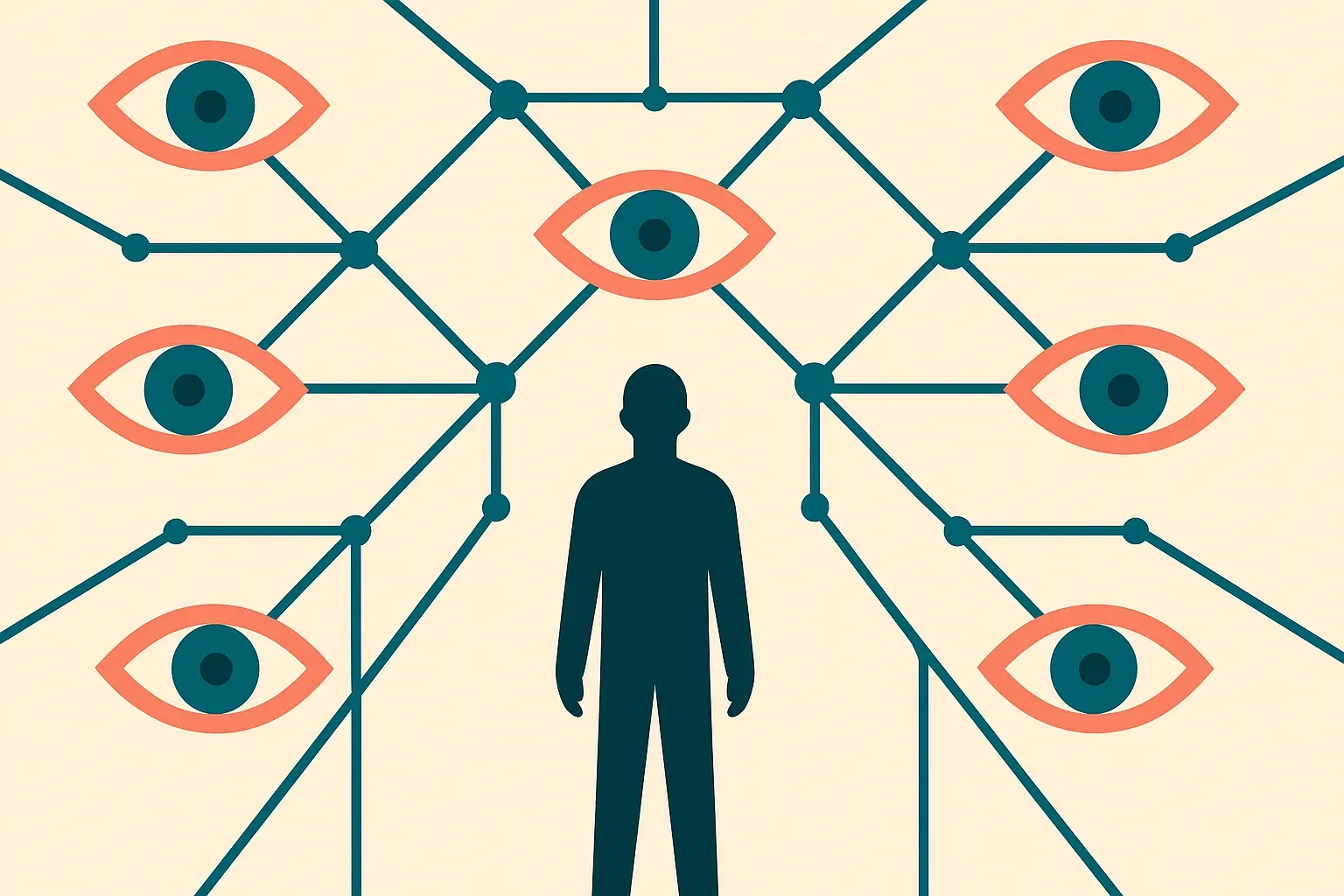
The abstract doesn’t discuss consent, individual-level accuracy, or misuse, and that’s the gap I’d flag hardest. Predicting a group’s shift is one risk profile. Predicting a named person’s future beliefs is another entirely, and the paper’s own framing (individual political ideologies and their temporal dynamics) points at the person, not just the crowd. Two large-scale datasets released for noncommercial research use is a responsible gesture, but a license line doesn’t stop the method from being reimplemented by someone with worse intentions.
There’s also a quieter epistemic problem. When you forecast someone’s ideology and then act on that forecast, you can cause the drift you predicted. A recommendation system that decides you’re trending right and feeds you more of it isn’t measuring polarization. It’s manufacturing it. A framework literally titled “against political polarization” could, deployed carelessly, become an engine for it.
What should a builder take from this?
The transferable idea here is not “go classify people’s politics.” It’s the architecture.
The detection-then-forecast split, with an LLM doing cross-domain cleanup up front and a temporal graph network doing trajectory modeling downstream, is a pattern that generalizes far beyond politics. Any problem where you have a noisy multi-source stream, a sparse signal buried in it, and a “where is this heading” question fits the same shape. Customer churn across channels. Community health in a product’s user base. Sentiment drift toward a brand across platforms that write nothing alike. The style-transfer trick for making one platform’s text legible to a model trained on another is the reusable piece, and it’s cheaper to try now than it was two years ago.
The catch most readers will miss: the detection module is the honest part, and the prediction module is the part that carries all the ethical and accuracy risk, but the paper bundles them so the strong evaluation of the first can lend borrowed credibility to the second. When you read “validated on X and Truth Social,” ask which module was validated and against what ground truth. Predicting the future has no ground truth until the future arrives, so any forecast accuracy number is a backtest, and backtests on human belief are fragile in ways backtests on, say, click-through rates are not. Build the pipeline if the pattern fits your problem. Just don’t let a clean detection benchmark talk you into trusting a forecast you can’t actually check until it’s too late to be wrong safely.