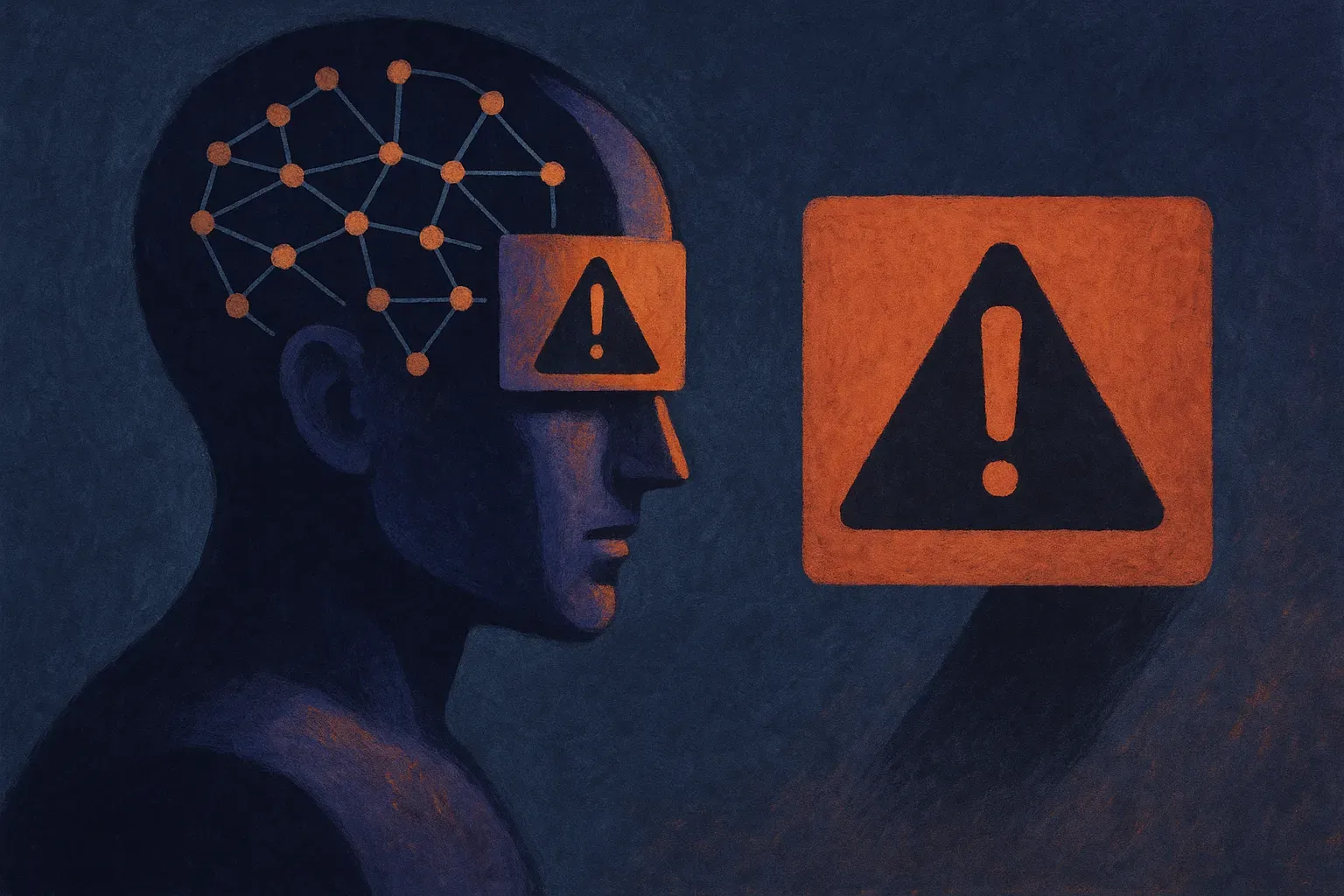
YOPO makes abstention cheaper by reading the model before it lies
YOPO shows a practical way to combine answer steering and abstention in one frozen-model pass, with a useful warning for builders: training a refusal gate can look good in-domain and then fall apart when the task shifts.
TL;DR: YOPO’s useful idea is not “make the model smarter,” it is “preserve the signal that says the model should not answer” while still steering the same frozen model toward better reasoning.
What problem is YOPO actually solving?
The arXiv paper “You Only Pass Once: Answering and Abstaining Together in a Single Forward Pass of a Frozen Language Model” tackles a very practical failure mode: a model can have evidence in its internal activations, use it poorly, then still answer when the input is not enough.
That is the bad combo behind a lot of confident nonsense.
YOPO focuses on frozen Qwen2.5 backbones at 1.5B, 3B, and 7B parameters. The paper combines two interventions on the model’s residual stream. One writes into the stream at mid-stack layers, using a conditional steering probe to recover reasoning accuracy. The other reads from the stream, using a zero-shot sufficiency direction to decide whether the model has enough information to answer.
Individually, both are attractive. Together, they collide. If you steer the residual stream, you change the state the abstention direction was supposed to read. The paper reports this can cost up to 8 AUROC points of cross-domain transfer on small models. The obvious fix is to run the model twice, once clean for abstention and once steered for answering. That doubles inference cost.
YOPO’s move is smaller and more interesting: keep the abstention direction fixed, train a small network to reconstruct the pre-steering residual from the steered residual, then read the abstention direction from that reconstruction. The reconstruction training uses mean-squared error on steered and clean residual pairs, with no sufficiency labels.
That last detail matters. The claim is not just that YOPO can abstain. It is that abstention survives better when it is treated as a label-free readout rather than a task-specific classifier trained into the system.
Why does one pass matter?
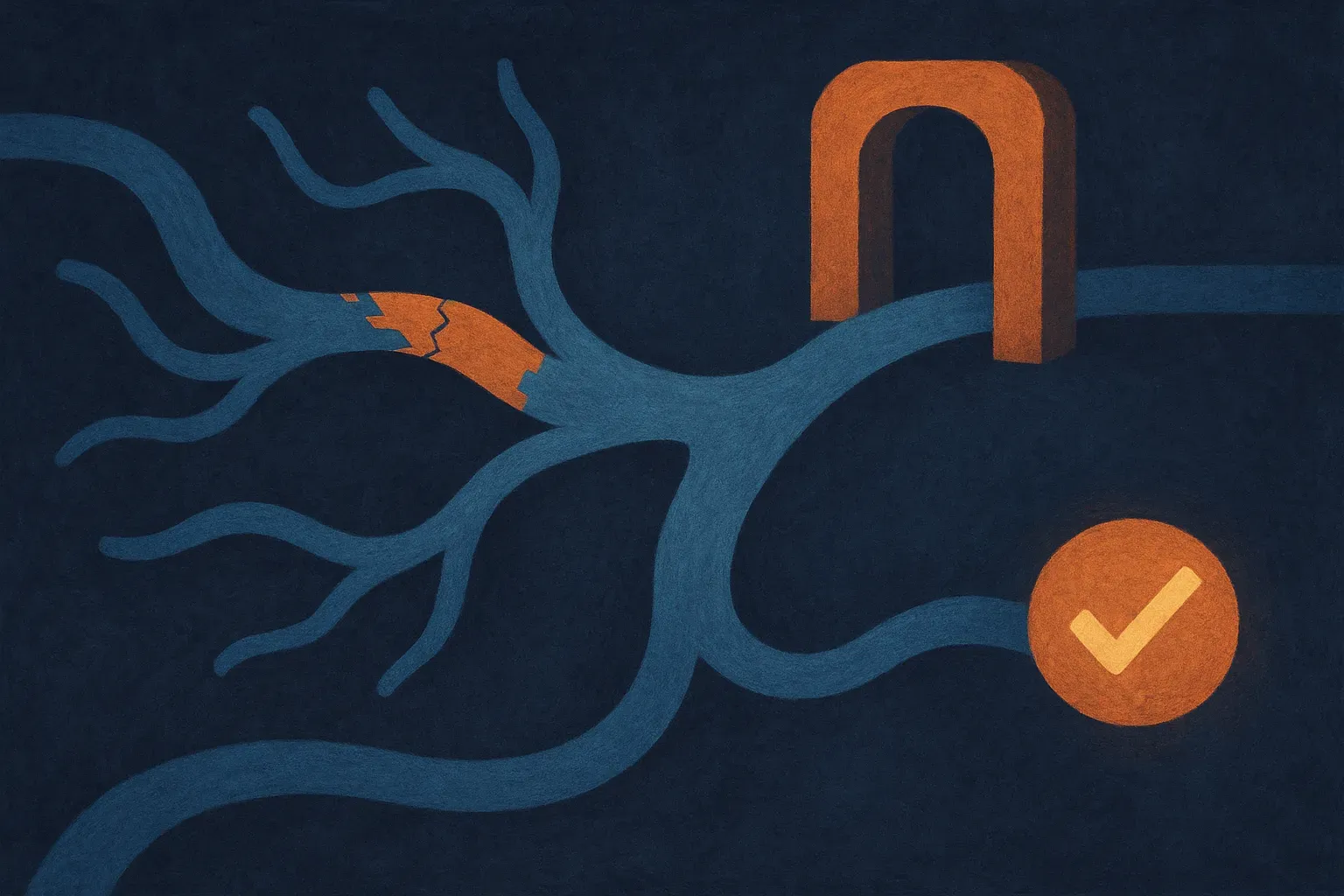
One pass matters because abstention features are often most useful in production settings where latency and cost are already tight.
The paper reports that YOPO answers, steers, and abstains in one forward pass of a frozen Qwen2.5 backbone. On 1.5B alphaNLI, three-way accuracy rises from 0.375 for the frozen baseline to 0.798. Across the 1.5B, 3B, and 7B Qwen2.5 backbones, the one-pass setup beats the two-pass reference at every scale: 0.798, 0.830, and 0.893 versus 0.753, 0.790, and 0.863.
That is counterintuitive. A clean two-pass reference should have an advantage, since abstention gets to read the untouched stream. YOPO beats it anyway, which suggests the reconstruction is not just a cost hack. It may be removing some harmful interference while keeping the useful steering.
The paper also reports results on ten backbones across six model families. I would still be careful with the broad claim. The strongest operational lesson is narrower: when two internal interventions share the same activation space, they can interfere in measurable ways. If one intervention writes and another reads, you need to design the interface between them.
That is true beyond this paper. Tool routing, refusal policies, factuality checks, and agent monitors often get bolted onto the same model state or the same final answer. YOPO is a reminder that the order and location of those operations matter.
What should builders take from the caveats?
The best part of the paper is that it does not hide the dataset problem. “You Only Pass Once” reports a source-side audit that found alphaNLI construction leaking a surface artifact. The paper says its architectural claims are anchored instead on native-label replications including SQuAD2, RepLiQA, and MuSiQue.
That is the right instinct. Abstention benchmarks are especially easy to game. If a gate learns dataset texture rather than insufficiency, it can look excellent in-domain and break the first time user inputs change.
The paper’s standard four-domain suite is framed as an answer-or-abstain benchmark. YOPO’s gate reportedly tops every in-domain dataset, while the label-free direction is the only gate family to survive domain transfer. That is the claim I care about most. Not because it settles abstention. It does not. But because it points toward a pattern: train the task behavior where you must, keep the uncertainty signal as close to the model’s general internal evidence as possible.
For a builder, I would not try to reproduce YOPO first. I would test the principle. Take a system that answers when it should refuse, log clean internal states if you control the model, or proxy signals if you do not, then compare a trained refusal classifier against a label-light sufficiency signal across domains. The catch most readers miss: the refusal mechanism is not just another head to optimize. If you train it too tightly to today’s eval, you may be teaching it the benchmark instead of teaching it when the model actually knows enough.