Claude’s Bluetooth hint is the right kind of AI assistance
A small lost-phone anecdote points to a useful pattern for AI assistants: translating a messy everyday problem into a testable physical signal, without pretending the model has magic location powers.
TL;DR: The useful assistant pattern is not “AI finds your phone,” it is “AI turns a vague problem into a concrete measurement you can test.”
What did Claude actually do?
The primary source is the Hacker News thread titled “Lost my phone at the office. Claude suggested tracking Bluetooth signal strength,” which points to a post by un1c0rnioz about using Claude to recover a misplaced phone at work.
That is a tiny anecdote. It is not a benchmark. It does not prove Claude is suddenly a location system. But it does capture something important about practical AI.
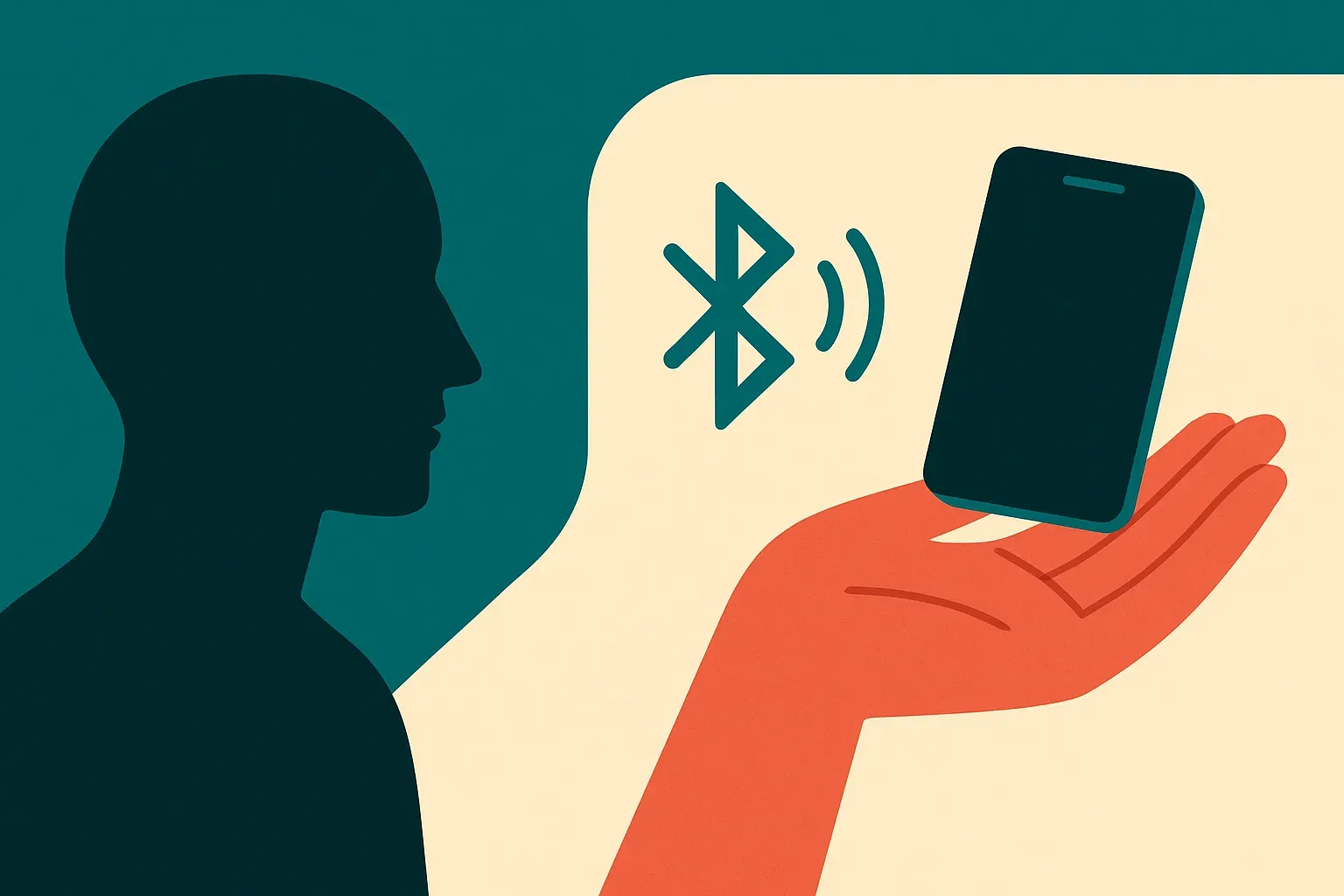
The user had a fuzzy problem: my phone is somewhere in the office. Claude apparently suggested a physical workaround: track Bluetooth signal strength. In plain terms, if another device can see the phone over Bluetooth, the received signal strength can act as a rough proximity clue. Walk around. Watch the signal get stronger or weaker. Narrow the search.
The model did not need a new tool, a special agent framework, or access to a building map. It supplied the missing intermediate step between “I lost a thing” and “there is a measurable signal nearby.”
That is where assistants are often most useful. Not as omniscient answer machines. As translators from intent to procedure.

Why is this more interesting than it sounds?
Most AI demos overreach. They show the model doing a polished end-to-end task, then quietly hide the human scaffolding, retries, tool constraints, and failure modes.
This one is almost the opposite. It is small enough to inspect.
Claude’s useful move was to reframe the problem. The phone was not just “lost.” It was a radio device. The office was not just a place to search. It was a space where signal strength changes as you move. The user was not waiting for magic. They could run an experiment.
That pattern applies far beyond a missing phone.
A non-technical person says, “My Wi-Fi is bad in this room.” A useful assistant can suggest checking signal strength, channel congestion, mesh node placement, or whether the device is clinging to the wrong access point.
A founder says, “Users say onboarding is confusing.” A useful assistant can turn that into session replay review, drop-off points, support ticket clustering, and one targeted copy test.
An ops lead says, “The nightly job randomly fails.” A useful assistant can ask for logs, isolate time windows, compare dependency changes, and test whether failures correlate with input size.
The value is not that the model “knows the answer.” The value is that it proposes the next discriminating action.
That is a better bar for assistants than personality, memory theater, or vague autonomy. Can it help you observe the world more clearly? Can it suggest a cheap test? Can it reduce the search space?
Where does this trick fail?
Bluetooth signal strength is messy. Walls, bodies, metal furniture, device orientation, battery state, and radio interference can all distort the signal. RSSI is a hint, not a ruler. It can tell you “warmer” or “colder,” but it may not point cleanly to a drawer, couch cushion, conference room, or backpack.
There is also a source-quality point. The Hacker News item is an anecdote based on a social post. Useful, but thin. We should not inflate it into evidence that Claude is generally reliable at physical-world troubleshooting. A different model might suggest the same thing. Claude might also suggest a dead end in a similar situation.
Still, the lesson holds because it is operational, not magical.
Good assistant use often looks like this:
You bring context. The model proposes a mechanism. You test it in the real world. You keep the parts that survive contact with reality.
That loop is boring compared with “agents will run your life.” It is also much closer to how people actually get value from today’s models.
Practitioner’s take: when you are stuck, ask the model to convert the problem into observable signals, not just answers. “What can I measure?” “What would change if this hypothesis were true?” “What is the cheapest physical or digital test?” Then verify. The catch most readers miss is that the assistant’s best contribution may be the experiment design, not the final answer.