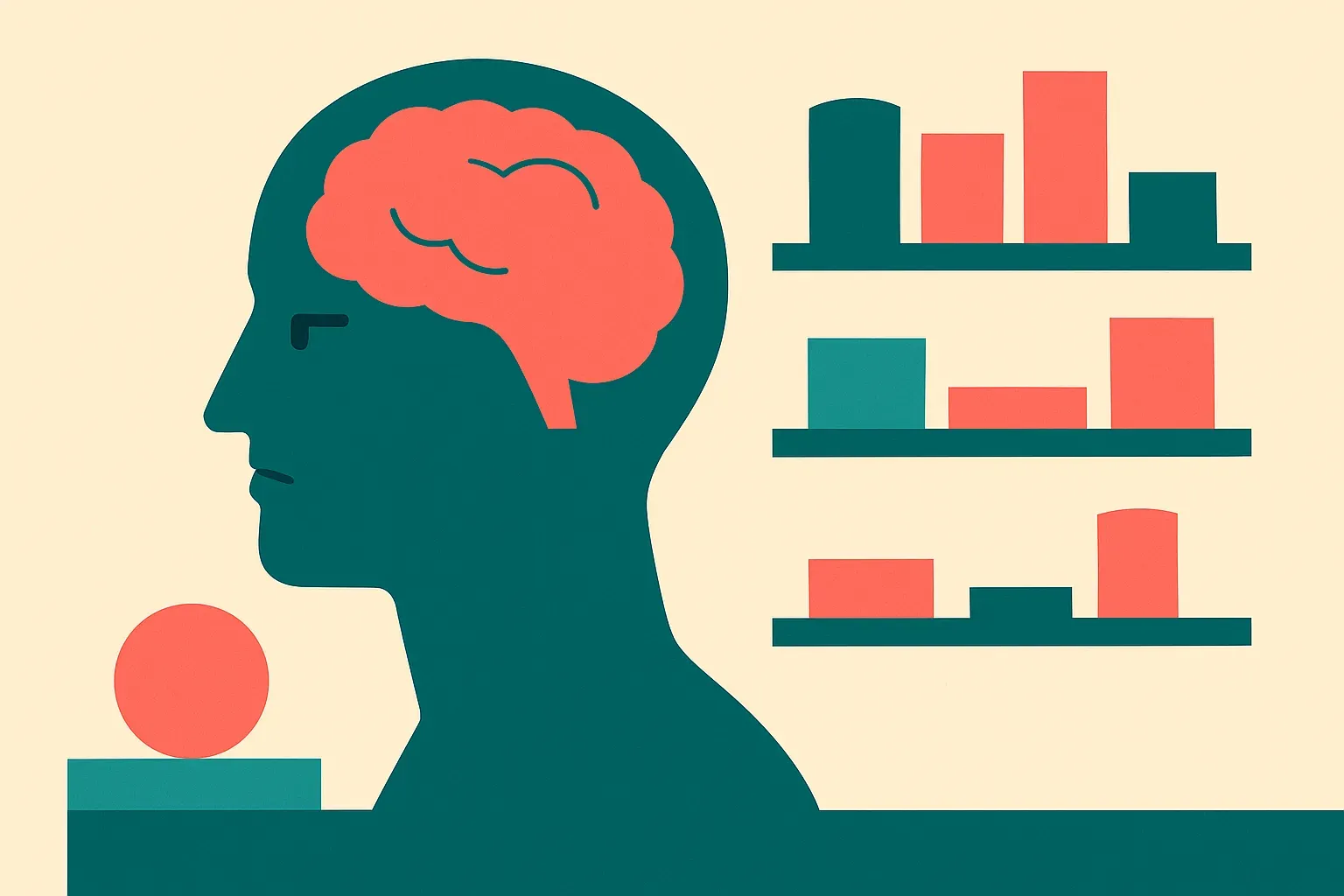
Claude’s useful frame for model knowledge: broad, frozen, uneven
Claude’s explainer is a clean reminder that model knowledge is not a database or lived experience. Builders should treat it like uneven inventory: plentiful in common pre-training topics, thin at local edges, and stale without tools.
TL;DR: Treat model knowledge as broad but uneven inventory, then decide when to trust it, when to ask for retrieval, and when to force human verification.
What does a model “know,” really?
Claude’s YouTube explainer, “What do AI models actually know?”, gives one of the better plain-English frames I’ve seen for this: a model like Claude has read more text than any human could in many lifetimes, but it has not lived through any of it.
That distinction matters.
A model’s “knowledge” comes from training on huge amounts of text, mostly internet text, public datasets, and other written sources. It does not have experiences. It does not remember your city changing its parking rules last week unless that fact is in context or available through a tool. It does not browse the live web unless the product has explicitly wired in search or retrieval.
The important word is not “smart.” It is “coverage.”
Claude’s explainer describes model knowledge as a continuum. On one end are topics that appear often, consistently, and before the training cutoff. That is where a model can feel shockingly deep. Canonical programming patterns. Common legal concepts, with caveats. Famous books. Mainstream history. Public technical documentation that existed during training.
On the other end are rare topics, post-cutoff events, niche local details, underrepresented languages, and anything where the right answer depends on freshness. That is where the fluent answer becomes dangerous, because fluency stays high while confidence should drop.

Where do the edges show up in real products?
The edge cases are not edge cases if you are shipping.
Customer support bots hit them on return policies that changed yesterday. Internal copilots hit them on company acronyms that never appeared on the public internet. Healthcare and legal workflows hit them when the model knows the general pattern but not the current rule, jurisdiction, or patient-specific fact. Local search products hit them when the model can describe what a good plumber usually does but cannot know which plumber is licensed on your block.
Claude’s “What do AI models actually know?” calls out four pressure points: time-sensitive information, niche or local domains, less represented languages, and situations where the model is asked for what is “typical” while web search is off.
That last one is subtle. A model is often very good at the median answer. It has absorbed the shape of common explanations. That can be useful for drafting, classification, brainstorming, tutoring, and turning messy notes into usable structure. But “typical” is not the same as “true here.”
This is why I dislike blanket claims like “the model knows X” or “the model does not know X.” Both are too crude. The better question is: how likely was this information to appear in the training mix, how stable is it, and did we give the model a way to check?
What should builders change?
A good AI product should make the knowledge boundary visible in the workflow.
If the user asks for stable, common, pre-cutoff knowledge, the model can answer directly and cite uncertainty where needed. If the user asks for current, local, proprietary, or high-stakes facts, the product should route to retrieval, search, database lookup, or escalation. Not as an ornament. As part of the core design.
This is also a prompt design issue. Asking “answer this” invites the model to fill gaps. Asking “state what you can infer from the provided context, list what is missing, then answer only if the missing facts are not required” creates a different behavior. The second prompt respects the inventory problem.
For evaluation, do not only test the happy path. Build a small set of questions that sit near the boundary: last month’s policy change, obscure internal terminology, local regulation, non-English user phrasing, and a question where the correct response is “I need to look that up.” If the model sounds equally certain on all of them, your system has a trust problem.
For builders, the practical move is simple: tag every user request by freshness, locality, domain specificity, and consequence. Let the model handle common stable knowledge. Add retrieval for private or current facts. Require citations or human review when the cost of being wrong is high. The catch most teams miss is that the model’s weakest answers often sound just like its strongest ones, so the product has to expose the boundary before the user pays for it.