
Kimi K3’s SpreadsheetBench win is a signal, not a coronation
A Reddit post flags Kimi K3 ranking first on AfterQuery’s SpreadsheetBench 2 ahead of Claude Fable 5. The useful signal is not model horse-racing, it is that spreadsheet work is becoming a serious AI test bed for messy, high-value office automation.
A r/LocalLLaMA submission from /u/Charuru says Kimi K3 ranks #1 on AfterQuery’s SpreadsheetBench 2, ahead of Claude Fable 5.
That is the claim. We do not have the score margin, task count, grading method, or failure breakdown in the Reddit post. So I would not treat this as proof that Kimi K3 is “better” than Claude across real work.
But I do think it is a useful flare.
Spreadsheets are where AI benchmarks start to look less like trivia and more like labor.
Spreadsheets test the boring skills that matter
A good spreadsheet task is not just “answer this question.” It usually asks for several things at once: find the right cells, infer messy structure, write or fix formulas, preserve formatting, understand business intent, and avoid breaking the workbook while doing it.
That is closer to office work than a clean prompt in a chat window.
This is why SpreadsheetBench 2 is interesting regardless of who sits at #1 this week. Spreadsheet work punishes shallow fluency. A model can sound confident and still put a formula in the wrong row, miss a hidden dependency, overwrite an input, or produce a plausible table that does not reconcile.
Those are not academic errors. They are production errors.
If Kimi K3 is really beating a Claude-branded model on this eval, the important question is not “did open-ish models catch closed models?” The important question is narrower: what kind of spreadsheet work did Kimi K3 handle better?
Formula synthesis is different from table extraction. Multi-sheet reconciliation is different from chart creation. Financial modeling is different from cleaning a CSV export from Salesforce. The benchmark name tells us the domain. It does not tell us which failure modes moved.
First place is useful, but thin without failure data
Benchmarks get quoted like sports scores because that is easy. #1 is clean. “Surpassing Claude Fable 5” is a strong headline.
Builders need more.
I want to know whether Kimi K3 won by being more accurate, by following spreadsheet editing instructions better, by using tools more reliably, or by avoiding catastrophic workbook changes. I also want to know how often it refused, hallucinated columns, changed existing formulas, or produced outputs that looked right but failed when recalculated.
Those details matter more than the leaderboard.
A model that is 3 percent better on final answer accuracy but 2x worse at preserving workbook integrity might be a bad choice for finance ops. A model that is weaker at freeform reasoning but excellent at deterministic formula edits might be perfect for an internal spreadsheet copilot.
The ranking is a starting point, not a buying decision.
Spreadsheet agents need guardrails, not just smarter models
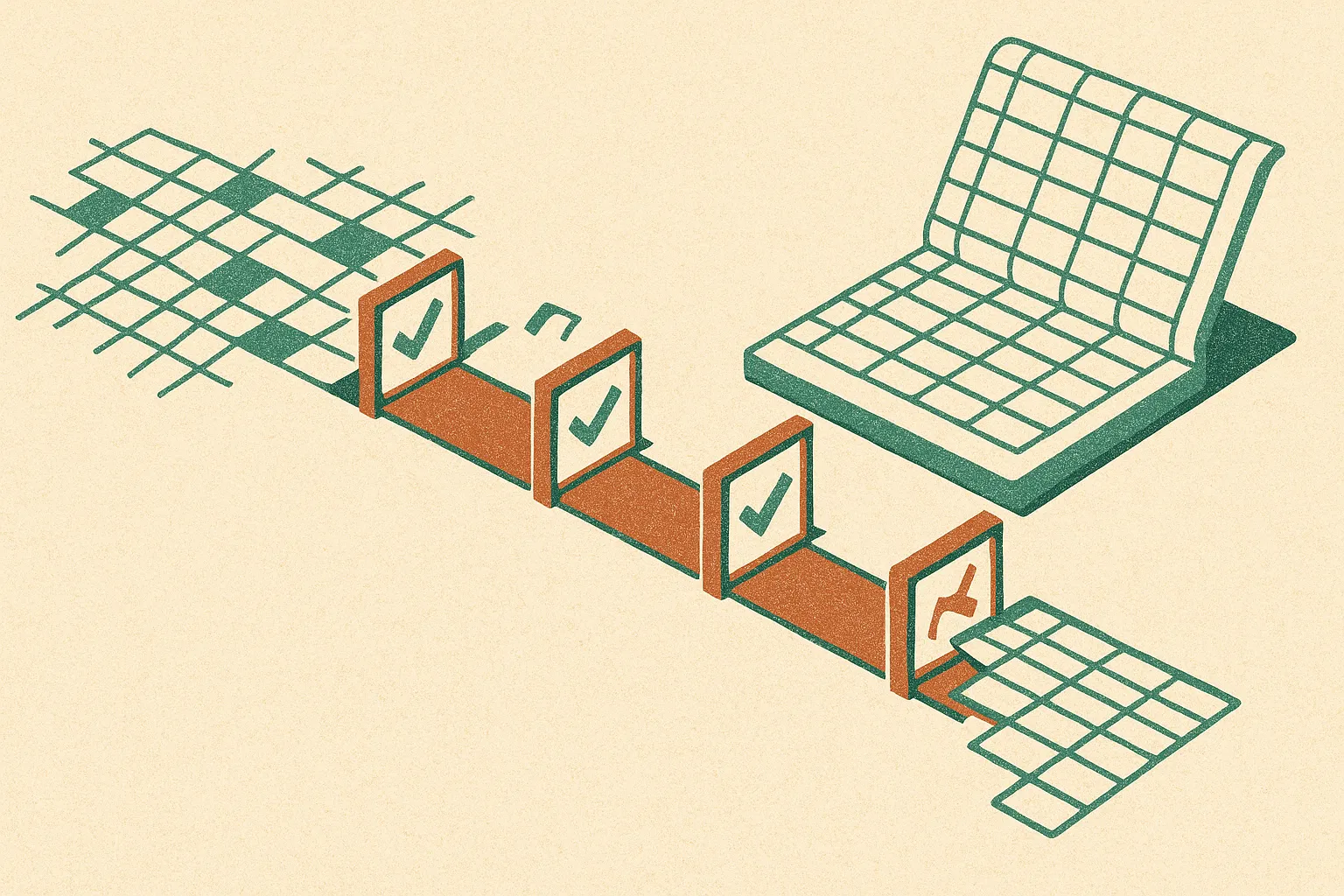
The practical direction is clear. Spreadsheet AI should not be a naked chat model with file access. It should be a workflow with inspection, planning, execution, and verification.
The model proposes changes. The system snapshots the workbook. A tool applies edits. A checker recalculates formulas, validates references, compares changed cells, and flags suspicious diffs. The user sees the delta before anything becomes final.
That architecture matters even if Kimi K3 is excellent. Maybe especially then. Higher model capability makes people trust automation faster, and spreadsheets are full of silent failure surfaces.
Practitioner’s take: if you build around spreadsheets, run Kimi K3 against your own workbook set before caring about the leaderboard. Pick 20 real files with ugly headers, hidden sheets, merged cells, stale formulas, and business rules that live in someone’s head. Score not just final answers, but changed cells, broken references, recalculation errors, and time saved. The catch most teams miss: the best spreadsheet model is only half the product. The other half is the diff, rollback, and verification layer that keeps a confident model from quietly corrupting the work.