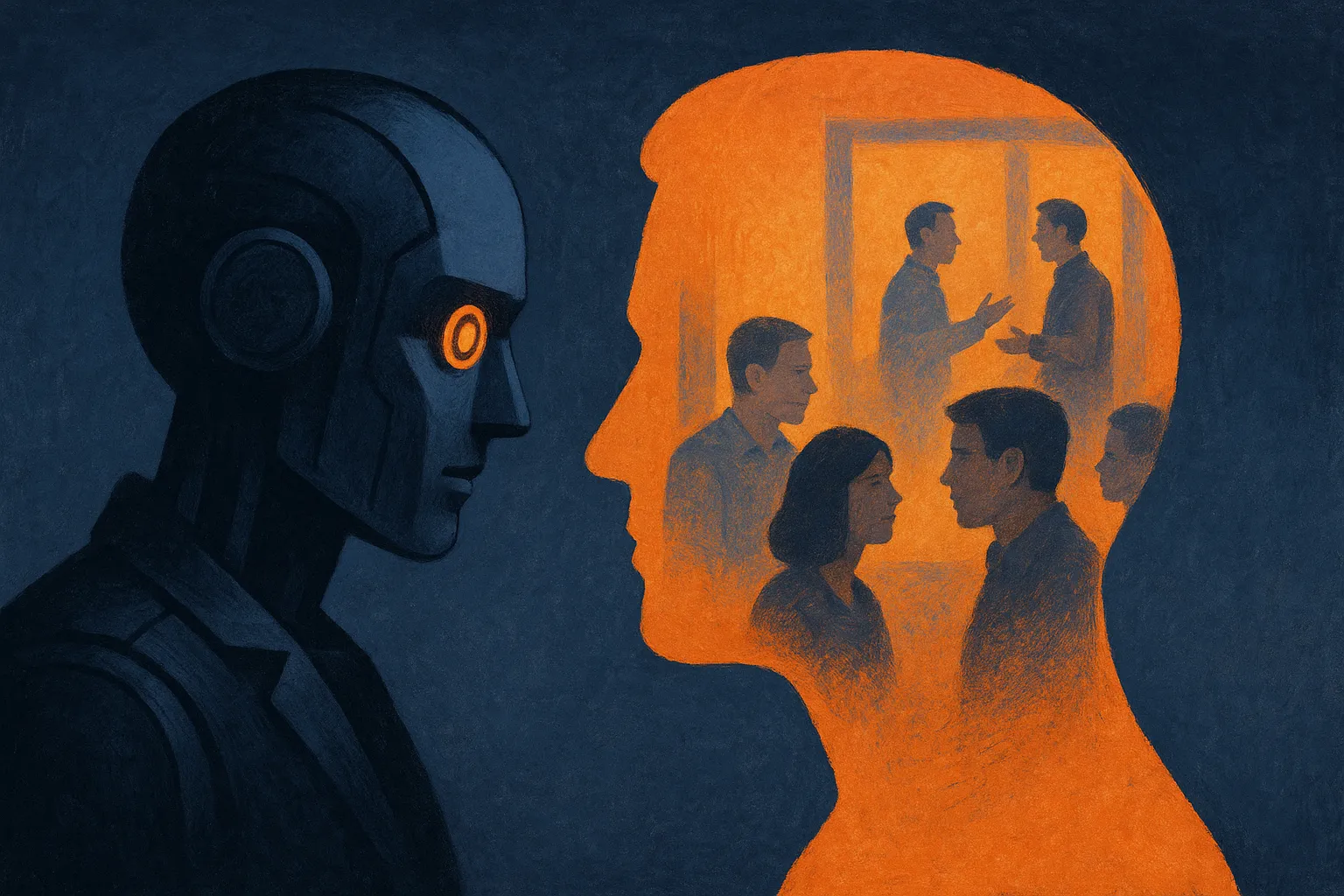
Vision models are getting the scene right, but not always the gaze
A new CSB benchmark suggests modern vision-language models can describe complex social scenes about as well as strong human annotators, but the remaining failures point less to vocabulary or hallucination and more to where the model chooses to look first.
Modern vision-language models have crossed a line that used to feel far away: describing messy human scenes with something close to human-level competence.
That is the useful takeaway from a new arXiv paper on the “Evolution of Accuracy and Visual-Cognitive Errors in a Decade of Vision-Language AI Models.” The researchers built a Complex Social Behavior dataset, 100 images focused on human interactions and behaviors, then compared model descriptions from 2017 through 2025 against a gold standard and 20 human descriptions.
The important part is not just “models got better.” We knew that. The important part is where they got better, and what still breaks.
MS-COCO was too easy for the current era
A lot of vision-language evaluation has leaned on MS-COCO-style images. Useful dataset. Historically important. But many of those scenes are simple enough that they hide the hard part: social context, implied intent, interactions, group behavior, and subtle relationships among people and objects.
The CSB authors found that older pre-MLLM systems performed much worse than even the lower-ranked human descriptions on complex social scenes. That tracks with the old captioning era. Models could say “a man standing near a table,” but missed the point of the scene.
The newer multimodal large language models changed that. On CSB, the paper reports that MLLMs reached accuracy similar to the top-ranked human descriptions. Even more interesting, the gap between simple MS-COCO scenes and complex CSB scenes mostly disappeared for these newer models.
That does not mean they “understand people” in the human sense. It means the evaluation target moved from object naming to scene interpretation, and current models did much better than the last decade’s systems. That is real progress.
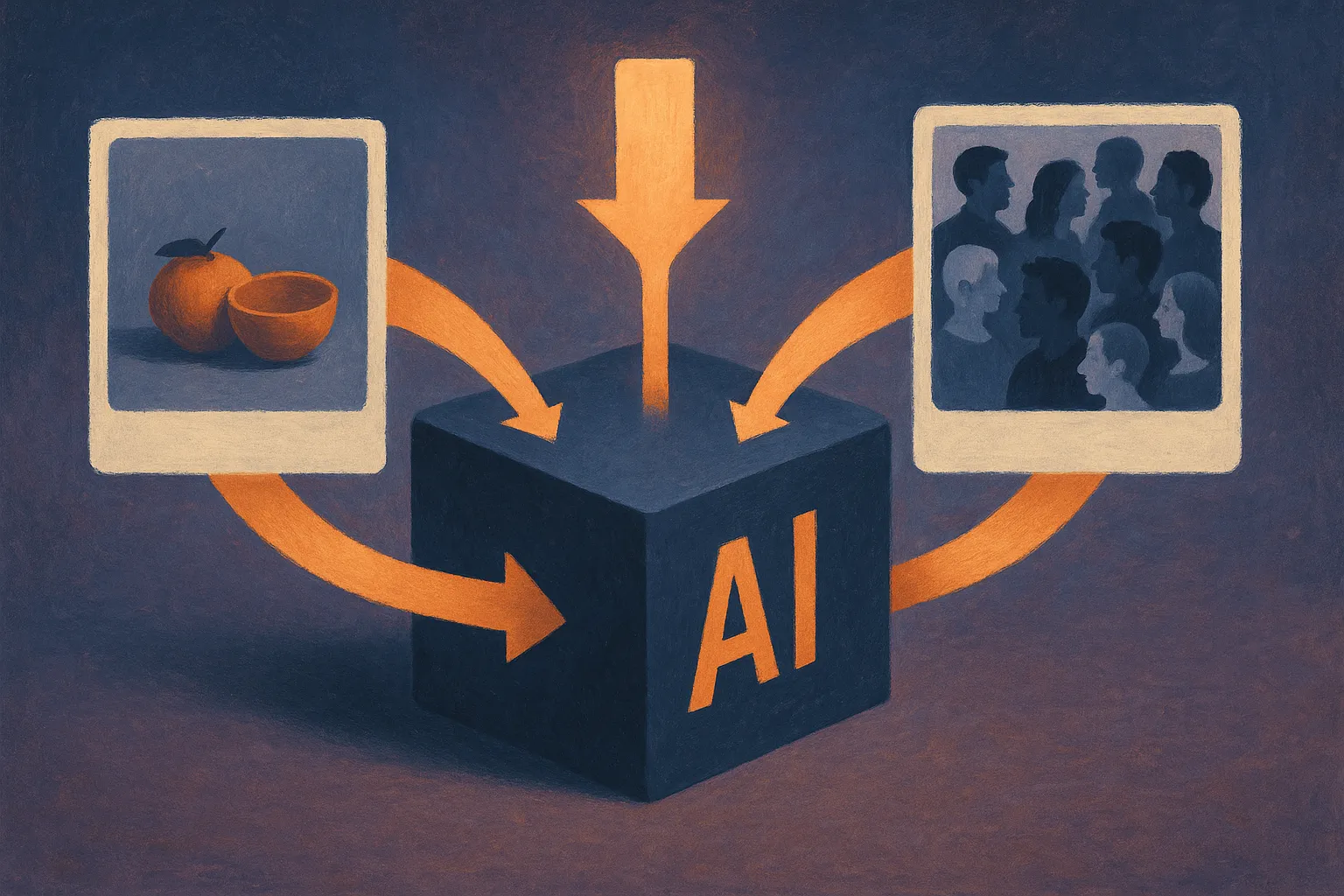
The errors shifted from naming to attention
The paper breaks failures into five visual-cognitive error types: object detection, recognition, hallucination, scene understanding, and spatial dependence.
The big win is that MLLMs nearly eliminated most of these errors on the tested datasets. Detection improved. Recognition improved. Hallucination dropped. Scene understanding improved. The authors also reported that detection, recognition, and hallucination errors had the highest impact on overall description accuracy, which is not surprising. If the model invents a dog, misses a knife, or misidentifies a wheelchair, the whole caption can go sideways.
The remaining error is more subtle: spatial dependence. In plain English, models sometimes rely on different image regions than humans do when forming a description.
That is a different class of bug. It is not “the model does not know what a cup is.” It is closer to “the model looked at the wrong thing first, or gave the wrong region too much weight.” For builders, that matters because many applied vision workflows are not caption contests. They are inspection, moderation, medical triage, robotics, retail analytics, accessibility, insurance review. In those settings, what the model attends to can be as important as what it says.
A model can produce a good global summary and still miss the operational detail you care about.
Better captions are not the same as better products
This is where I would be careful with the headline version of the research. “Human-level scene description” sounds like a solved problem. It is not.
The CSB dataset has 100 images. That is enough to expose a weakness in older benchmarks and compare error types, but not enough to bless every product workflow. Also, the task is description accuracy relative to a gold standard. Real deployments often ask narrower questions: Is this patient at risk? Is this worker violating safety protocol? Is this customer angry or just waiting? Should this robot move left?
Those tasks need different evals. They need domain-specific gold standards, edge cases, and failure audits. The CSB result is still valuable because it gives a cleaner map of what has changed. The easy failures are less common. The remaining failures are more about attention, grounding, and task framing.
For a builder, I’d use this as permission to test vision-language models on richer social or operational scenes, not as permission to trust them blindly. Build a small benchmark from your actual images. Score not just final answers, but error type: missed object, wrong identity, invented detail, bad scene inference, wrong focus. Then add prompts or cropping pipelines that force attention to the regions that matter. The catch most readers miss: the model may sound right while looking in the wrong place.