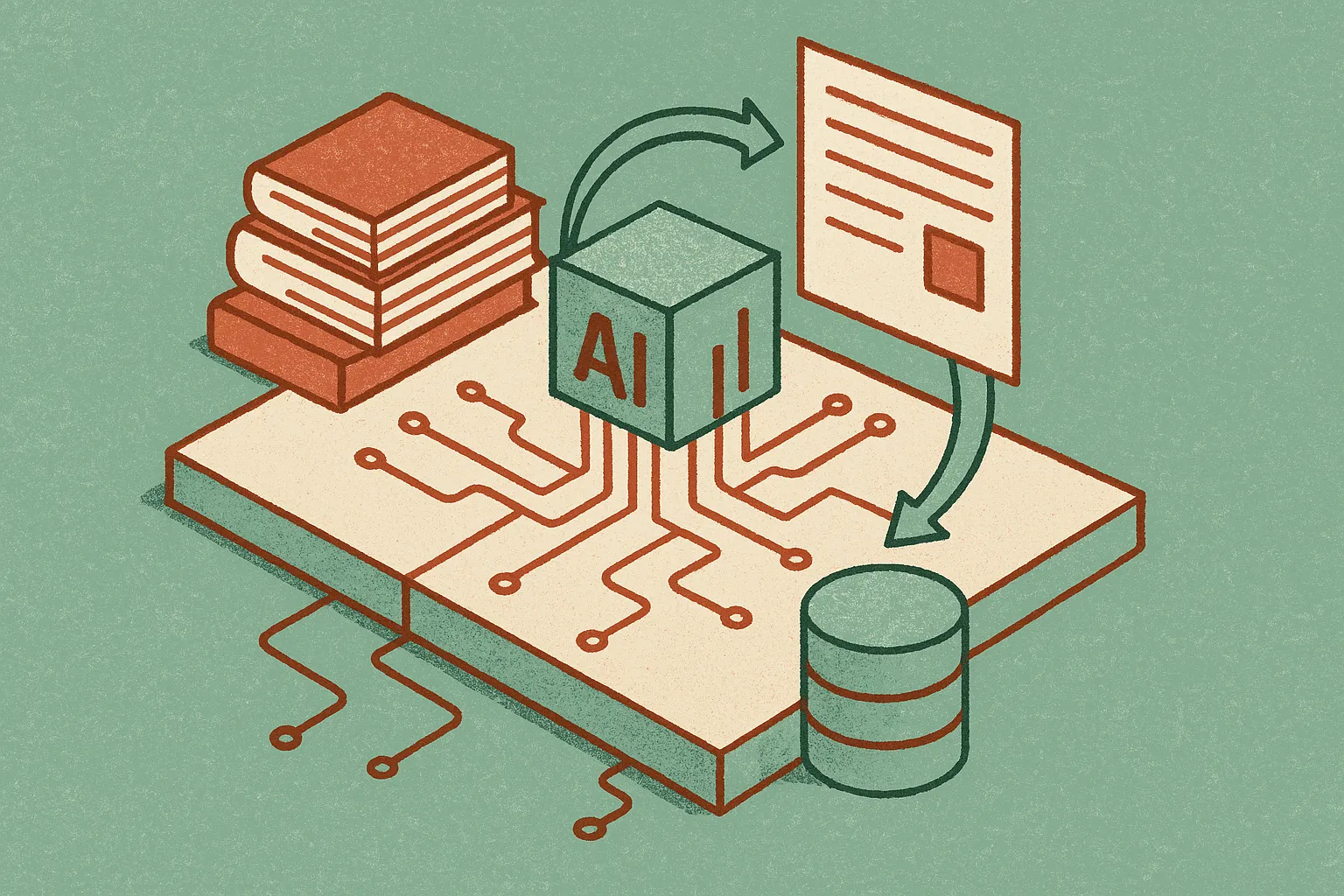
LangChain’s Mistral update is about provenance, not flash
LangChain’s langchain-mistralai 1.1.6 release is small, but the useful parts are telling: citation metadata, stop sequence support, and package version tracing. That is not agent magic. It is the plumbing teams need before generated answers can survive audits, regressions, and real product constraints.
LangChain’s langchain-mistralai==1.1.6 release is not a headline grabber. No new benchmark crown. No giant context window. No agent that books your flight and fixes your database.
Good.
The interesting changes are smaller: citation metadata from Mistral chat responses, stop sequence support, refreshed model profiles, and package version tracking in tracing metadata. That sounds like plumbing because it is. But this is the kind of plumbing that decides whether an AI feature stays a demo or becomes something a team can operate.
Citations are becoming part of the response object
LangChain reported that langchain-mistralai now surfaces citation metadata from chat responses in PR #37008. That matters because citations are usually treated as a UI feature. The model says something, the app shows a little source chip, everyone feels better.
But citations need to be data, not decoration.
If citation metadata is exposed cleanly through the integration layer, builders can store it, inspect it, test it, and reject outputs that do not meet a product’s threshold. A support chatbot can require a cited policy page. A research assistant can show which retrieved document shaped an answer. A compliance workflow can preserve evidence after the chat session is gone.
This does not make citations automatically trustworthy. Models can still quote weak context or point to the wrong passage if the retrieval system is bad. But surfacing metadata gives the application a handle. You cannot build controls around information you never receive.

Stop sequences are boring until they save your product
LangChain also added Mistral support for stop sequences in PR #38047. This is one of those controls that feels primitive next to tool calling and structured outputs, but it still earns its keep.
Stop sequences help developers fence in generation. They can prevent the model from continuing into the next section, leaking a prompt format, producing extra conversational turns, or breaking a parser that expects a clean boundary. Not glamorous. Very useful.
In practice, these small generation controls stack. You use temperature, response format, stop sequences, tool schemas, validators, retry logic, and traces. None of them solve reliability alone. Together they make the system less surprising.
That is the real pattern in this release. It is not about making Mistral models smarter. It is about making Mistral-backed applications easier to constrain and inspect from LangChain.
Tracing now has better fingerprints
The release notes also point to package version tracking in tracing metadata, added across core and partner packages in PR #35295, plus a related fix to package version trace metadata in #38110. This is the kind of feature teams ignore until a regression ruins a week.
When an AI workflow changes, the model is only one suspect. The prompt changed. The retriever changed. A dependency changed. A partner package changed. The same user input no longer produces the same shape of output, and suddenly everyone is reading logs like tea leaves.
Including package versions in traces gives teams one more fingerprint. If a production run started failing after langchain-mistralai moved from 1.1.5 to 1.1.6, that should be visible in the trace, not reconstructed from memory and deployment notes.
The refreshed model profile data in the release fits the same theme. Model capabilities and defaults change. Integrations need to keep pace so applications are not making decisions from stale assumptions.
Practitioner’s take: if you use Mistral through LangChain, test this release against one narrow workflow before upgrading broadly. Add assertions around citation metadata if your product claims grounded answers. Use stop sequences where your output has hard boundaries. Then check LangSmith traces to confirm package versions are captured the way your debugging process needs. The catch most teams miss: observability is not just for outages. It is how you prove an AI answer came from the system you thought you shipped.