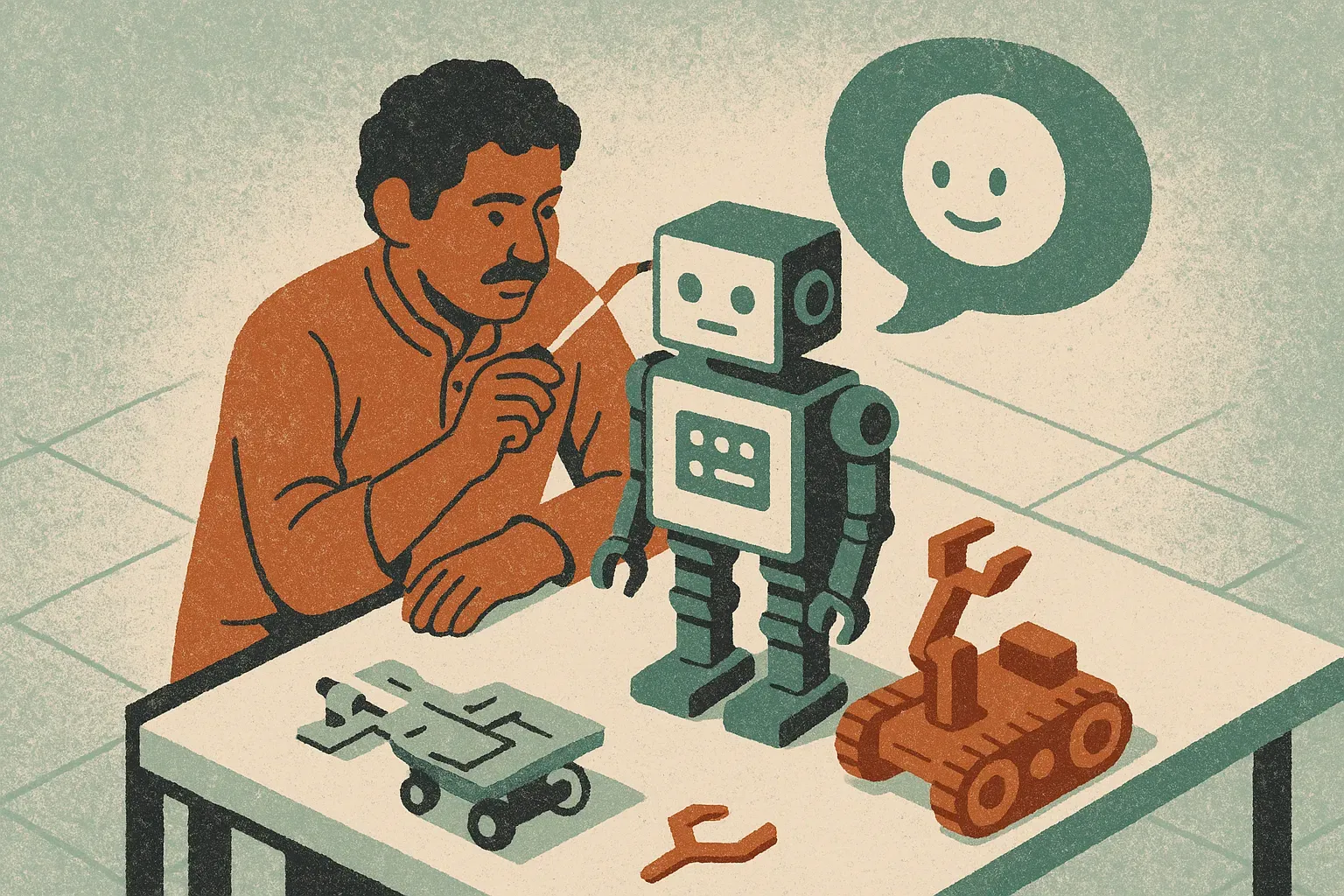
ATL Saathi puts Gemini beside India’s robotics teachers
Google and India’s Atal Innovation Mission are putting a Gemini-powered assistant inside Atal Tinkering Labs. The useful question is not whether this makes classrooms smarter, but whether it helps teachers run better robotics sessions, debug projects faster, and keep students building when expert support is scarce.
Google DeepMind reported that Google and AIM launched ATL Saathi, a Gemini-powered AI tool for Indian educators working in robotics labs. The short version sounds familiar: AI assistant meets classroom. The more interesting version is narrower. This is not about replacing teachers. It is about putting a capable helper next to the person who has to make a robotics lab function with real students, real parts, and uneven local support.
The teacher is the user, not the press release
A lot of education AI launches talk past the actual bottleneck. They promise personalized learning for every student, then run into classroom time, curriculum constraints, assessment pressure, device access, language, safety, and teacher trust.
ATL Saathi is framed differently. Google DeepMind says it is meant to empower Indian educators in robotics labs. That matters. Robotics classrooms are messy in a way chat-based tutoring demos usually are not. A student’s code may be wrong. The sensor may be wired backward. The battery may be weak. The kit may be missing a part. The teacher may need a quick explanation, a troubleshooting path, or a way to adapt the activity for a mixed-skill group.
If Gemini is useful here, the win is not a magical student companion. It is a better-prepared instructor. Someone who can ask, “Why is this motor not responding?” or “Give me a simpler version of this activity for younger students,” and get an answer that keeps the room moving.
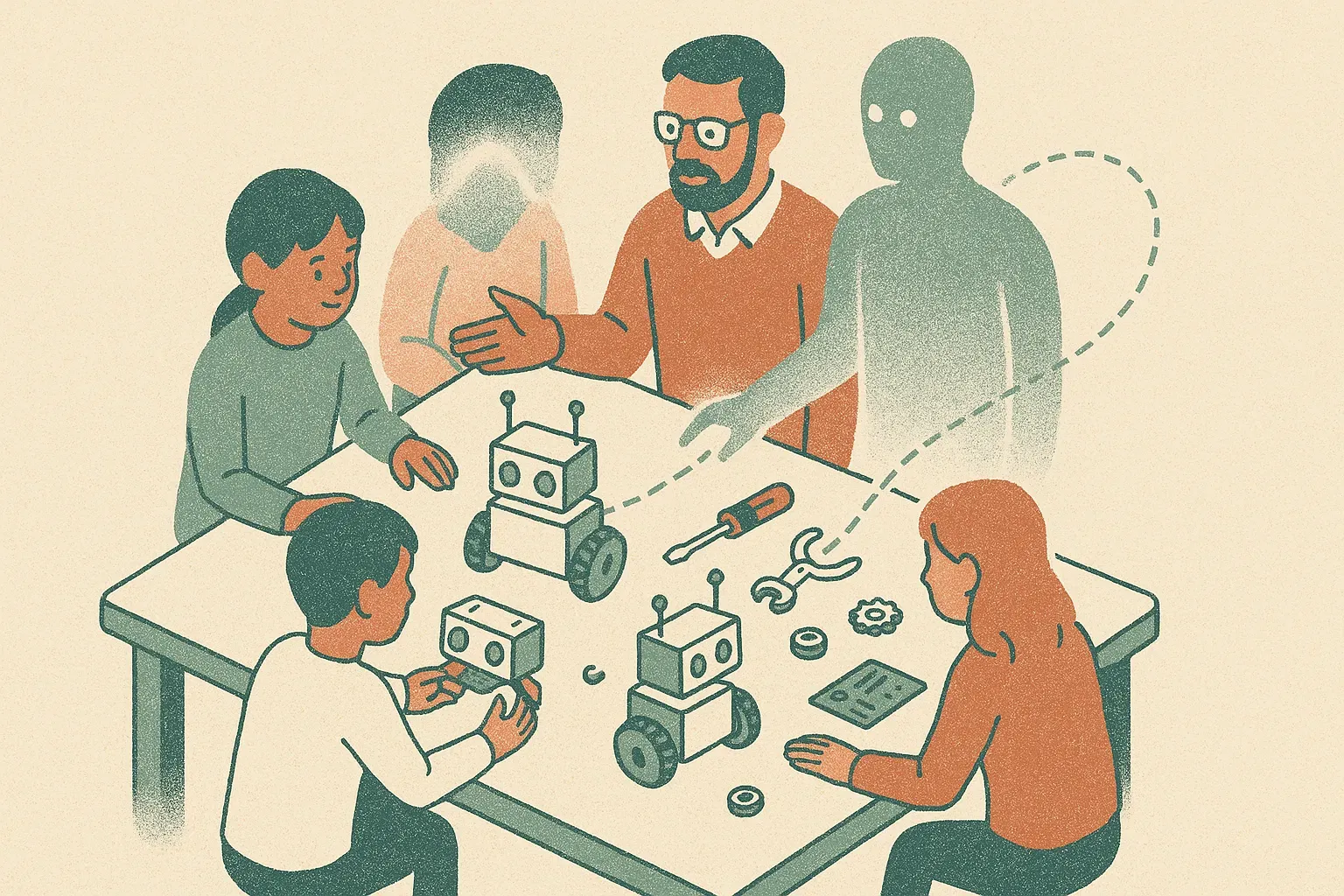
Robotics is a good test of classroom AI
Robotics labs are a strong proving ground because they punish vague answers. A generic explanation of loops or sensors is less useful than a concrete fix. A teacher needs step-by-step help, likely in the context of specific kits, local curriculum, available components, and student age.
That is also where the launch raises questions the announcement does not answer, at least from the public summary. What languages does ATL Saathi support? Does it know the exact hardware used in Atal Tinkering Labs? Can it handle images of circuits or robot builds? Is it grounded in official AIM materials, or mostly relying on Gemini’s general knowledge? Can educators trust it around electrical safety, tool use, and age-appropriate guidance?
Those are not nitpicks. They are the difference between a nice demo and a tool teachers keep open during class.
The missing receipts
Google’s education push in India has a plausible shape. India has scale, a large student population, and a national program around tinkering and innovation. AIM gives the effort an institutional channel. Gemini gives it a general-purpose reasoning layer. Put those together and you can imagine a useful support system for thousands of educators who do not all have deep robotics backgrounds.
But the receipts still matter. I would want to see teacher adoption, repeat usage, error rates on technical troubleshooting, supported languages, and examples of lesson adaptation. I would also want to know how Google and AIM will measure success. More lab activity is one thing. Better student projects, more confident teachers, and fewer abandoned kits are better signals.
The catch is that education AI rarely fails because the model cannot produce an answer. It fails because the answer does not fit the room. Too long. Too advanced. Wrong kit. Wrong language. Wrong assumption about internet access. Wrong safety boundary.
For builders, ATL Saathi is a reminder to pick a real operator as the primary user. Do not build “AI for education.” Build for the teacher running a robotics session at 2:10 p.m. with 30 students and one broken prototype. Start with the top 20 classroom failure modes, make the assistant excellent at those, and measure whether teachers come back without being nudged. The catch most people miss: in hands-on learning, the best AI may be the one students barely notice because it helped the teacher keep the workbench alive.